

AI usage
Artificial intelligence: use and application of AI in the design, development and innovation of digital products as well as in digital marketing.
11 min read

The rapid development of artificial intelligence has revolutionised many areas of working life. From virtual assistants to intelligent algorithms solving complex problems: AI technologies are now the engine of digital transformation. They make innovation possible and are changing the way we work.
We too, as a digital agency, integrate AI technologies as effective tools into our work on digital products and landscapes. In doing so, we address questions such as:
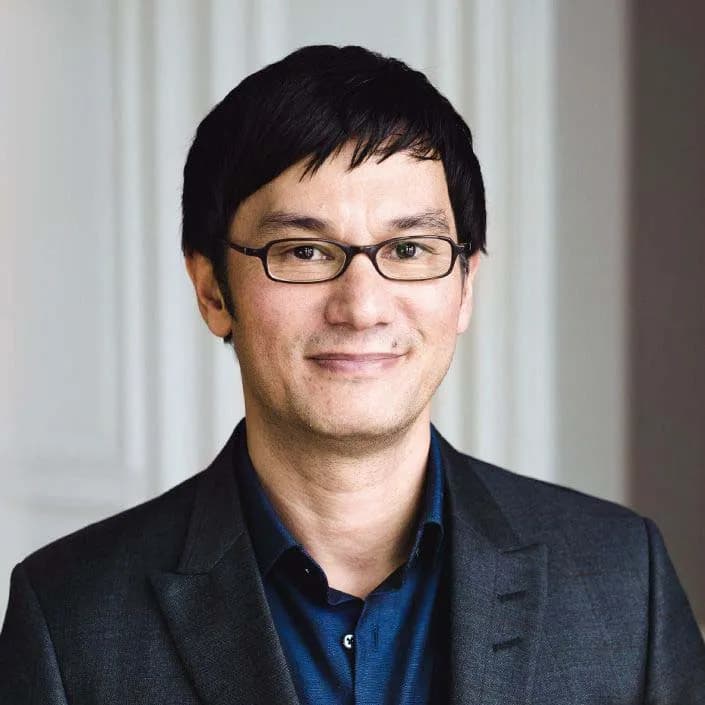
What impact does artificial intelligence have on human creativity and innovation? What does that mean for the way we work? What added value does it bring our clients? To get to the bottom of these forward-looking questions, we invited people to an open dialogue at our agency: joining us was Samuel Tschepe from HPI, Head of HPI Certification Program for Design Thinking Coaches, for a conversation with our Customer Centricity and AI expert Marcus Völkel.
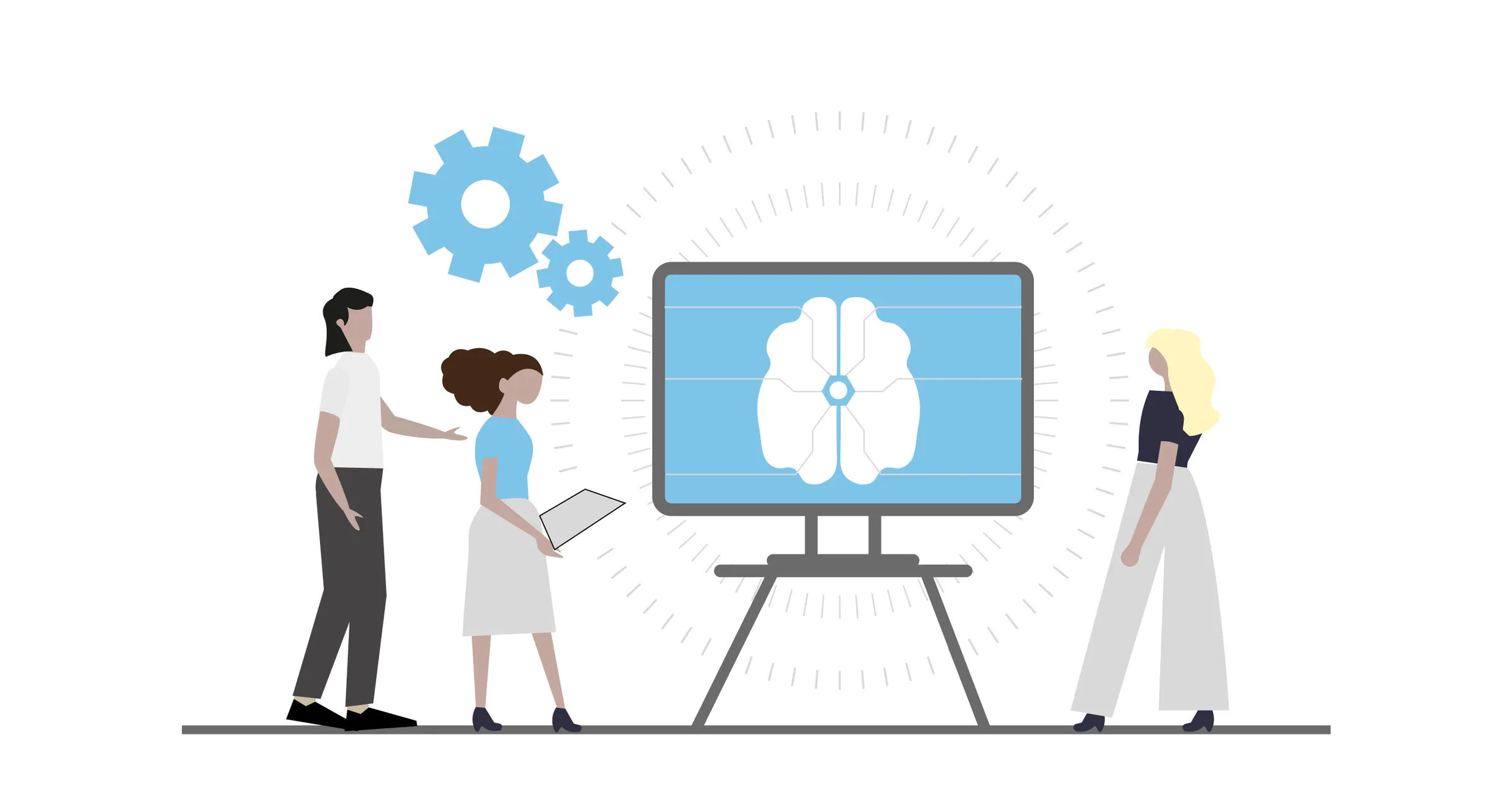
Innovative interplay: AI meets design thinking
As artificial intelligence relentlessly makes inroads into various areas of working life, it's sparking an intense debate about how it can be used optimally and sustainably. As innovation tools and aids in developing digital products, AI technologies offer a broad range of possibilities – from improving customer experience to supporting data-driven business intelligence. Particularly in digital marketing, AI technologies can simplify workflows and boost efficiency by generating content and automating processes.
In this context, however, important questions arise for us: How can AI be used responsibly? What do our clients get out of it? And how can we ensure that AI brings not only efficiency but also human creativity and empathy into digital products?
Answers to these questions can be found in the interplay between AI and the design thinking method. Design thinking not only offers a structured framework for looking at problems holistically and understanding user needs, but also enables the development of creative solutions that combine human empathy with technological efficiency. By linking AI and design thinking as a tool for developing or optimising digital landscapes, possibilities open up for thinking beyond traditional boundaries and jointly developing innovative solutions for complex problems.
A balanced combination of AI efficiency and human empathy in design thinking creates a powerful synergy that connects systemic developments and technological progress with human depth and authenticity, and can create meaningful innovations.
Samuel Tschepe and Marcus Völkel have spent the last two years intensively exploring the connection between generative artificial intelligence (AI) and the processes of creativity and innovation. Samuel presents five theses that shed light on the multifaceted relationship between AI and design thinking in particular. In doing so, he emphasises how AI can enrich creative processes without overshadowing the human dimension. In exchange with Marcus, who played a key role in building our agency's AI division and supports our creative processes as well as clients in integrating AI tools, both discussed how the strengths of both approaches can be harmoniously combined – not just methodically, but also in mindset: How do these aspects influence our established ways of working and the collaboration with partners and clients?
Leveraging synergies: how AI and design thinking drive innovation
The dialogue between AI experts Samuel Tschepe and Marcus Völkel was marked by an in-depth exploration of five relevant theses on the synergy between AI and design thinking. Discussing Samuel's theses made clear how AI and design thinking, working together in an innovative interplay, can push the boundaries of what's possible and enrich creative processes without losing sight of the human dimension. Using real cases and examples from our everyday work, Marcus Völkel illustrated how we already successfully apply generative AI in collaboration with our clients.
Fostering creativity through AI integration
Samuel's thesis that the interplay of AI and design thinking fosters and expands team members' creativity and skills was confirmed through real, concrete case studies from our everyday work. Integrating AI into various phases of the project cycle – from UX research to prototyping – not only accelerates project progress but also encourages a deeper engagement with questions and hidden connections. Developing tailored AI models offers a way to optimise our work and unlock new perspectives.
Accelerating projects through AI technology
Another important aspect is speeding up project progress through the interplay of AI and design thinking. In a service design project we cite as a practical example, AI helped us move 69% faster than planned. By developing and using custom AI models (custom GPTs), we were able to draw valuable insights from qualitative in-depth interviews and existing data, and feed them into real-time simulations.
AI tools also enable a deeper, more nuanced engagement with questions, as Samuel Tschepe argues in one of his theses. In a design sprint, we were able to integrate data and results into bespoke AI models to run real-time simulations and quickly build testable prototypes. This multidisciplinary approach opens up new perspectives and lets us uncover hidden connections and develop innovative solutions.
Strengthening customer innovation through AI workshops
Marcus Völkel also shared insights into our AI workshops for clients, where they learn to develop their own AI models and GPTs, to improve strategic decisions. Another of Samuel's theses stresses that AI makes it possible to picture future scenarios more vividly and make strategic decisions faster. Through AI workshops for our clients, they can learn to develop their own models and use them, for example, to create customer journeys or plan campaigns. This not only strengthens innovation capability but also supports the successful delivery of their projects. These examples show how the synergy of AI and human creativity keeps people at the centre while still driving forward innovative solutions.
Collaborative approach to AI integration
The concluding discussion on agency strategy for AI integration underlines the importance of a collaborative approach, such as the one offered by the "ChatGPT Team" workspace. This approach allows our colleagues to gradually become faster and better, which ultimately benefits our projects.
We're excited to see what possibilities the further development of AI technologies such as Microsoft Copilot or Codium will offer us in future, and how we can use them to further optimise our work processes and develop innovative solutions for our clients.
Overall, the exchange shows that the connection between AI and design thinking is not only a promising vision for the future, but already offers concrete added value and opportunities for our work today.



How AI is influencing the way we work for our clients
Artificial intelligence means, especially for our creative work, a wealth of new ideas, an almost endless source of inspiration or research database for alternative approaches or concepts – and it prompts us to achieve even better and sometimes faster results.
More on the use of AI
Your contact person
- Marcus Völkel
Consultingsynaigy
Show phone numberShow email address