

Design Sprint
5 min. read
Many of our clients face very large tasks: rethinking the company's digital landscape, optimising the application process, creating the optimal product landing page. Often, it is difficult to approach such complex challenges.
We use design sprints to quickly arrive at results that are tangible and comprehensible for everyone. Within one week, we work together with our clients through agile working, design thinking and user research to develop an interactive prototype that has already been tested.
This format was originally developed by Google Ventures, so you may also know it under the names Google Sprint or Google Design Sprint. Find out more about this fast, concrete and results-oriented way of developing solutions for complex tasks.
Benefits of a design sprint
Design sprints are very popular with our clients, as they bring a wide range of benefits:
Speed
Within five days, we jointly develop solution approaches that often take months to develop and agree on in the regular work context.Tested outcome
The goal of a design sprint is to develop a prototype that's already been tested by initial participants. Rarely do projects with such a short time horizon deliver such a concrete, validated result.Together
In the Design Sprint, our clients work across disciplines with experts from interactive tools. Management, team leads, product management, UX design, UX research and development are all part of the team, for example. Different people and competencies from within the company are brought together and develop a shared view of the topic.Clarity
After the sprint week, everyone involved understands the problem and the task at hand. They have also already helped shape a solution the whole team stands behind.
How does a design sprint work?
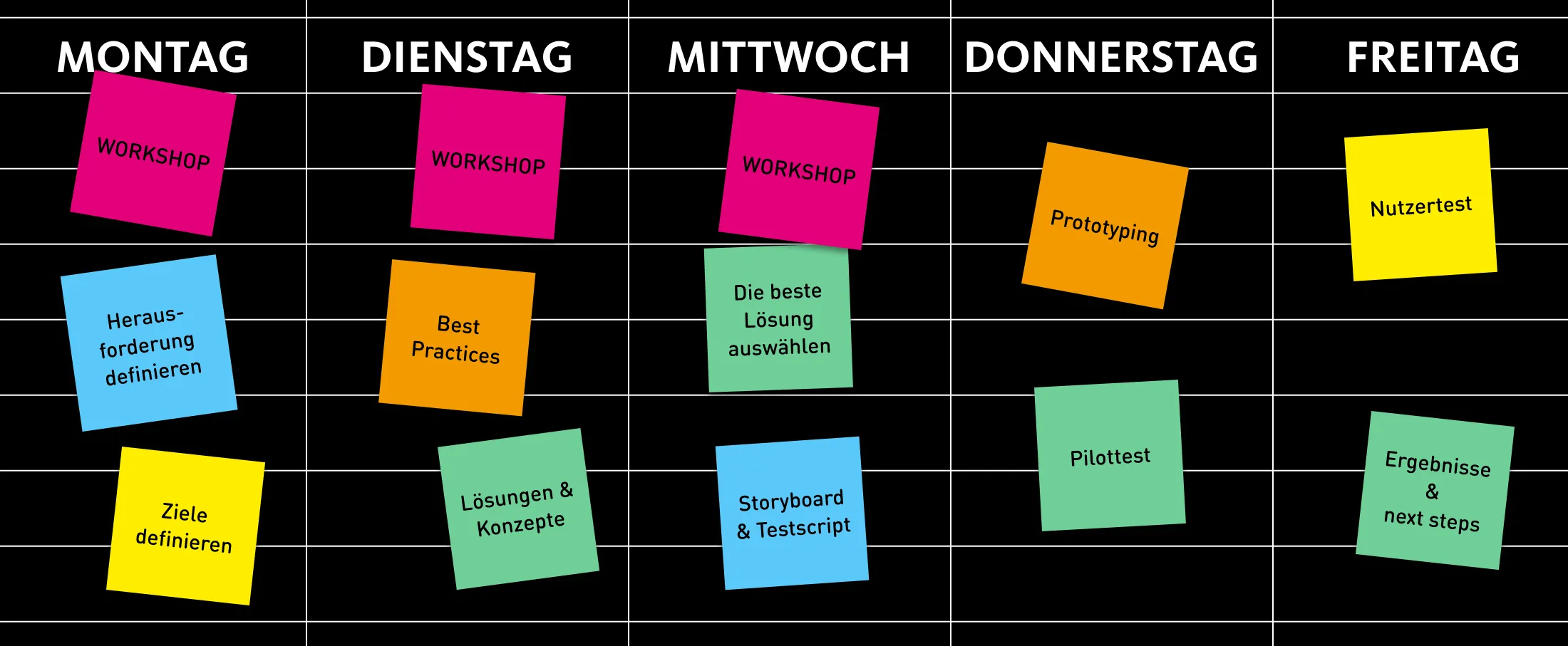
The design sprint takes place over four or five days within one week. In the first three days, we run various workshops. The last two days are used for prototyping, testing and consolidating results.
Monday
The design sprint week starts with constitutive workshops in which challenges and goals are identified and discussed together.
Tuesday
On Tuesday, we work with best practices, i.e. examples from other industries or approaches taken by competitors. In the afternoon, first solutions and concepts of our own are created.
Wednesday
In the middle of the week, the best solution approach is selected. A storyboard for the prototype and the test script for the first UX test are created.
Thursday
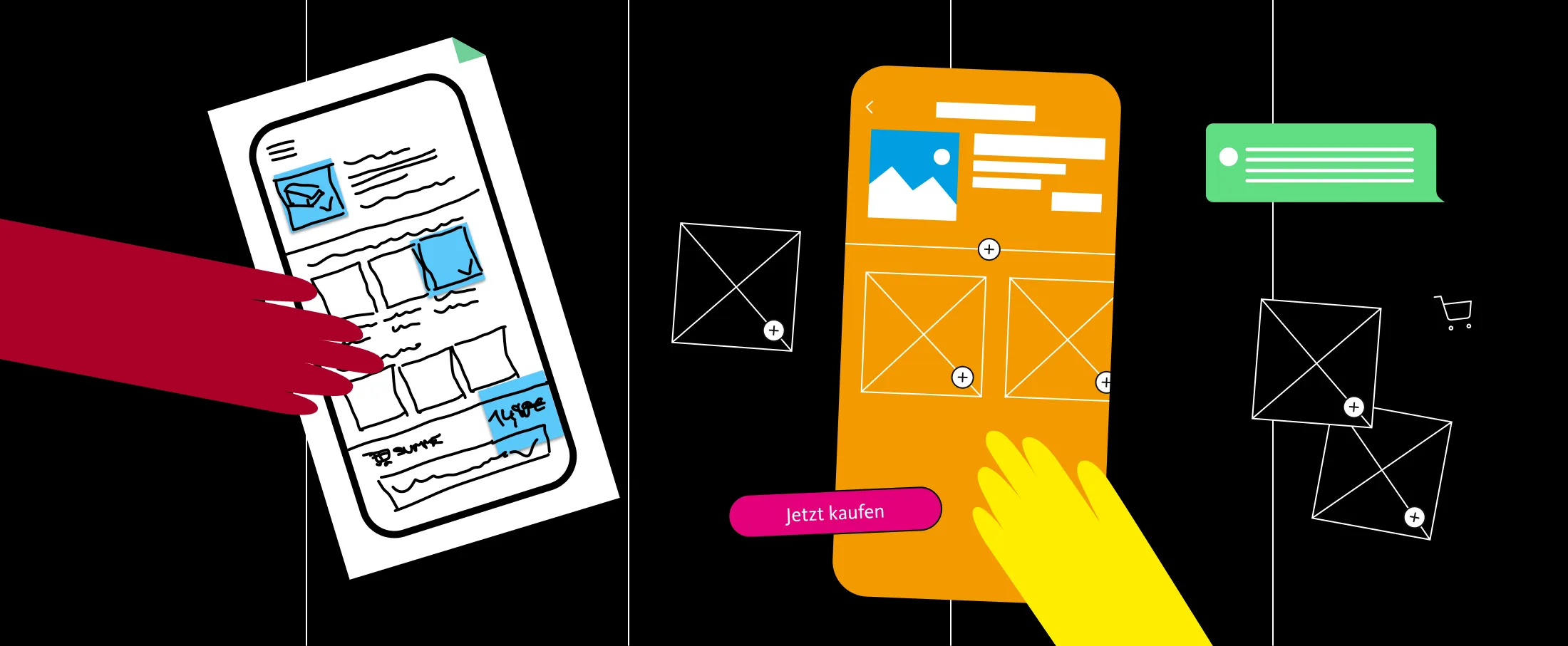
In the morning, the prototype is developed, so a pilot test can already take place in the afternoon.
Friday
In the morning, we carry out UX tests with real users. In the afternoon, all results are recorded and discussed. Finally, everyone decides together how to proceed and records the next steps.
Which challenges can be tackled with a design sprint?
Design sprints make it possible to work on a wide variety of problems. Our clients from B2C and B2B often approach us with one of these questions:
How can we optimise our application process?
How can we design our product landing page to generate more leads?
What is the right strategy for our corporate website?
Which new services or products can we develop?
How can we align our website content even more closely with our users' needs?
Design sprint even more compact: ideation day
Mobilising every stakeholder for a whole week on one project can be tough. There's an alternative to the week-long sprint that generates innovative solutions in a flash: the ideation day.
How does an ideation day work?
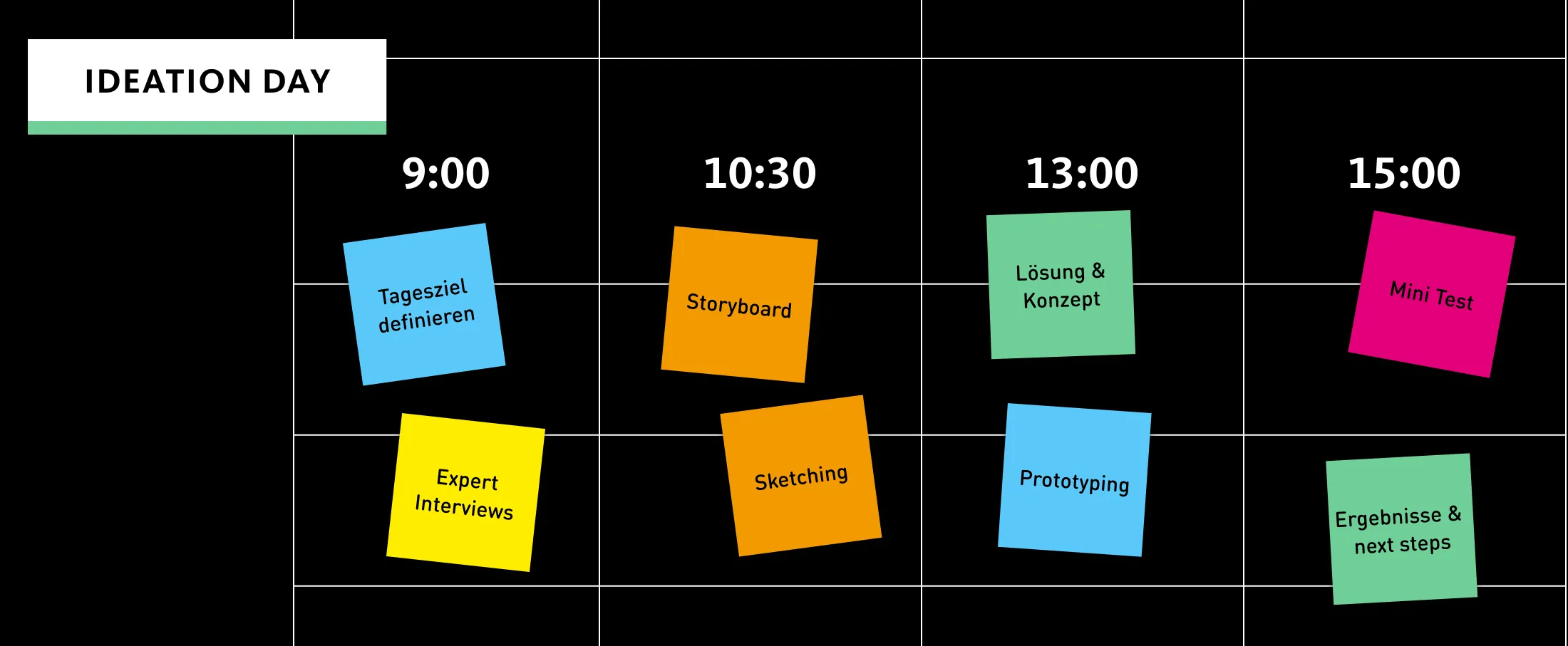
9am – the day's goal is defined, then it's on to the expert interviews.
10:30 am – work on storyboard and test script starts.
1pm – the solution and concept are recorded, then move into prototyping.
3 pm – prototype undergoes trial by fire in mini UX test.
Afterwards – the day's results are recorded and next steps are defined.
The most important thing: a protected space
Whether a week-long design sprint or a lightning-fast ideation day, it is essential that the whole team – agency side as well as client side – can come together in a protected, creative space. This space can also be digital, as with our remote design sprints. What all variants have in common, however, is that problem definition, ideation, prototyping, UX testing as well as preparation and follow-up lie entirely in the hands of the interdisciplinary team. In a safe, trusting environment, we can explore ideas and thoughts that might otherwise never have been voiced.
Are you facing a major task and interested in a design sprint or ideation day? Contact our experts by e-mail or simply give us a call! We look forward to the exchange and can decide together with you which solution-finding approach is best for you.
We look forward to getting innovative with you.
Your contact
- Marcus Völkel
Consultingsynaigy
Show phone numberShow email address