
Digital Trends 2019
7 min read
We asked our 80 digital experts: what are the digital trends for 2019?
We've summarised the six most important ones here.
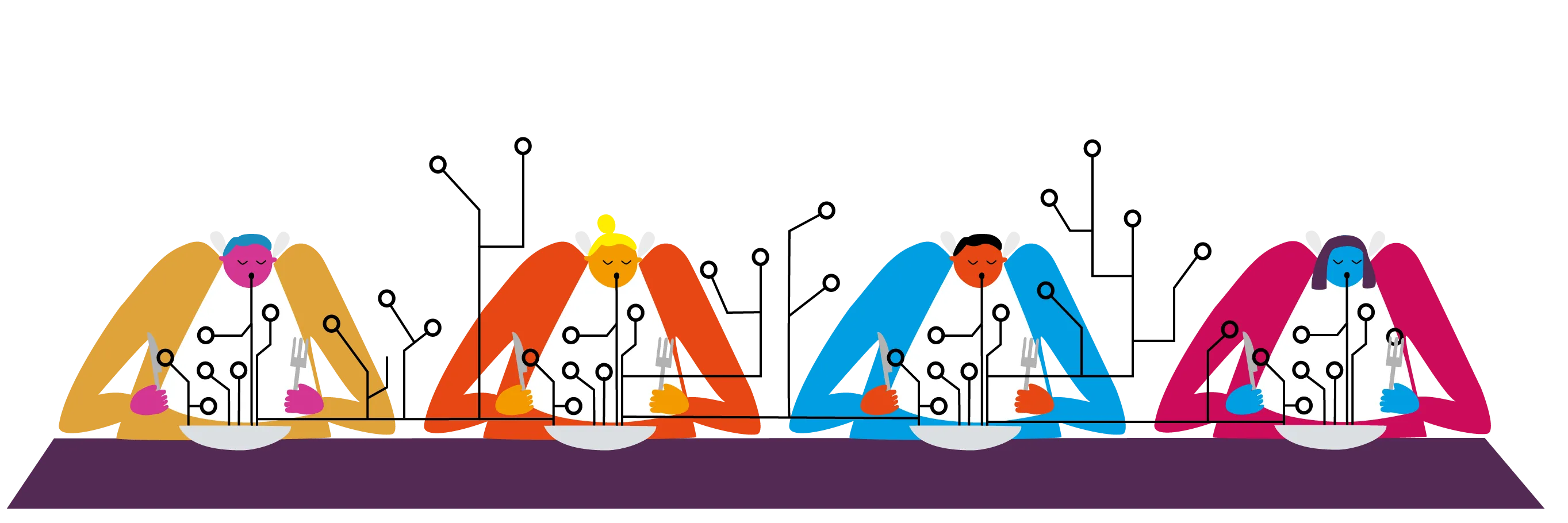
1. Even better than AI: HI (Human Intelligence)
"Artificial intelligence" currently tops many trend lists. Auto-filling fridges, speeding up work processes or trading stocks independently — AI can do all that.
The topic matters hugely for German companies. Right now, AI gets used especially for automated online marketing or as chatbot in CRM. These are quick to build and deploy, but far from AI's final development stage. Many of these bots draw on a fixed set of questions and answers, can't learn, and so aren't really "intelligent".
The Zukunftsinstitut in Frankfurt believes artificial intelligence does one thing above all:
“AI forces an upgrade of human intelligence and empathy.”
It's up to people to use AI in a meaningful way, because there's always a person at the end device that AI is meant to help.
What problems can AI solve for this person? And how?
To answer these questions, users must consistently be put at the centre and their needs identified. This works best with user interviews or UX tests.
The insights from UX tests reflect subjective experience and cannot be predicted by any AI.
So before the first chatbots are installed, companies must ask themselves how AI can be used sensibly. This requires human communication, which works slowly, is context-dependent and not automatic. Companies that upgrade their own „Human Intelligence“ and foster empathy can use new technologies in a way that delivers added value for businesses and customers.
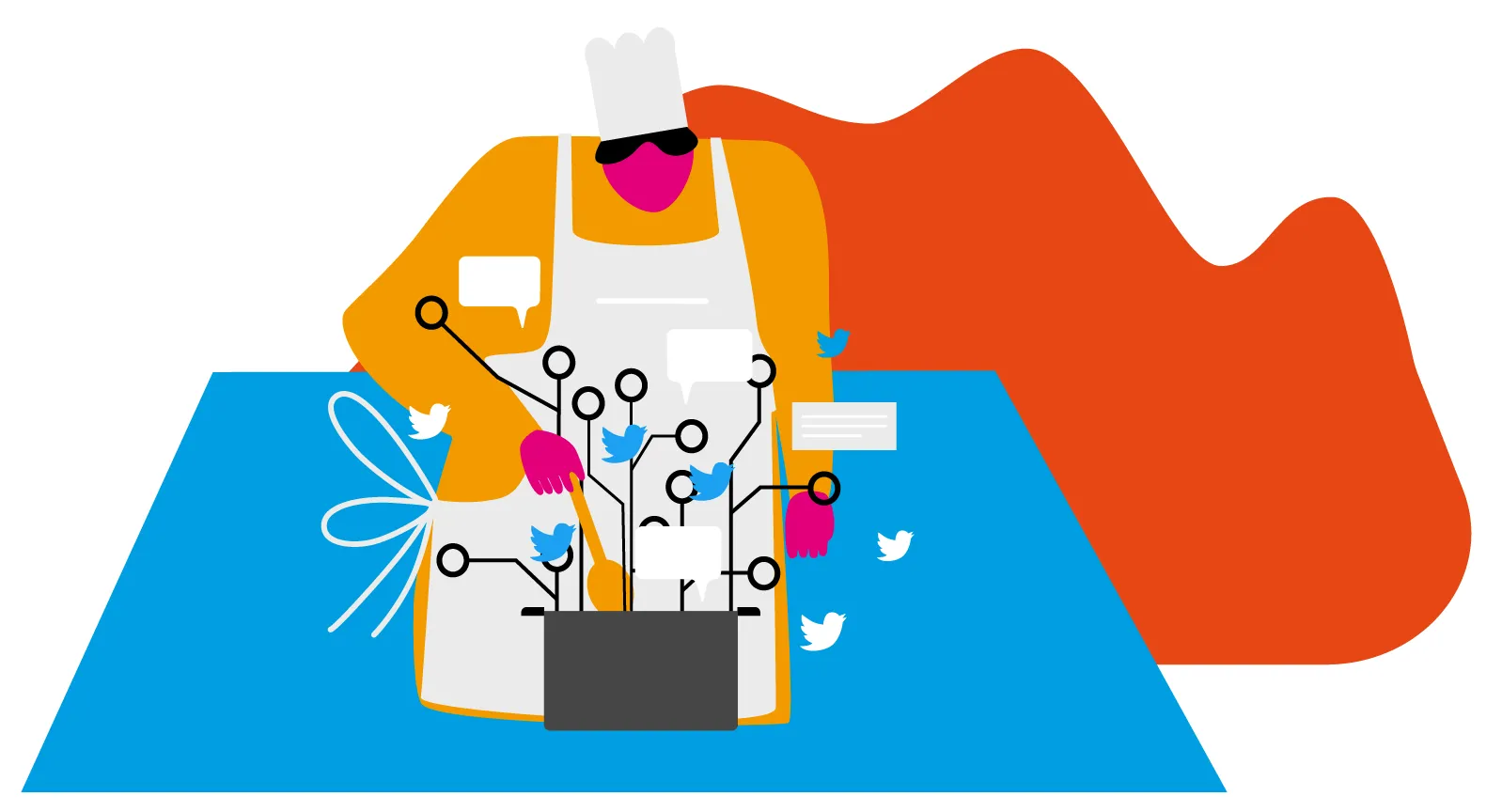
2. Bye bye, Social Media?
Facebook has to run adverts for itself on billboards in city centres. Snapchat's share price has fallen by almost 80% since its 2017 IPO. Google+ will be shut down completely this year. Tumblr recently banned all adult content and had to watch users flock to other networks in droves.
The big social networks are experiencing real crises. The hype is over.
This isn't down to changed user behaviour, though.
Facebook hasn't really been listening to its users for years: personal data is shared with companies, the algorithm favours the spread of fake news, and unpaid reach keeps declining. Google+ was confusing from the start and offers no added value. Snapchat let itself get copied by Instagram and lost its unique selling points. And Tumblr doesn't know its own users' demographics.
The social networks' crises are all self-inflicted.
But the era of social media is far from over.
These networks have connected people all over the world; people are joining together in digital protest marches and revolutionising the social media landscape themselves: on Tumblr, former users are posting links to their new Twitter accounts. Birthday greetings – previously sent via Facebook – are now more often sent as an Insta story or a voice message serenade via WhatsApp.
Users don't care which platform they're on, as long as their needs and expectations are met.
The only way out of the crisis for the struggling networks: consistently put user needs at the centre. Rethink monetisation models.
For companies, this means: stay flexible and don't become dependent on one big network. Better: prepare your own content so it can easily be shared across different networks.
3. Talking websites
They're called Siri, Alexa, Cortana or Watson. The voice assistants of the big IT names. Even though many people here still resist the virtual voices, they're symptoms of a trend wave we've been riding for several years now: audio!
Listening is on trend: podcasts are more popular than ever, and more audiobooks than paperbacks were found under the Christmas tree. On WhatsApp, many users prefer sending voice messages to typing long texts on the keyboard.
This changed behaviour has an impact on companies' digital communication. Search queries via voice assistants, voice searches, have consequences for how websites are designed. Content has to be prepared so Alexa can read it aloud. Meta tags have to be maintained so they're found via spoken search queries. Audio tracks of interviews or speeches have to be available as audio files for download.
Companies that want to communicate digitally in a future-proof way should give their products and services a voice online.
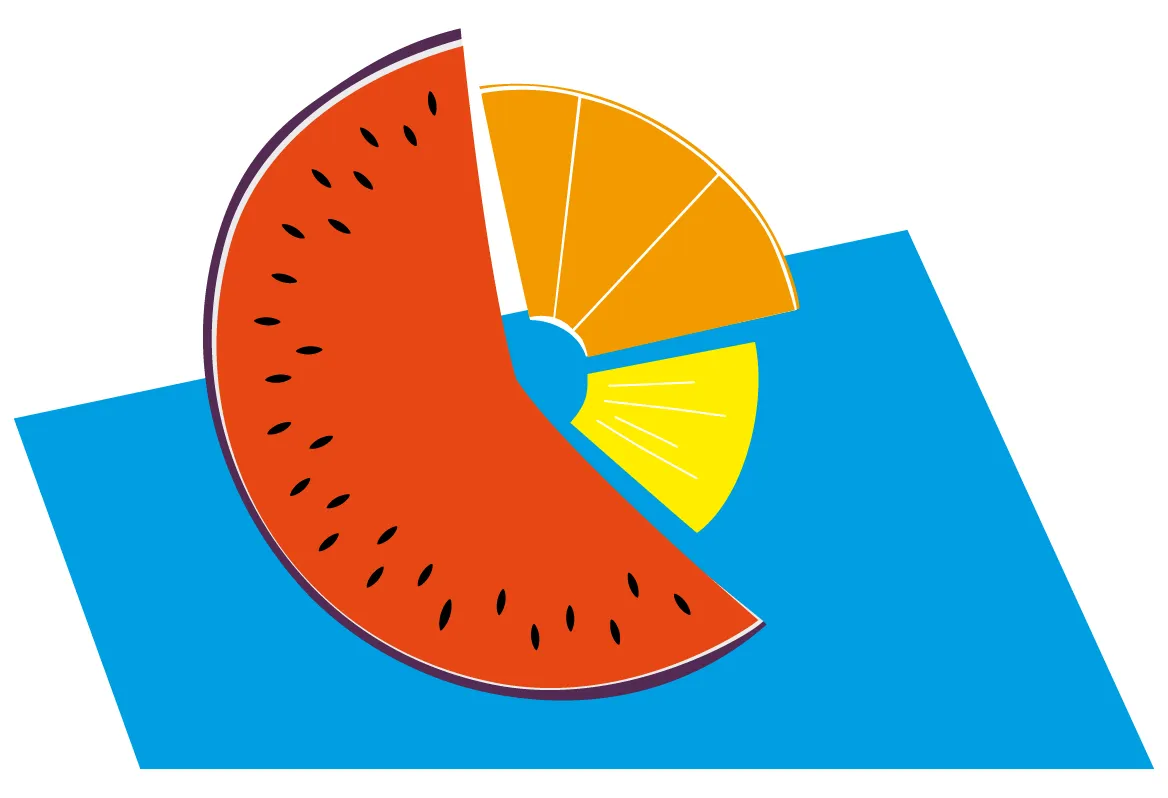
4. Better Data – measuring correctly and understanding more
“If you can't measure it, you can't improve it.”
Most marketing directors know this famous line from economist Peter Drucker by heart. But far more important than measuring and improving is the what – the it.
Besides CR and CPC, CTR, PIs and ToS are measured, as well as, of course, CPA, BR and ROAS. Add to that the follower count on Instagram, pins on Pinterest, response time on Facebook and retweets on Twitter: all neatly presented in a PowerPoint slide deck. Meaningfulness: zero. More and more is being measured, and less and less is being understood.
The culprits are so-called „vanity metrics“: figures with no direct link to the business or the user. Big data means complexity. Companies have to accept that and focus their activities accordingly. To do so, companies need to ask themselves:
Do we need a monthly update on our Facebook likes?
Is time spent on the homepage relevant to our business goals?
Is our core target group even active on Pinterest?
In short: which figures are actually relevant?
Things you should be measuring instead:
Which keywords bring users to our website?
How long does user need to fill in contact form?
Which links in our newsletter get clicked?
Data will still matter in 2019. However, you should check whether you're applying the right benchmarks to the right edges.

5. “Do One Thing and Do It Well”
That's, in short, philosophy behind microservices.
Microservice is a term from software architecture describing a small, independent service that provides a single function within a software solution. Microservices enable the modular structuring of software and stand out for their flexibility and easy scalability.
In the example of an online shop, this can mean that the product catalogue, shopping basket and payment are developed independently of one another.
Each microservice can use a different programming language or database. This approach fits well with agile working processes and simplifies experimenting with new technologies.
Microservices have long been used by large internet platforms; Google, Twitter, eBay, Amazon and Netflix are just a few examples.
Microservices differ from classic monoliths – i.e. applications deployed as a whole. Both approaches have advantages and disadvantages and should be chosen according to need.
Especially when it comes to continuous software development, we and our clients have had good experiences with this approach. For complex tasks, it's often sensible and sustainable to rely on a microservice architecture.
6. New Work – the return of humanity
New work confronts us with fundamental question: how do we want to work in future?
This topic occupies our clients as much as it does us as an agency. At interactive tools, we've started process to consistently flatten hierarchies and work together in agile teams. We distribute responsibility across all colleagues in our projects. What matters most to us here is mutual trust and awareness that people matter more than job titles or roles.
The megatrend new work is global, yet each region handles it differently: while Toyota in Gothenburg has been achieving rising revenues with six-hour workday since early 2000s, other companies are only now starting to cautiously think about home-office policies. Digitalisation changes processes, makes some jobs redundant while creating new fields of work at same time. As result, requirements for employers and employees have changed.
Pain this change causes shows up in companies as burnout statistics or staff turnover rate. Companies wanting to take on challenges of digital transformation must therefore also adapt how they function internally and how work is shaped. Digitalisation, in turn, forces us towards more humanity and consideration.
Days of performance-driven society are numbered.
Keen to find out more about interactive tools?
- Klaus Cloppenburg
Managementsynaigy
Show phone numberShow email address