

Employer branding how to reach more qualified applicants
7 min read
Germany's mid-sized industrial sector is desperately searching for skilled workers and young talent. Despite this situation, employers are failing to use many opportunities to approach and win over potential candidates professionally. Especially when relaunching the corporate website, communicating the employer brand plays an increasingly important role. After all, potential candidates' first contact with companies today typically takes place online, and increasingly on mobile. With targeted employer branding, you boost your attractiveness as an employer to candidates – and strengthen the bond of existing employees to your company. We'll show you concrete examples of how online recruiting and employer branding can be optimised.
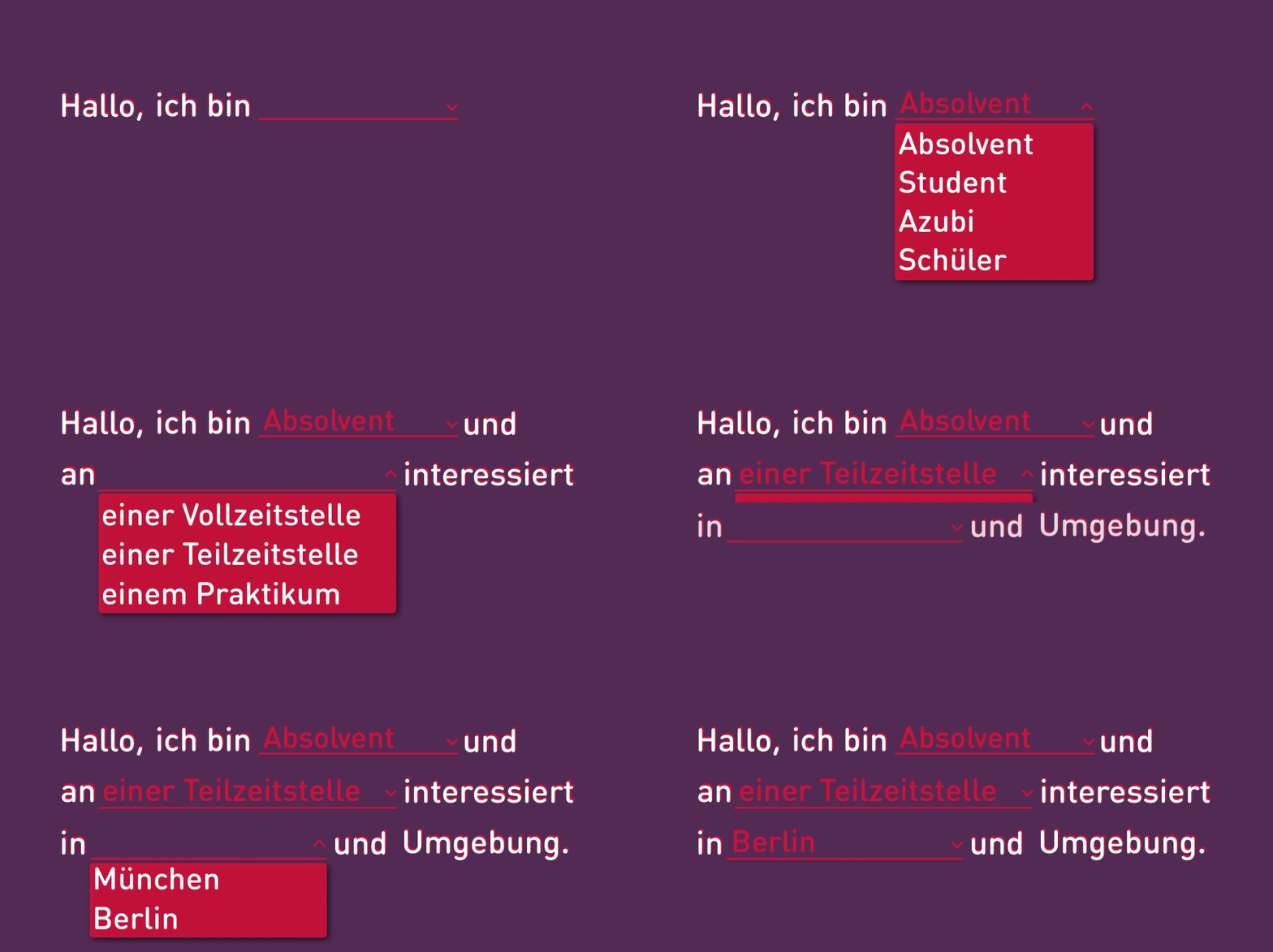
Laying the foundation for a positive candidate experience with employer branding
Employer branding refers to all measures a company takes to present itself as an attractive employer brand to applicants and employees. Successful employer branding is therefore one of the core tasks in the so-called "war for talent". B2B companies near conurbations in particular find it hard to find qualified applicants, as competitors have long since joined the race for the brightest minds.
The majority of users research the company, its environment and the conditions of an advertised position online before applying. A well-designed careers section can lay the foundation for a positive candidate experience at this important first point of contact. Whether a visitor becomes an applicant depends above all on whether you succeed in correctly identifying user needs and presenting your own company as well as your employer brand effectively.
Creating an attractive employer brand through targeted employer branding
A careers section is only as good as its ability to anticipate users’ questions and needs. Does your company have guiding principles or a mission statement summarising what defines the company? Do you offer applicants particular perspectives? Then these should feature as a guiding theme in your communication, not only on your own website but also across all other touchpoints with applicants. Are there reviews or awards as a good employer, do your colleagues and staff achieve exceptional things? Then these are stories you should tell.
A good careers section puts user needs at the centre
To position themselves in the job market, B2B websites should not only meet technical criteria, but above all satisfy specific user needs. This starts with relevant applicant information and ways to contact the right people. Key information includes the framework conditions such as the selection process, fixed-term contracts, willingness to travel and other commitments.
Examples of career and development opportunities help candidates in their decision-making process. Reports on, for example, special health promotion programmes and social engagement contribute to the employer brand's image and often give a good indication of whether applicants and the company match on an emotional and values level.
Job boards & job maps are often the first port of call
Before applicants engage further with a potential employer, they first check whether there are relevant positions at the company. Similar to online shopping, users first examine the range for relevance before deciding whether to stay on a page or not. A clear presentation of available positions as “job maps” by location provides a better overview.
Filters and intuitively understandable interfaces in the underlying job board shouldn't just function flawlessly but lead to the relevant information within a few clicks. Further relevant content, for example similar positions and cross-references to employee benefits with corresponding contacts, should be integrated so applicants can engage more deeply with the company.
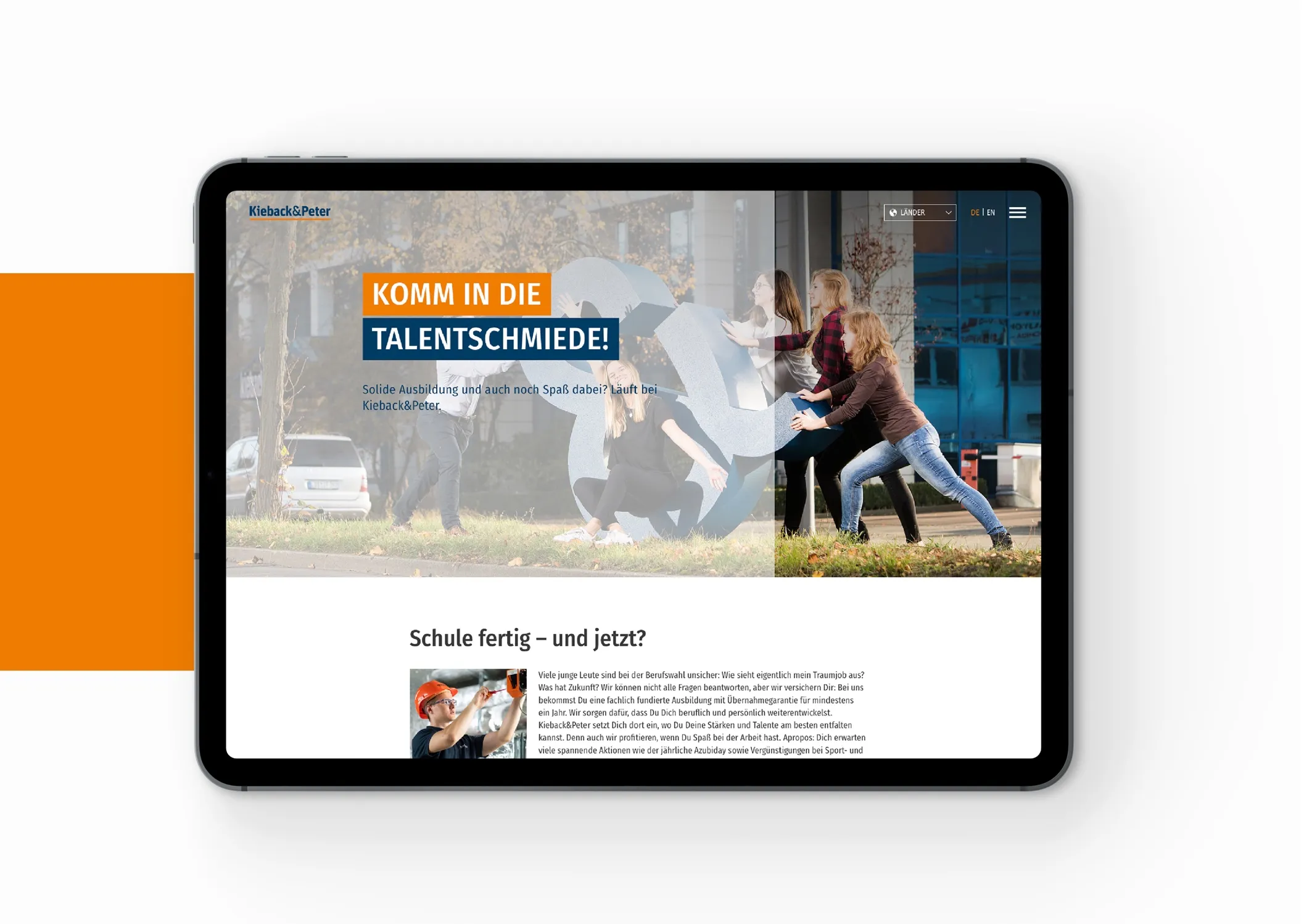
Making the company tangible for applicants digitally
The recruiting process is also about making the company tangible for prospective applicants. Videos in online recruiting grab attention, can create emotions, convey information compactly and be shared on social networks. Through images and videos, applicants get authentic impressions of everyday life at the company. Well-designed employee portraits help give a first impression of how future colleagues 'tick' and what their areas of responsibility look like.
Entry points for all applicant groups
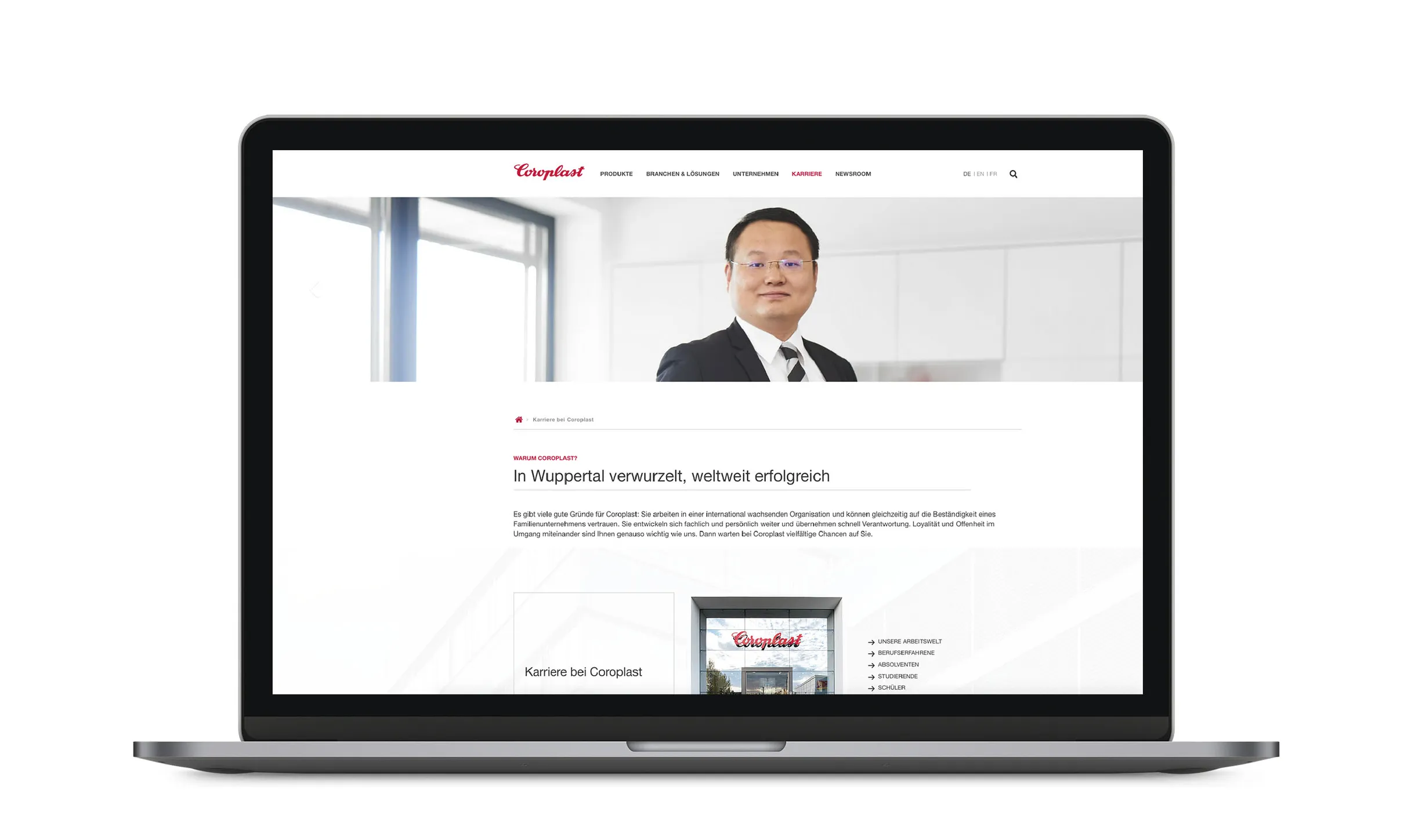
When designing this, it's important to consider entry points for different applicant groups (professionals, students/pupils etc.) and types. Fact-oriented content at the top hierarchy level allows quick, web-appropriate access to business figures, annual reports and contacts. Photo galleries, stories, articles on company history, news and statements on goals and company culture invite browsing and give applicants background for a possible interview.
Building technical foundations: encryption & mobile optimisation
Anyone requesting data such as detailed CVs from applicants via corporate website must ensure security of this data. Encrypting site with HTTPS, or introducing HTTP2, also pays off in terms of visibility. Google rates encrypted and fast-loading sites as secure and thus automatically ranks them better in search index. Same applies to mobile optimisation: a responsive design, or mobile capability of a website, pays off, since especially first-time accesses from job apps work on mobile, and for candidate journey this initial job browsing is particularly important for later generating qualified applications.
Completing applications: CV parsing and one-click application
From applicant's perspective, uncomplicated one-click application is often still an unfulfilled wish. Established applicant management tools are mostly not mobile-optimised and only support sharing a CV via career networks like LinkedIn and Xing to a limited extent. Instead, willing applicants are forced to upload as individual a cover letter as possible along with CV in a specific format and prescribed size. Once applicants take on these hurdles and submit their data, they're mostly left alone – without information on what happens with application and who will respond when. Positive user experience looks different.
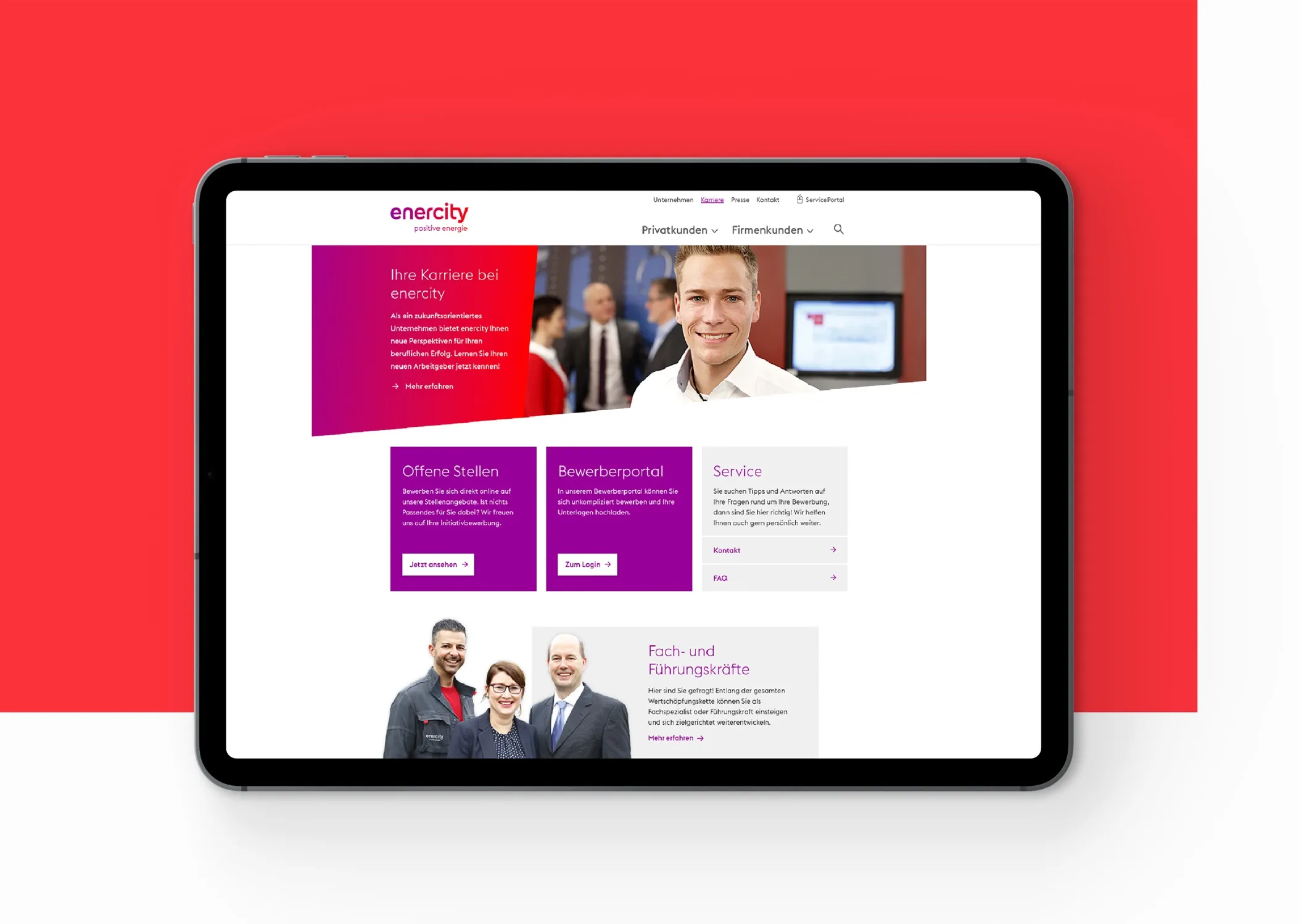
More transparency and service in the application process
In numerous reviews of corporate websites, we repeatedly find that the good impression often ends at the "Apply now" button. Simply because from that point on, the old applicant management tool takes over, with rigid forms that allow hardly any personalisation. Some newer tools, and especially start-ups in the applicant management tools market, rely on both open source and greater transparency and service. An applicant cockpit, for example, shows applicants the status of an application and allows them to specify preferred times for a callback from the responsible HR manager. CV parsing or simply recording interests and skills from a selection of predefined answers also makes the work easier for HR managers.
Recruiting across national borders
In particular, geographically distant applicants who don't know what to expect in an unfamiliar working culture need additional information in the careers section. Relocation packages, help with dealing with authorities and multilingual points of contact are decisive advantages when companies want to attract qualified international applicants. A flowchart in English or in the respective local language helps applicants from other cultures understand how the first few days in Germany will unfold and what to expect.
Inspiring applicants with effective candidate journeys
Anyone wanting to successfully generate qualified applications online should first put on the applicant's glasses, so to speak, and engage with the candidate journey and experience. To work out the key applicant information for the respective target group at each touchpoint, we frequently use so-called candidate journey maps in workshops with customers. The most sought-after applicant profiles are evaluated here in personas with interests and corresponding target media, and suitable content is then produced for them.
Overview allows applicant cycles to be depicted and new contact points to be set beyond recruiting. User-centred content created this way should then be subjected to a reality check. As a digital agency focused on usability, we recommend a UX test and interviews with the respective target groups before rolling out an applicant campaign.
Conclusion: employer branding helps you reach more qualified applicants
Alongside social media presences, it's above all the company and careers section of a corporate website that is essential for successful employer branding. In addition to the technical foundations, this requires a solid employer branding strategy. Personal stories from employees, emotional imagery, high-quality recruiting videos and a smart candidate journey are all part of this strategy and present you optimally as an attractive employer. But to measure the success of your employer branding, you should continuously monitor a few key metrics such as speculative applications, applicant numbers, drop-offs, etc., and make optimisations where necessary.
Companies that take the points listed here into account can specifically play to their strengths on the web and are well equipped for the "war for talent". This is all the more important as, today, candidates have the choice and opt for the employer that offers them the best conditions and makes applying online easy.
Your contact person
- Marian Gertheim
Consultingsynaigy
Show phone numberShow email address