

Global corporate website: opening new markets digitally
5 min read

With an internationally oriented digital strategy, companies open up new markets worldwide. We show how the rollout of a brand with an international corporate website can be successfully implemented.

How do you successfully achieve the international rollout of a corporate website? How do you successfully carry your brand and offering into other languages and cultures? Internationalisation is more than just building a bilingual or multilingual website. Rather, it's a major challenge that needs to be planned strategically well in advance and operationally together with the business units.
Country-specific presences can differ decisively from the original website in the home market in terms of strategy, content, design, technology and format, or alternatively they can integrate into a global umbrella brand presence. The company structure and the possibilities in marketing and sales determine what the right or wrong approach is here.
Internationalisation strategy: know goals and target audiences
Country-specific presences can differ decisively from the original website in the home market in terms of strategy, content, design, technology and format, or alternatively they can integrate into a global umbrella brand presence. The company structure and the possibilities in marketing and sales determine what the right or wrong approach is here.
At the start stands the strategic question of what goals the localised corporate website should achieve: is lead generation the focus, should investors become aware of the company, or are more applications from the relevant country desired? Thorough market research and an analysis of target groups in the intended market are the next step. This includes identifying local needs and characteristics typical of that country.
With the help of proven methods from the field of User Experience (UX), as we use them at interactive tools, valuable insights into the behaviour and expectations of new users can be gained. Reliable results are achieved through the use of personas, i.e. archetypal users. Together with our customers, we as an agency develop a target vision and solution scenarios on this basis, which serve as a compass for the further course of the project.
Clear processes ensure consistent brand communication
The corporate website was in most cases created centrally. As a result, the editorial workflows are also geared towards central processes. Decentralised implementation only succeeds in the long term on the basis of decentrally organised workflows. For successful internationalisation, the process architecture therefore has to be developed from the ground up. Well thought-out editorial concepts and topic plans are also fundamental for building and smoothly running the international web presences. Resources are then planned on the basis of these preliminary considerations. Is enough specialised staff available at all locations in the long term for the upcoming tasks? Are qualifications or new hires needed?
International companies face a complex task through cross-border editorial processes: communicating corporate identity consistently, despite individual adaptations to users in new markets. A brand portal can help here: it bundles all relevant information about a brand in a central online platform. This serves employees, agencies and other service providers worldwide as a secure guide through a company's brand world.

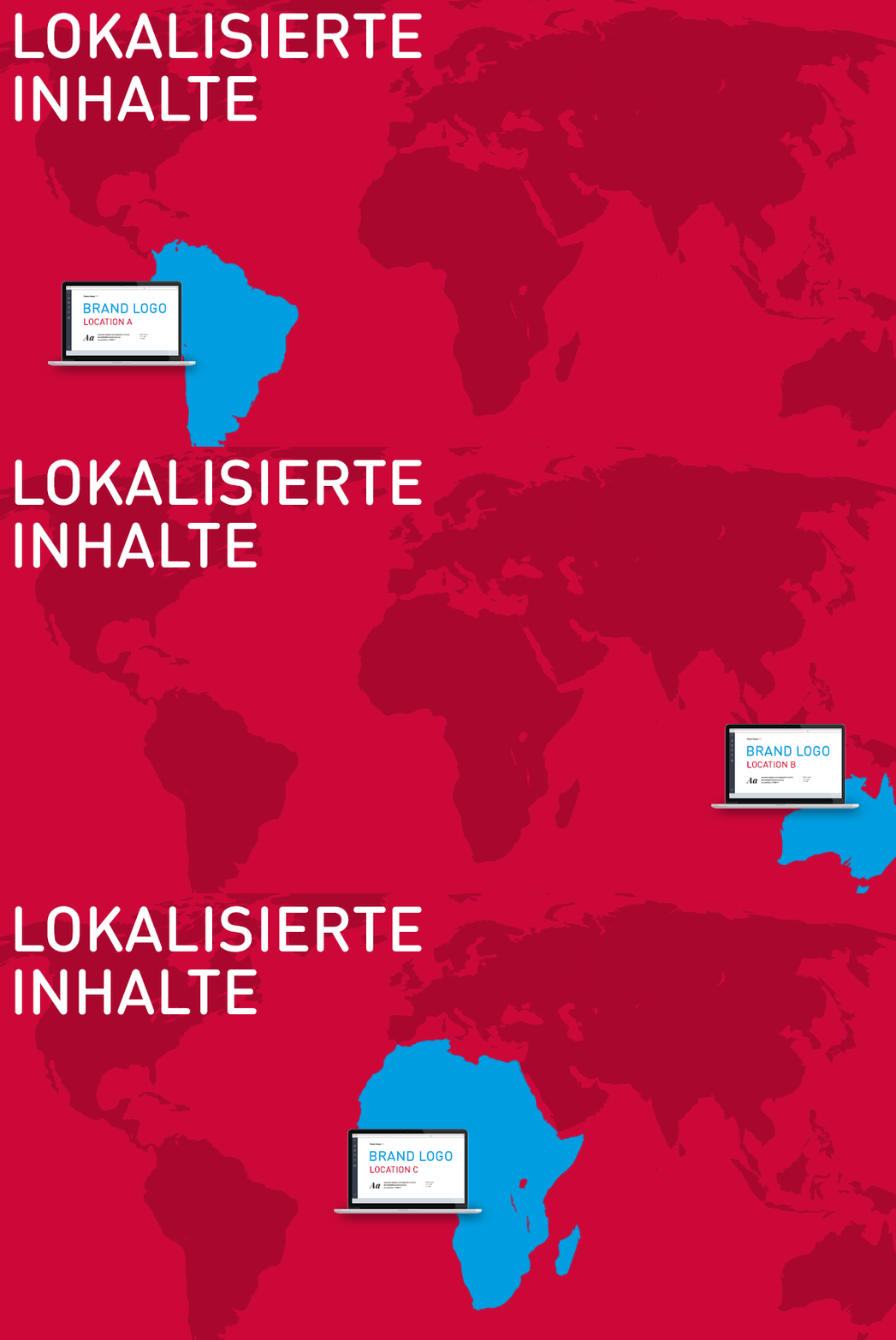
Reaching customers with localised content
When planning content, the user should consistently be at the centre. The user analysis carried out beforehand provides information on cultural particularities and regional characteristics. This quickly makes clear which topics and products people in the respective target market are interested in and how strongly content is weighted in the respective countries. The results help to successfully localise the content of the website, for instance when it comes to the interpretation of colours or the impression and feelings that certain image motifs evoke.
The right technologies: CMS, SEO and domain concept
Building and reliably operating an international digital corporate presence requires the right technological foundation. Most important is a future-proof, multi-tenant-capable and multilingual content management system that meets all technical and editorial requirements. The system must also be able to grow with the company, i.e. be extensible. Today, it is also crucial that it enables optimised experiences for mobile devices.
Many further technical aspects such as localised search engine optimisation should be considered. Because Google isn't measure of all things for SEO in every country. Expert knowledge of respective leading search engine and its algorithms is needed here, with goal of developing international SEO strategy. Right domain concept for respective target market depend on country, not language. Global .com domain with country-specific subdirectory, or separate country-specific top-level domain, make sense here.
Internationalisation checklist
Defining the strategy: what goal should the internationalised website achieve?
Defining the processes: who has which tasks in which location? Are the resources available?
Localise the content and define editorial processes: is it clear which employee creates which content, in which country, at what time?
Organising brand communication: is brand consistency ensured across country borders?
Which products and services are relevant in which country/market – how is the data managed centrally?
Select the technologies: does the CMS meet the identified requirements, or does it need further systems to run the sites successfully?
Your contact person
- Marian Gertheim
Consultingsynaigy
Show phone numberShow email address