

Hybrid AI search
From product search to digital advisor: how AI-powered search generates more qualified leads and exceeds customer expectations.
4 min read

Search is often the most important touchpoint in digital applications. Whether customer portal, e-commerce platform or corporate website: if users can't find what they're looking for, companies lose not just a click but potential customers and revenue. At the same time, expectations are rising: what works on Google, Amazon and ChatGPT is what users now expect from business applications.
The good news: modern AI technologies enable a quantum leap in search quality. Hybrid AI search combines proven technologies with new approaches and transforms search from a simple product finder into a context-aware advisor.
Why classical search is reaching its limits
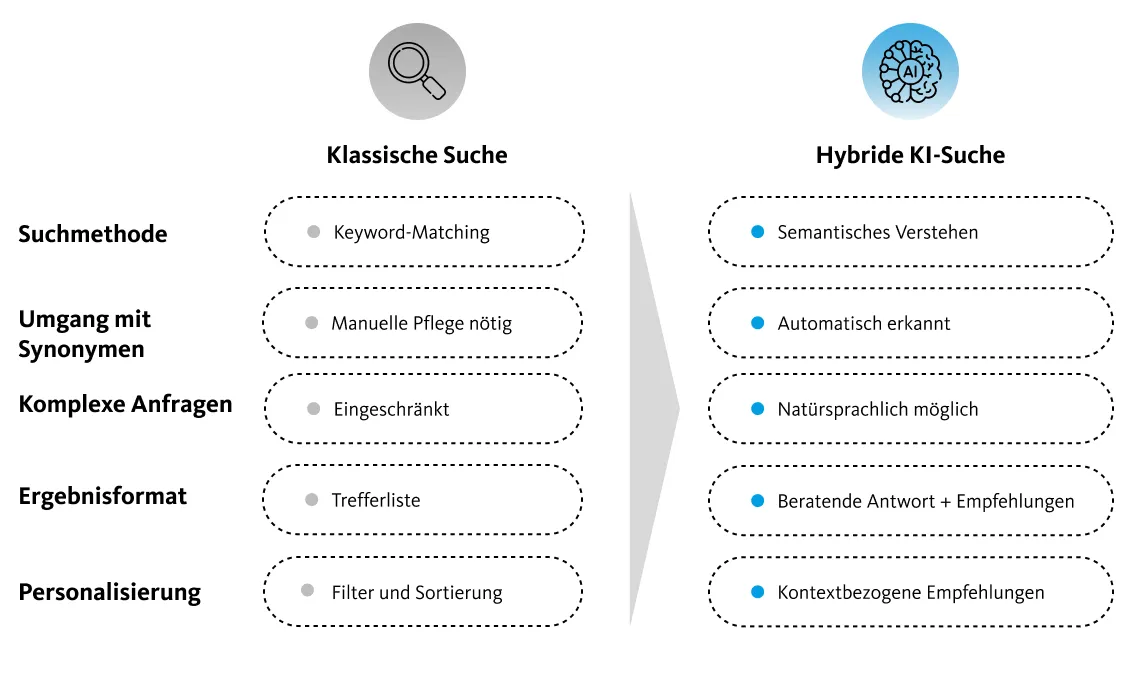
Established search solutions such as Solr, Elasticsearch or Algolia have done excellent work over the years. They're based on proven principles: full-text indexing, keyword matching, faceting and relevance scoring. For many use cases they remain a solid choice.
But these systems hit limits when it comes to understanding meaning:
Synonyms and variants: Whoever searches for a hammer drill doesn't automatically find an impact drill.
Technical jargon vs. everyday language: An electrician searches differently to a DIY enthusiast.
Context and intent: Outdoor cables require knowledge of standards and applications.
Complex enquiries: What material do I need for a sub-distribution board in a single-family home?
Result: zero-hit searches, irrelevant results and frustrated users who switch to competitor or contact support.
What makes hybrid AI search different
Hybrid AI search complements classic search technology with three key components:
Semantic search: meaning instead of keywords
Vector search converts text into mathematical representations that capture its meaning. This way, the system understands that NYM-J 3x1.5 and three-core installation cable are related, even without a shared word. Large language models (LLMs) such as GPT also enable natural-language queries and generate context-aware answers.Knowledge networking: products in context
Graph databases link products, categories, use cases and specialist knowledge. They map which accessories fit which product, which standards apply and which alternatives exist. This creates digital expert knowledge that feeds into every search query.RAG: retrieval augmented generation
RAG combines the best of both worlds: the precision of a database with the language capability of AI. The system retrieves relevant information and formulates understandable, context-aware answers from it. The result isn't a list of hits, but qualified advice.
From product finder to digital advisor
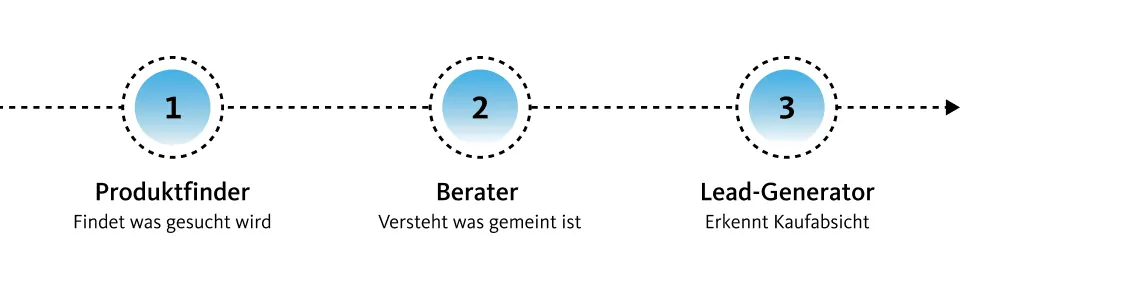
Hybrid AI search enables an evolution in three stages:
Stage 1: Intelligent product finder
The search understands what's meant, not just what's typed. Synonyms, typos and different technical terms lead to the right result. Matching accessories and alternatives are suggested automatically.
Stage 2: Context-aware advisor
The system recognises the intent behind the enquiry and delivers not just products but solutions. It takes standards, use cases and typical project contexts into account. Technical expertise flows into every answer.
Stage 3: Proactive lead generator
Through intent recognition, the system identifies high-value leads. Anyone asking about complex solutions doesn't just get answers, but also the offer of personal consultation. Hyper-personalisation based on user behaviour and context increases relevance and conversion.
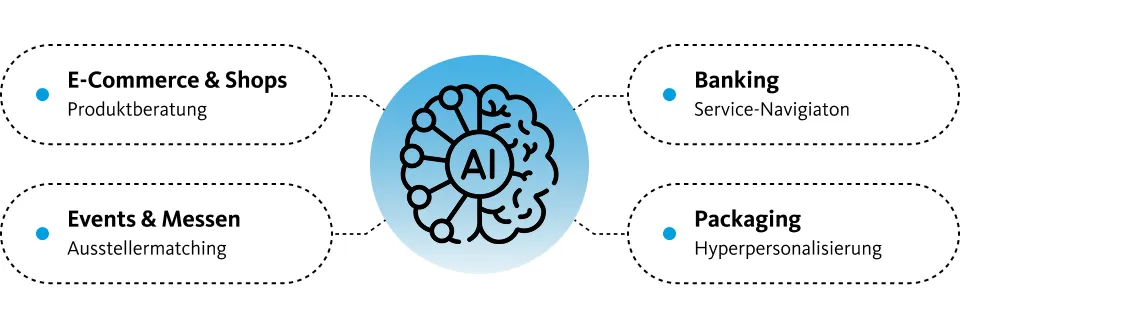
Application scenarios by industry
E-commerce and shops
A specialist retailer with tens of thousands of products is transforming its search from a pure item finder into a digital specialist advisor. Tradespeople enter their project requirements in natural language and receive a complete materials list including accessories and alternatives. The system identifies upselling potential and suggests premium variants where it makes sense.
Banking and financial services
In a bank's customer portal, users don't search for "SEPA direct debit mandate", they ask: How do I change my bank details for my electricity contract? Can I open a current account with an EC card for my daughter, and how much does it cost? Hybrid search understands the intent, delivers a comprehensible answer and leads directly to the relevant form. Complex queries about financing or insurance are handed over to advisors as qualified leads.
Events and trade fairs
A trade fair organiser with hundreds of exhibitors enables target-group-specific search: which exhibitors show solutions for sustainable packaging? The system understands industry terms, links exhibitors with topics and product categories, and suggests suitable talks and networking events. Visitors receive personalised fair tours based on their interests.
Packaging and industry
A packaging manufacturer offers its customers hyper-personalisation: the search knows previous orders, industry requirements and regulatory specifications. Anyone searching for food packaging receives only certified solutions. The system takes minimum quantities and delivery times into account and recommends alternatives in the event of bottlenecks.
Ready for the next step?
Hybrid AI search is not a vision of the future, but achievable today. We at interactive tools develop AI-powered search solutions that integrate seamlessly into existing systems and create genuine added value.
In a non-binding initial conversation, we jointly analyse:
Where does your current search stand, and what are the biggest pain points?
Which quick wins are achievable in the short term?
What does a roadmap to hybrid AI search look like?
BOOK INITIAL CONSULTATION NOW
Your contact person
- Marcus Völkel
Consultingsynaigy
Show phone numberShow email address