



AI in B2B 2026: what 200 wholesalers and manufacturers really reveal about their AI use
Artificial intelligence has arrived in the German B2B landscape. The new B2BEST Barometer from ECC KÖLN, created in collaboration with synaigy and supported by VTEX, surveyed 200 wholesalers and manufacturers. The results show a picture that is both encouraging and frustrating at once. Investment is happening, deployment is happening, but it's rarely thought through consistently to the end.
 Joubin RahimiManaging Partner · synaigy
3 min read
AI is no longer optional
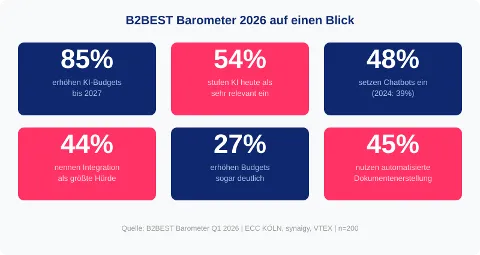
54 percent of the companies surveyed already rate AI as very or extremely relevant to their own business today. In 2024, this figure was still 49 percent. The real leap becomes visible when looking ahead. 85 percent expect AI to be highly significant for their company in five years. In 2024, it was 75 percent. AI is therefore no longer a technology topic negotiated within the IT department. It's a strategic topic that has arrived in the executive boardroom.
This assessment is reflected directly in budgets. 85 percent of companies plan to increase their AI investments by 2027. 27 percent of those significantly. These are no longer pilot budgets. These are infrastructure investments.
Status quo: what's actually in use in B2B
At the top of the AI solutions used are chatbots and virtual assistants at 48 percent. In 2024 this figure was still 39 percent. Right behind that follows automated document creation at 45 percent, an increase of nine percentage points over the previous year. Automatic posting of incoming payments stands at 44 percent.
Generative AI applications are growing disproportionately. 41 per cent now use AI for automated product descriptions. 37 per cent use it to enrich product data in the PIM system. 39 per cent automate internal workflows with AI support. This shows that AI is growing beyond the simple chatbot and increasingly moving into value-creating processes.
More money for AI, same problems with implementation
The three biggest hurdles to AI implementation in B2B have stayed nearly identical since 2024. Integration into existing IT systems stands at 44 percent, versus 43 percent in 2024. Data protection and security risks stand at 37 percent, versus 39 percent in 2024. Technical dependency stands at 30 percent, versus 34 percent in 2024.
Two years, significantly more investment, but no measurable progress on the fundamentals. The budgets flow into new tools and licences, but not into the prerequisites needed to meaningfully integrate these tools into everyday business.
Success measurement remains the blind spot in B2B
Systematic measurement of AI success is barely happening on a broad scale. The majority of B2B organisations track neither revenue effects nor efficiency gains from their AI initiatives consistently. If KPIs are captured at all, it is mainly cost savings, revenue growth and error rates. But even that only happens occasionally.
66 per cent of the companies surveyed describe AI as strategically relevant. But those who invest strategically must also measure strategically. Without solid data, there is no basis for scaling decisions. And without scaling, AI remains an expensive experiment with an open outcome.
Have questions or feedback?
Then feel free to contact us directly.
- Joubin Rahimi
Managing Partnersynaigy
Show phone numberShow mobile numberShow email address

Subscribe to the blog now and never miss any news
✔️free of charge ✔️weekly news ✔️expert knowledge
Please accept the corresponding cookies to view this embedded content.