

The benefits of TYPO3 using Handtmann as a practical example
4 min. read
The Handtmann corporate group is one of the world's leading manufacturers of products for the automotive and food industries, plastics technology and mechanical and plant engineering. The B2B company from Biberach is organised into six autonomously managed business units. interactive tools implemented a new corporate website for Handtmann based on the TYPO3 content management system (CMS). Discover, using this example, what technical possibilities the open source enterprise CMS TYPO3 offers. How can you map complex company structures and a large number of products and services on a website in a way that's as user-friendly as possible? Here you'll find out what tasks await you and what concrete solutions exist.
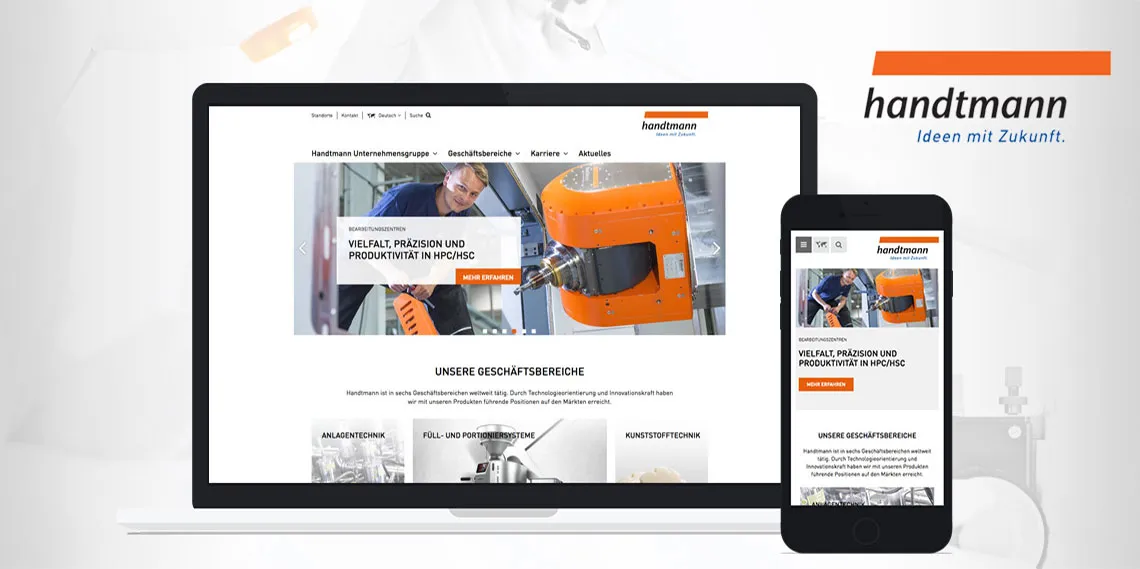
Benefit no. 1: Multi-site management
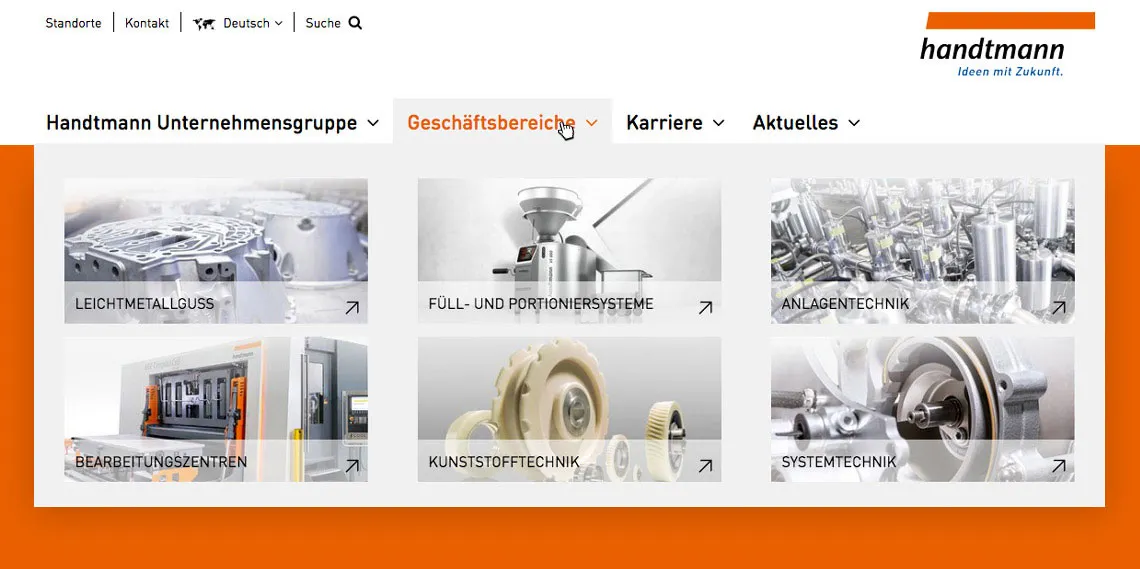
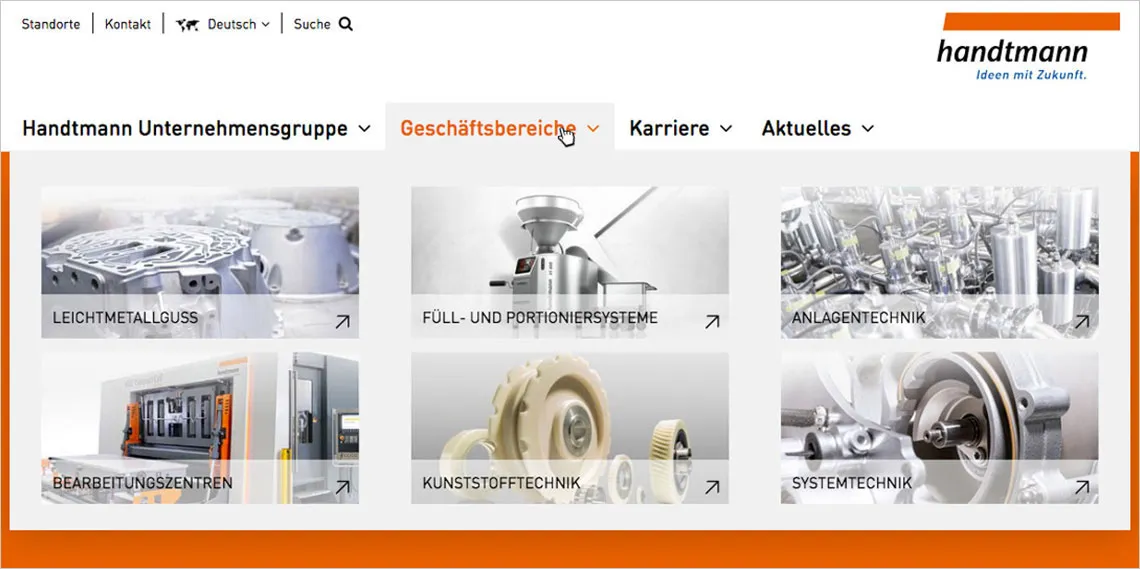
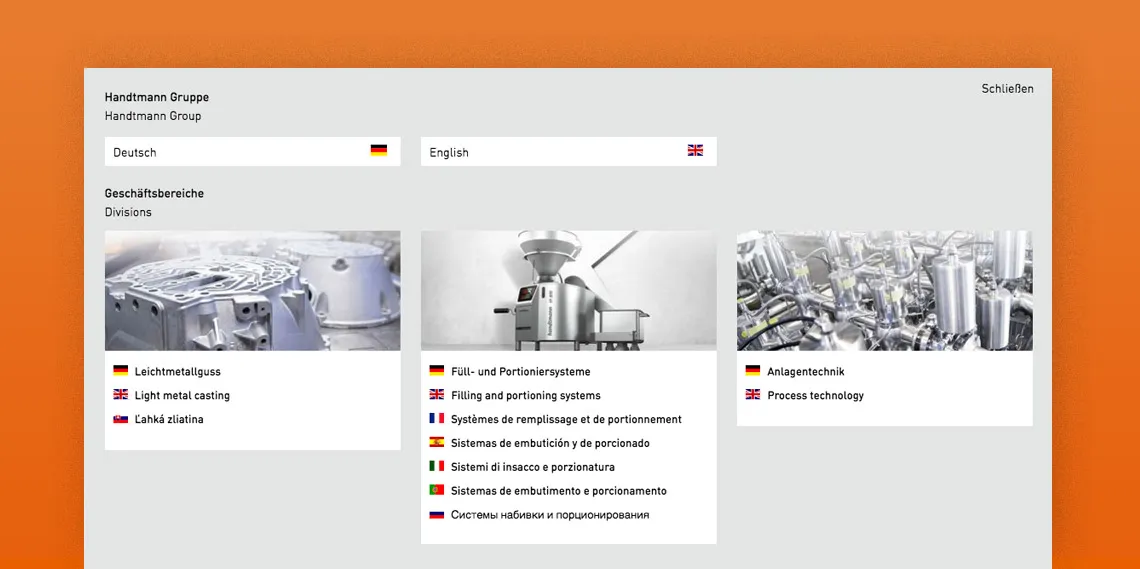
With powerful TYPO3, we were able to integrate all six business units – each with its own requirements – into a single system with one page tree. The websites for each unit deliberately feel independent to the user. On the system side, however, all pages can be centrally managed by one editorial team in a single page tree.
Many things only need to be integrated into the system architecture once and are then automatically available to all business units. This applies, for example, to navigation, the search function and dynamic elements such as location maps as well as news and event lists. The clarity of the backend and the excellent usability bring numerous benefits for the company and the work of its editors:
International translation management
TYPO3 offers various concepts for multilingual websites. In the case of Handtmann, the German texts are translated 1:1 into the required "language variants". That's why we opted for the so-called "one tree" concept. Content for all languages sits in a single page tree.
System updates (such as new content modules or extensions) automatically benefit all business units.
Business units are treated as separate pages. All content stored in the system is available to everyone and doesn't need to be entered multiple times.
Editors can adopt and link to content from other business units. At the same time, they retain full editorial control over their respective business unit.
User rights can be configured so that editors receive read rights for all pages, but write rights only for their own business unit.
Benefit no. 2: International translation management
TYPO3 offers various concepts for multilingual websites. In the case of Handtmann, the German texts are translated 1:1 into the required "language variants". That's why we opted for the so-called "one tree" concept. Content for all languages sits in a single page tree.
Unlike other well-known CMSs, with TYPO3 we can decide individually for each data field whether it should be translated or not: for example, in a "text+image" element, the heading, the text and the image caption are translated. General settings, such as the weighting of the heading and the layout of the element, are retained – unless explicitly desired otherwise in the translation.
Localization Manager extension (l10nmgr)
The Localization Manager extension (l10nmgr) offers the ability to export the content of a page. This allows the texts to be sent to a translation agency, for example, and later imported back into the system. For updating content, the export can be limited to changed content. There's also the option of marking changed content in the export. We've extended the function and can now correctly export and re-import nested content elements, such as teaser lists, as well.
News and events as content pages
We implemented news items and event announcements as page types. This gives editors the ability to design this content individually. News and event pages can thus be populated with any content elements from the CMS. The two overview pages for news and events are then automatically generated from the headings and metadata of the news and event pages. This approach allows for consistent user guidance in the backend and eases the burden on editors through efficient automation.
Benefit no. 3: Direct newsletter dispatch from the CMS
Using the direct_mail extension allows newsletters to be sent directly from the CMS. This means editors can create a newsletter in the familiar editorial interface while drawing on content from the existing content pool. This saves time and resources.
Conclusion: The TYPO3 benefits summarised
TYPO3 offers companies like Handtmann a wide range of solutions for the challenges of digital transformation. The open source CMS enables complex multi-site management via just a single page tree. It offers convenient translation workflows and direct newsletter dispatch.
Its modular structure makes it infinitely extensible and provides room for bespoke solutions. Furthermore, TYPO3 is open source freeware, so no licence costs are incurred. At the same time, the tool is supplied with all important security updates for four years through Long Term Support (LTS).
If you'd like to find out more about TYPO3 in general and in comparison with other systems, we recommend the following articles:
Your contact person
- Frank Weisser
Consultingsynaigy
Show phone numberShow email address