

B2B marketing: how to create successful content for complex products
8 min. reading time
On the web, B2B companies with products that require explanation face the same challenge as companies in the B2C sector: how do I write copy that convinces potential buyers of my offering within seconds? The answer: listen to your customers.
Do you know what a hobbing machine is? A polyvinyl alcohol solution? Or a horizontal machining centre? These different products from the B2B sector have – apart from their long names – one thing above all in common: they're difficult to explain.
Digital B2B marketing: a particular challenge
Marketing professionals and copywriters in B2B companies know this challenge. But on the web, it intensifies: the attention of online users is a scarce resource. Customers who can't immediately find what they're looking for on a website leave the site and continue their search elsewhere. For companies, that often means: with the competition.
At the same time, decision-makers and buyers in the B2B sector are increasingly informing themselves about products and services digitally. Companies that have long primarily sought direct contact at trade fairs or through field sales are therefore increasingly rethinking their approach.
However, marketing copy from brochures, product catalogues or offline campaigns can only be transferred to the web to a limited extent. Good web content follows different rules. But how do you find the right tone in B2B marketing?
B2B marketing doesn't have to be boring
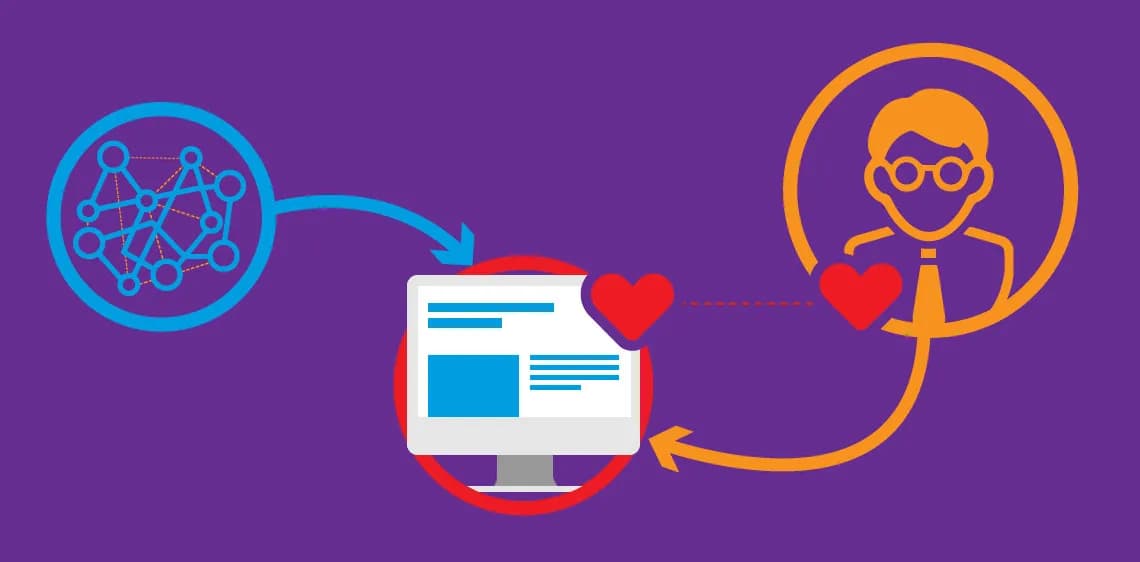
B2B communication struggles with a reputation for being notoriously boring – partly with good reason. Yet at its core, this dullness is based on a misunderstanding: namely, the notion that B2B communication must be as factual as possible, while B2C communication should be especially emotional.
There are certainly differences between target groups in B2B and B2C. But does copy have to be boring and dry just because it's aimed at other companies? After all, it's still people within companies who ultimately make purchasing decisions. These people have feelings, problems, dreams and desires just like consumers in the B2C sector – and they dislike being bored just as much.

5 steps to product copy that sells
So the distinction between B2B and B2C isn't the decisive criterion. Regardless of industry, the most important question when writing for the web is: Who is your specific target group?
Once this question is answered, the next step is to align the needs of the target audience with your own communication goals when creating copy. For product texts, this usually means: explain how your product solves a specific problem for your target audience. The best way to achieve this is to follow 5 steps when creating your copy.
1. PUT YOURSELF IN YOUR TARGET AUDIENCE'S SHOES
Before you start writing, some preparation is needed. Whether simple brainstorming or a detailed target audience analysis based on granular data: develop as precise an idea as possible of who your text is aimed at. This is because the content and tone of your text depend largely on whether you're speaking to a buyer, an engineer or a direct user of a product.
Especially at the start of a project, it helps to visualise the individual target groups as personas. Personas are archetypal users of your website. These are brought to life through as detailed a profile as possible. Your persona profiles should include not only demographic data such as occupation, age or gender, but also, where possible, statements about the wishes, goals and needs of the respective target group.
On the web, you face the challenge that a single text often needs to address multiple target groups with different information needs. Here it helps to prioritise: ask yourself who your most important target group is and focus on them. At the same time, you should keep other potential target groups in mind when creating content, so as not to exclude their needs.
2. Forget your product
Once you've identified your primary target audience, the first step is to mentally detach yourself from your own product and its technical features. The reason: customers primarily want to maximise their benefit. Usually, they have a problem and are looking for a solution. That's why, in the first step, they don't need endless technical details or product descriptions. Instead, customers want to hear how the product supports them in their everyday work.
So put yourself in your target audience's shoes and ask yourself the following questions:
What are their problems?
What are their wishes?
What keeps them up at night?
Only at the end of these considerations does your product come back into play. How does it solve a specific problem for your target audience? And: to what extent does it solve the problem better than your competitors' products?
If you can answer these two questions, you've worked out a strong unique selling point for your product.
On this basis, you can then describe your product and its many technical features in detail. Ideally, the detailed description backs up the promise you make at the start of your product page with plenty of data and facts.
3. Describe specific applications
Many products in the B2B sector require a great deal of explanation, even for specialists. Whether it's a financial service or a patented plastic: illustrate the product benefits using specific use cases. This quickly makes a complex product or service understandable for users on the web.
Here too, it's worth first taking a step back from the product and its many technical characteristics. Explain as simply as possible what a product is used for. From the manufacturer's perspective, this may sometimes seem banal and self-evident – but from the customer's perspective, it's anything but.
A vivid, situational description makes even the most complex product easier to understand. Such an introduction doesn't replace a detailed technical description – but it immediately makes the benefit of the product clear to potential customers and serves as a door-opener, because it attracts attention and sparks curiosity.
Take a look at the following two text examples, which describe the same product in different ways:
"Products from our company guarantee a high level of safety when parking lorries. The efficient ultrasonic and radar parking aids enable a quick and safe parking process."
Instead of general and factual, you can convey the same content in a specific and emotional way. It might sound something like this:
"A tight parking space in the middle of the city centre. The customer is waiting. We know: parking can be a test of patience for lorry drivers. That's why we do everything we can to support you. With our ultrasonic- and radar-based parking aids, you'll reach your destination quickly and safely."
With a specific, vivid description, you reach the customers who are meant to use your product directly and personally. Supported by direct address, product benefits become immediately understandable.
4. Write the way you speak
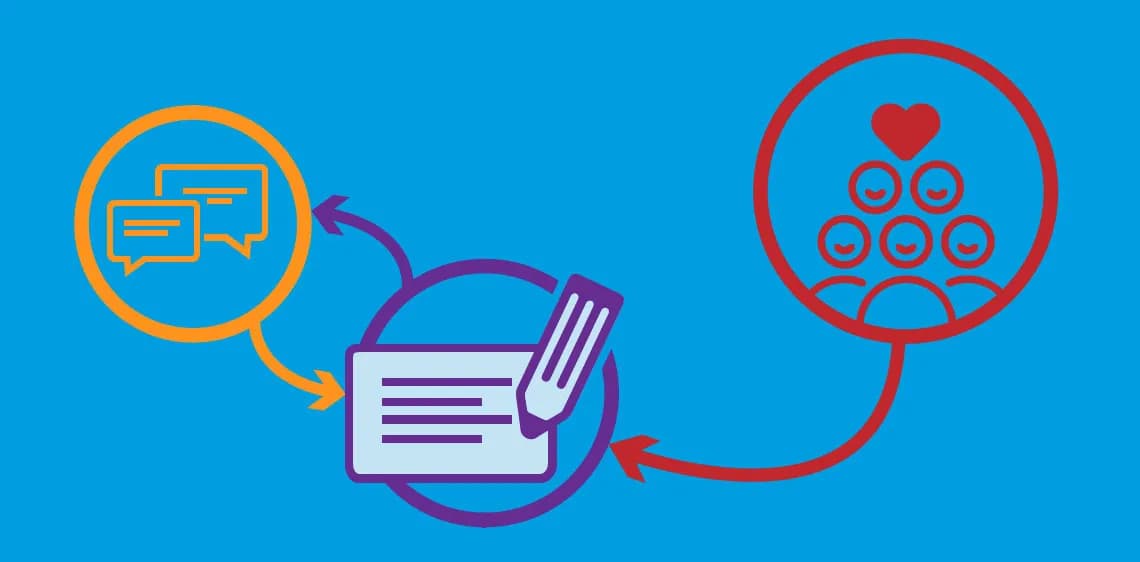
In conversation, we tell stories and describe experiences directly and vividly. When writing, however, we tend to hide behind big, abstract terms and complicated phrasing. The result: our written texts are hard to understand. This is a major drawback, especially on the web, where the goal is to convince customers within a few seconds.
When creating product texts, it therefore helps to picture a product page as a sales conversation. How would you explain the benefits of a complex product to a potential customer at a trade fair stand in three sentences?
Before writing, it helps to talk about the product with outsiders. By successfully explaining a complex product to a layperson, you sharpen your focus on its key, fundamental benefits. In conversation, we often find our way to the essentials more easily than when we're sitting in front of a blank sheet of paper, unable to see the wood for the trees.
Once your text is finished, read it aloud to check it. Does a sentence sound too long? Shorten it. Does a word feel clumsy or overly formal? Delete or replace it. As a general rule: if a text doesn't work when spoken, you should refine it.
5. Write as simply as possible
Some basic journalistic rules from print also apply to writing for the web. The most important: write as simply as possible. That sounds easier than it is, because presenting complex matters simply and concretely takes far more thought than producing complicated, sprawling sentences.
Yet it's precisely on the web that the simplest product copy proves most successful – so the effort is worthwhile. There are a few basic rules that help you write simply and clearly.
Concrete words are always better than abstract ones.
Short words are better than long ones.
Active verbs make copy feel more lively.
Avoid passive constructions.
Use only as many words as necessary.
Subheadings and bullet points give the text structure.
Go through your draft several times to reduce the complexity of your product description as much as possible. Your potential customers will thank you for it.
Conclusion: successful B2B marketing means knowing your customers
Writing good copy for complex products is hard. That's why truly compelling product descriptions in the B2B space are the exception rather than the rule. But this presents an opportunity for companies: especially in competitive markets, well-argued product pages can give you a competitive edge over the competition.
That's why it's worth investing some time and energy into preparation when creating copy. It's the only way to tailor a website's content precisely to the needs of potential customers. Because what matters for successful copy isn't the question of B2B versus B2C, but a clear focus on a well-defined target audience.
Your contact
- Marcus Völkel
Consultingsynaigy
Show phone numberShow email address