
System Integration & APIs
Connect systems, automate data, and make processes seamless. From integration architecture to API operations.

System Integration & APIs
Every new system promises order. And leaves behind a new interface.
One buys a system because it solves a problem, and inherits a new one: The number of connections grows faster than the number of systems. With three systems, there are three paths, with six already fifteen. That's why integration at a certain point feels like each new connection takes twice as long as the previous one.
The symptoms make this visible: The ERP provides different prices than the shop, orders are manually entered into the system, product data is maintained twice. These are not handling errors, but the cost for connections that were created sequentially instead of in a planned way.
That's why for us architecture comes before code: The plan for all connections is created before the first line is written. After that, we build the bridges between ERP, PIM, CMS, commerce platform, and marketplaces.


LET'S TALK!
Count your interfaces. Then we'll discuss which ones should remain.
In 30 minutes, we'll talk about your system landscape and look together at where it stumbles. With this input, we analyze your project and explore your options in a roadmap discussion.
Your benefits with system integration from synaigy
Integration is effective where people today transfer what systems could exchange.
Design integration architecture
Define data flows, API contracts, and interface governance scalable for new systems and channels.
Develop and connect APIs
REST, GraphQL, and event-based interfaces. Individual API development, standardized, documented, and testable.
Connect ERP and commerce
Connect SAP, Microsoft Dynamics, AS/400, or other ERP systems with Shopware, VTEX, commercetools, or Intershop. Automated real-time synchronization.
Implement Headless and API-first
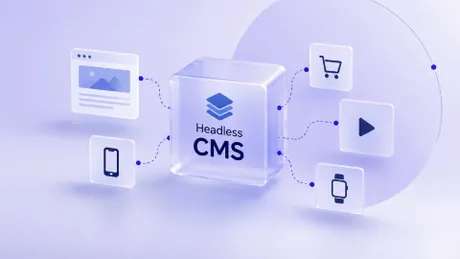
Decouple front end and back end. Connect commerce, CMS, and PIM via APIs. Realize MACH architectures with microservices and headless storefronts.
API operations and monitoring
Cloud hosting, API monitoring, and error handling. synaigy operates your integrations on AWS or OVHcloud with 24/7 monitoring and performance optimization.
References
Integration projects in practice
Three projects that demonstrate how clean integration accelerates processes and eliminates error sources.

The most expensive interface is the one no one remembers anymore. That's why we document API contracts before we build them.

Your path to an integrated system landscape
Four phases that ensure your systems communicate cleanly and data flows automatically.
System audit and integration architecture
We analyze your grown system landscape, prioritize critical data flows, and design the target architecture.
API design and technology selection
Based on the architecture, we decide per interface on protocol, data format, and mediation layer, standardized or individual, depending on requirements.
Development and integration
We develop the interfaces, implement middleware, and connect your systems. Iteratively, with automated tests, API documentation, and defined error handling.
API operations and optimization
Following the go-live, ongoing operations follow: error analysis, performance dashboards, and capacity planning for growing data volumes.
Why architecture comes before code
The integration backlog is not an isolated case but the normal state.
3
Technology worlds in which we build interfaces
Java with Spring, PHP with Symfony, and .NET. The choice depends on your system landscape.
1.061
Applications a company uses on average
Source: MuleSoft Connectivity Benchmark Report 2023 (market data).
29 %
of these applications are connected together
The rest runs isolated. Source: MuleSoft Connectivity Benchmark Report 2023 (market data).
KNOWLEDGE TO GO
Whitepaper
Solid knowledge for your architecture decisions, free for download.
The Composable Commerce platform developed by synaigy opens up completely new possibilities for us - from personalized customer offers to seamless integration of additional services. The project is not only a milestone for us but the next stage on the way to a data-driven, digital future!


We at Siena Living want to take the next step and sell directly into the space as an online pure player. Without our Shopware-based POS system, this would not have been possible in the retail trade. synaigy understood what we needed and delivered.


With the new Shopware app, we have built a bridge to Shopware, one of the leading eCommerce systems, with synaigy based on the Box Merchant API. Our partners can now offer their customers our flexible and sustainable Click & Collect service 'Box - The Pickup Station' as a shipping option in their Shopware stores with minimal effort. This advancement is an important step in better using train stations as central locations in the context of last-mile logistics.


We at Bosch Home Comfort have found a competent partner in synaigy who professionally supports us in the smooth migration to Google Analytics 4, complex tag configuration, and comprehensive tracking integration for various tools and web platforms.


Even in challenging project phases, synaigy has proven to be a reliable partner at eye level, providing us with excellent support through high commitment and pronounced professional competence.


Together with synaigy, we were able to implement a B2B info portal to provide ERP information via a web-based interface. Through a partnership and professional collaboration, we were able to master challenges at eye level. With the help of synaigy's Managed Commerce, we can now ensure sustainable, secure, and highly scalable operation.


The goal of the collaboration was for everything to come from one source for our customers: Our completely redesigned online portal achieves this! It links our product system with marketing and provides a pleasant and brand-loyal user experience for all website visitors.

Frequently asked questions about system integration
Ensuring that shop, merchandise management, and data sources are in sync: prices, inventories, and orders remain automatically synchronized across all channels. synaigy designs the architecture for this and develops the interfaces.
In addition to classic REST APIs, GraphQL, and event-driven architectures with webhooks and message queues like RabbitMQ or Kafka. Middleware and iPaaS, such as Alumio, MuleSoft, Actindo, or custom solutions, are used as intermediary layers.
An API is a defined interface for exchanging data between two systems. Middleware is an intermediary layer that connects multiple systems, transforms data, and orchestrates workflows. synaigy uses both.
Headless separates frontend and backend, API-first makes all functions available via interfaces. This enables flexible frontends for web, app, and point of sale.
Iterative and secured with automated tests. It's possible to start mid-process, for example, with an audit of individual interfaces instead of a complete overhaul.
Yes. We also integrate older ERP systems without modern interfaces through individual adapters or middleware, ensuring smooth data flows.
synaigy combines system integration with commerce platforms, PIM, cloud operation, data analytics, and UX design. We don't just build interfaces, but are responsible for the architecture from strategy to managed operations.
Both are possible: handing over to your team with complete API documentation, tests, and runbooks, or remaining in managed operation with synaigy.
Please accept the corresponding cookies to view this embedded content.