



insights! #79: How AI personalises your online shop with data analysis
 Joubin RahimiManaging Partner · synaigy
3 min. reading time
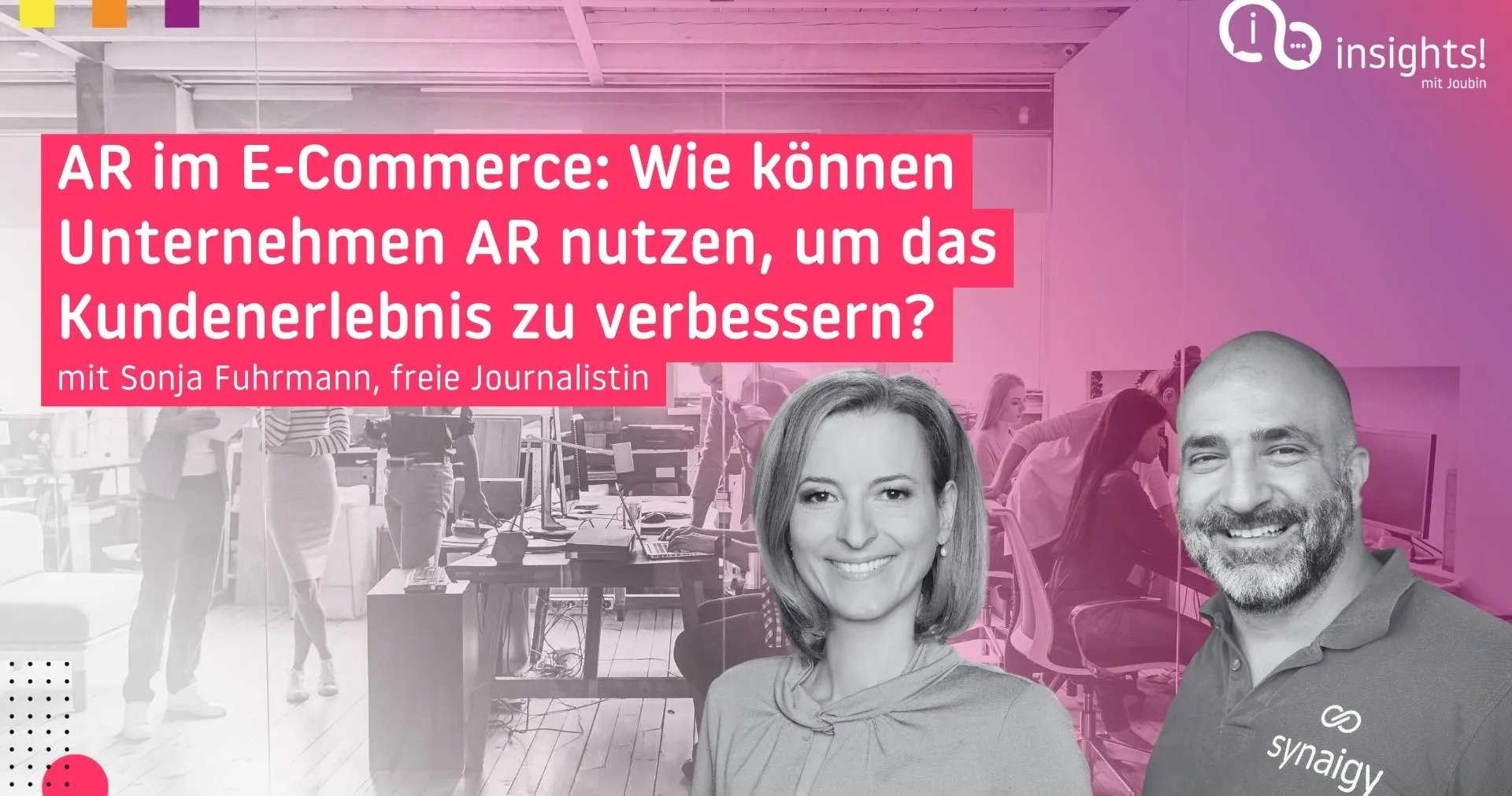
We're all in IT, and I really think that, especially when you're working with machines, you forget that people should actually come first.
Artificial intelligence and data analysis are transforming the way we shop online. Gone are the days when online shops were static and impersonal. Today, it's all about addressing each customer individually and offering them a tailor-made shopping experience. But how does this work? With intelligent algorithms that recognise users' needs in real time and respond to them.
Revolution through AI and data analysis
ODOSCOPE uses AI to personalise online shops in real time. Unlike traditional approaches that rely on manual rules, the AI learns independently from existing data, delivering a dynamic and individual user experience. This scalable personalisation means users are no longer confronted with predefined rules; instead, the AI uses the data to anticipate which products are most relevant to them. This happens without manual intervention, ensuring every user gets a shopping experience tailored to them.
Closely linked to artificial intelligence is data analysis. According to Hünermann, "analysis must be at the centre of the shop system". Only this way can it be ensured that every element users come into contact with is delivered in a data-driven way. This not only increases the conversion rate but also perfects the customer experience. Convenience plays a central role here. Shops that act on data and anticipate their users' needs create a convenient and engaging shopping experience, which can lead to greater customer loyalty and increased customer lifetime value.
From personalisation to situationalisation
ODOSCOPE extends the concept of personalisation with so-called situationalisation. This considers not just the person, but also the specific situation they're in. Data such as the device used or the access channel (e.g. Instagram or Google) influence which products are shown to the user. This enables an even more precise adaptation of the offering to users' individual needs and situations. For example, users accessing the shop with an iPhone might have different preferences than users with a Windows machine. The AI uses this information to optimise the shopping experience.
Getting product list sorting right
One of the central challenges in e-commerce is sorting product lists. At a time when users are browsing on small screens, it's crucial that the most relevant products are visible immediately. This is where ODOSCOPE's strength shows: by using AI and data analysis, products can be sorted so that every user sees the products most relevant to them straight away. This increases the likelihood that users stay on the shop and ultimately make a purchase. Correct sorting of product lists has an enormous impact. These lists are often sorted only by best-sellers or even alphabetically, which makes little sense and doesn't inspire users. Correct sorting, on the other hand, can significantly increase dwell time and purchase likelihood.
The most important thing: using tracking data
Companies that have their data under control can use this information to calculate product relevance. It's not just about what's bought, but also about user behaviour in the shop – which products they view, add to the basket or remove again. All this information should feed into the analysis and help further improve the shopping experience. What matters is using this data from the very start.
Central role of data analysis
To grow a successful e-commerce shop, analysis must be at the centre. Every element users come into contact with should be delivered in a data-driven way. This enables dynamic adaptation to users' needs and ensures a better customer experience. A higher conversion rate and increased customer lifetime value are the logical consequences.
Want to listen to the full episode?
Here you'll find the podcast of the interview:
Please accept the corresponding cookies to view this embedded content.
Would you rather watch the episode? No problem!
Here you'll find a recording of the interview:
Please accept functional cookies to watch this video.
Prefer to read?
Sonja Fuhrmann:
How does augmented reality influence the online purchasing process? Joubin, is the hype around augmented reality in e-commerce justified?
Joubin Rahimi:
Absolutely. And from my perspective, it's really only just getting started. Perhaps to clarify the terms: AR, VR. In our conversations with prospects and customers, these are often mixed up.
Sonja Fuhrmann:
What's the difference?
Joubin Rahimi:
And yes, augmented is, so to speak, the physical world as I see it, and I overlay something on it. I overlay something digital, and VR is above all an entire virtual reality. People often mean AR when they say that, but it's actually virtual reality. Today we're talking about AR. So I have the real image plus a digital one that I overlay on it, and that's going to find its way into certain industries much, much more.
Sonja Fuhrmann:
How can AI create added value for the customer in the shopping experience?
Joubin Rahimi:
Basically, whenever I have a product, or whenever I imagine something and then have to picture it in a room or in the digital world. So whenever you're wondering, what will this all look like? That can be clothing, that's one topic, but it's very often found particularly in B2C, when it comes to furniture, pictures and decorative elements. So what would a moss picture look like here? What would a particular type of moss picture look like here? Or should we use neon lettering instead? These are the kinds of thoughts we're having right now. And that's where AR helps you immediately, when you say, I have the moss picture at this size, so how big does it need to be? And we don't calculate that. We're not the experts there, but we have a feel for what's good. And that's where we're just starting out. Amazon already does this for some products. If you go to it with your smartphone via the app, or IKEA too, then for certain items they have, so that you can furnish your space quite well.
Sonja Fuhrmann:
That was the customer perspective, absolutely understandable. How can companies benefit from using AR in the longer term?
Joubin Rahimi:
First of all, it's a cost factor.
Sonja Fuhrmann:
I can imagine that.
Joubin Rahimi:
And I want to pull that tooth straight away for you, along the lines of: return on investment in six months, a year. Nope. And if you do it properly, it's a much longer case you need to calculate. Let me compare it to building a branch, if you don't rent it but build it and depreciate it, the case is simply longer too. And here it's also something I can't rent, I have to build almost everything myself. I need the data. So I need the raw material for the products' data so I can visualise it. That's the first case. And the second, I have to combine that, even if software for it already exists. Once I've combined it, the next question is: how can I interact with it again from there? But why should companies do it? I believe it's a help for customers in deciding on something. And where would you rather buy? Where you get exactly that help, or where you don't? And yes, we're in Germany, so people will say: "Well, then he'll get advice here from me and buy elsewhere." Maybe. But the good ones manage to get you to buy from them.
Sonja Fuhrmann:
Sounds like a big investment. Who does it pay off for?
Joubin Rahimi:
For those in a niche facing really tough competition, it'll pay off to genuinely be a first mover, and of course for those who can scale. That's why the examples are Ikea and Amazon. It's no coincidence that these are exactly the companies investing in that market.
Sonja Fuhrmann:
Back to the consumer perspective for a moment: aren't we losing ourselves in a world of digital deception?
Joubin Rahimi:
Fair point. It is, first of all, a visual deception we're dealing with there. But I believe it helps people and saves them time, because how often do you ask yourself beforehand: "Do I want to buy this or not?" And you didn't know, so you drove to a shop to get an impression, only to find out: "I still have no idea how this sofa will look at home." And you spent a lot of time on that. Yes, and that's another reason not to drive to a branch, but that's not really the point, the point is making the customer experience and the customer's buying process as great as possible.
Sonja Fuhrmann:
How important do you think it is for companies to follow this trend? And what does that mean for companies that are hesitant right now?
Joubin Rahimi:
I'll give a general answer to that. We're very cautious in Germany. If I'm a business owner or a decision-maker and only operate in the German market, with no strategy to grow beyond it, then I probably don't need it as much. But if I say I simply want to become market leader, I want to increase my market share, I really want to do what's opportune in this day and age, create customer experiences, then it's something you should look into.
Sonja Fuhrmann:
Good closing words. Thank you very much, Joubin.
Joubin Rahimi:
Thank you, Sonja. Thanks very much for your interest. And we're really keen to hear your opinion and input. Just drop it in the comments below, and that's a really strong call to action, because the discussion around it and your experience can simply enrich this piece.
Got questions or feedback?
Then feel free to contact us directly.
- Joubin Rahimi
Managing Partnersynaigy
Show phone numberShow mobile numberShow email address

Subscribe to the blog now and never miss any news
✔️free ✔️weekly news ✔️expert knowledge
Please accept the corresponding cookies to view this embedded content.