
Teamwork
7 min read
Trust and connection within the team are central principles of collaboration for us at interactive tools. For us they are the basis of good, productive teamwork that ensures all team members can contribute their skills in the best possible way. In this positive working environment we openly and transparently agree how much time and energy everyone involved can invest and which role they want to take on. Ultimately we also value these principles because they reduce a great deal of friction - and enable the best results for our clients and colleagues.
We therefore provide our teams with various tools and methods that promote trusting collaboration:
We rely on transparency and share information to involve all team members optimally
We use the agile methods Scrum and Kanban to build as complete a picture of the project as possible together
We put people at the centre and rely on a positive feedback culture
We work hybrid — from home or in the office, depending on what benefits the project and our team
We don't close our eyes to problems and use them to find new solutions
Shared information as part of a transparent team culture
Transparency is a key element in our Scrum environments. This transparency shows itself among other things in shared information, which we don't hold back in silos but communicate openly. This doesn't mean that all involved must be included in every meeting. In our teams there's rather a "transparency manager", who usually also takes on the role of Scrum Master. This person is responsible for sharing all relevant information and resources and ensuring that everyone involved is at the level they need. This includes access to the product backlog, stakeholder expectations and all other relevant information. All stakeholders should have a clear understanding of what the team is working on and why – so they also depend on transparency from the team.
Shared information also helps teams make better decisions. When everyone involved is included in the decision-making process, they can all contribute their own perspectives and insights. This allows the team to consider all options and make the best decision for the project.
Agile methods – adapted to every project
In recent years it's become clear to us that agile methods are best way to develop digital products. They let us react quickly to changes and offer our clients added value. At interactive tools we use range of agile methods, including Scrum and Kanban.
We use Scrum to manage our work. It helps us deliver software in short cycles, so we can get feedback from stakeholders and users early and often. Scrum also helps us track progress and identify areas needing improvement. Kanban is method that lets us visualise our work, so we always see what needs doing and when. It also helps us avoid overloading team members with too much work.
We believe that agile methods strengthen the quality of our work and the satisfaction of our clients. That's why we constantly try out new methods and adapt our process to find the most efficient way.
People are at the centre
Regardless of the method we work with, people are always at the forefront for us. Working on equal footing and mutual appreciation are particularly important to us here. For several years now, we've therefore established a positive feedback culture in which regular retrospectives, personal feedback and perspective conversations are a fixed part of our work.
For example in projects it's sometimes hard to break ice on human level and build a trusting relationship with each other. This is where our so-called "Icke-Zettel" comes in – a tool that helps us get to know our team colleagues better. Each person in team writes down, for example, what they need to work well or what they'd like to improve about themselves. Then everyone shares their notes with group. This simple exercise can help team members understand each other better and find common ground. It can also help identify areas where colleagues need more support from team. When we share our weak points and weaknesses with others, we give them chance to do same. This creates an open and safe environment where people feel they can be themselves.
We work hybrid
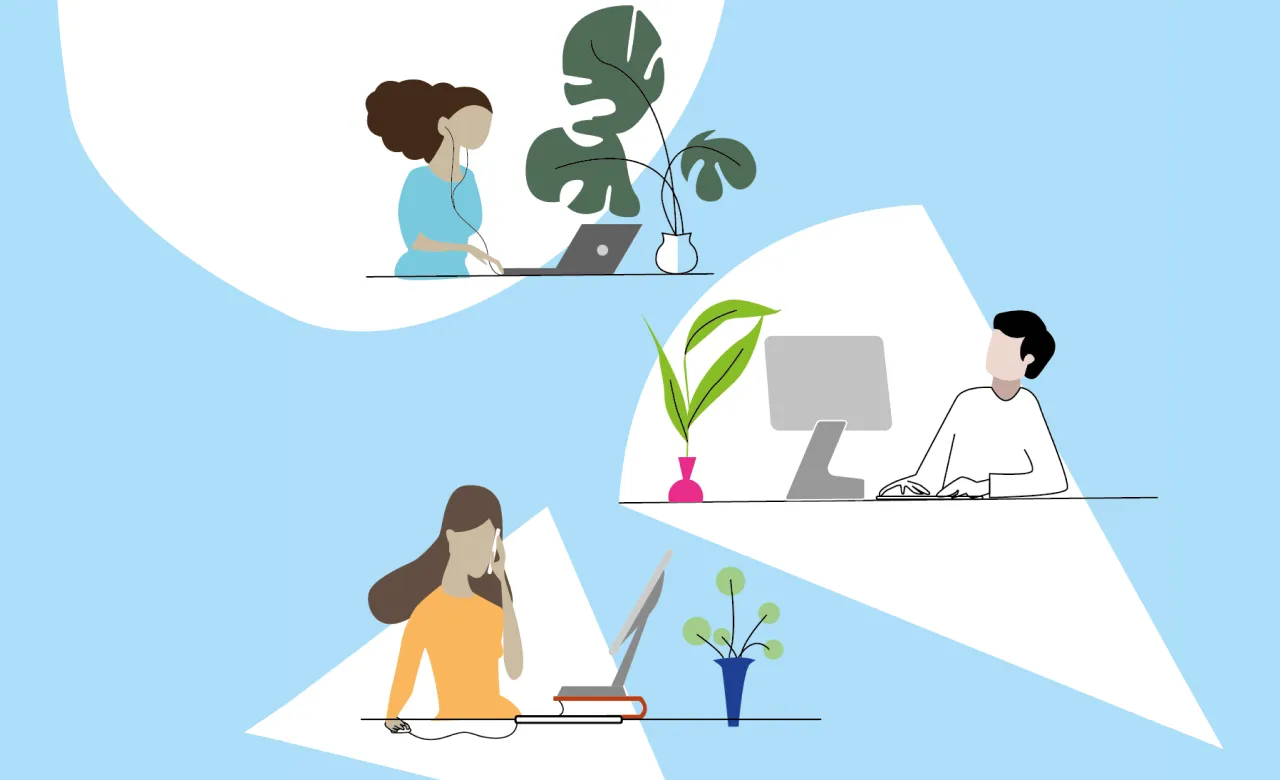
25 years ago we couldn't have imagined that the reality of work would look like this one day: some colleagues come into the office every day, some work almost exclusively from home, and others open their laptop here one day and there the next. On top of that, we have colleagues working part-time and others full-time – depending on their life situation. This creates differently structured hybrid teams on every project. What they share, however, is the conviction that precisely this flexibility benefits our clients.
Working in hybrid teams pays off, as our colleagues have the option of choosing the space and working situation they need for their current task. If they need to exchange ideas, they arrange to meet at the agency. But if focused, uninterrupted progress is needed, some prefer to work from home. To keep the whole team connected, we use a range of tools, including collaborative software such as Figma or Miro, video conferencing tools, chat and project management software.
25 years of interactive tools – showing stance, we take seriously
For over 25 years, we at interactive tools have been developing digital products, placing people at the centre of our decisions and actions. This attitude defines us not only in our projects, but in our daily interactions and in our role in society.
We take responsibility

Moving forward through contrasts and solutions
In every project different viewpoints or approaches can arise. Sometimes this relates to different roles or characters involved – there are driving, supporting, observing or also critical personalities who can clash. To work effectively as team, it's important to us that all project participants understand their role and that of others.
When differing positions arise, we place particular value on treating one another with respect – and on the shared understanding that all roles contribute equally to a project's successful progress. Ideally, two diverging viewpoints allow us to develop a third that is even better. It is therefore important to identify and use contrasts to make the project a success.
Ultimately, we believe new challenges, perspectives and methods are always necessary to improve quality of our work. In coming 25 years too, we want to drive our projects forward in interest of our clients – working together with trust, transparency and necessary efficiency.
Your contact person
- Anne Geissler
People & Organisationsynaigy
Show phone numberShow email address