

Conversion optimisation and CTAs
7 min read

A goal that should be part of every digital marketing strategy? Quite clearly: conversion optimisation! After all, the costs invested in marketing and the sales funnel need to pay off as effectively as possible. Effort put into brand presence along with functional digital services is wasted if users leave offers unused and abandon their customer journey. The devil is in the detail. From lead generation to purchase or contract signing, it's often only small things that cause the transition to the next phase to fail. What could be more frustrating than great initiatives failing because of something like that?
A recent study on the future of B2B sales makes a forecast that fits exactly into this pattern: the share of digital sales interactions is expected to reach a full 85% in 2025. (Study: B2B Buying Journey, Gartner, 2020) The customers of the future will be won and retained through digital channels. The small things mentioned above can then quickly become real differences in ROI, revenue and profit! We therefore want to show which simple measures contribute to a great digital customer experience while also delivering conversion rate optimisation (CRO).
To that end, we've put together two steps and 10 tips that every marketing team can tackle.
First step: combining conversion rate optimisation with lead nurturing
When working with many companies in the B2B and finance sectors, we use methods such as customer journey mapping and personas to understand target groups and sales channels, and use this knowledge to design an optimised digital customer experience. Despite very individual findings, we see that certain best practices prevail. These are things every company must get right, because they play a role in every customer journey and make life easier for all users. So what's the goal? Quite simple: regardless of whether users arrive at a page organically, via Google Ads or the latest social media post – and wherever they enter the customer journey – the page they land on should offer them value, meet their expectations and guide them into the next phase of the customer journey. When exactly this transition succeeds, it's called a conversion.
Defining conversion and conversion rate
Unfortunately, things get a little more complicated now, because anyone wanting to quantify conversion in a key performance indicator (KPI) such as the conversion rate first has to define what should count as a conversion. Some examples: on a page with a survey, the conversion is the entry of data such as gender etc. and the answering of the relevant questions. On a blog article or a page with help content, it is usually the newsletter subscription. In an online shop, it will be adding products to the shopping basket and completing the purchase via the relevant forms. Search engine optimisation (SEO) provides a tool for categorising all possible pages and creating clarity about the purpose they serve. This tool is the user intent.
A page should always address a clear user intent. The user intents that are particularly interesting for conversions are do intent and know intent.
E-commerce example: conversion rate and buy intent
On a product page with a purchase option, the user intent is a do intent, more specifically a buy intent. The users to whom this page makes an offer want to buy something. The intended conversion of the page is therefore the purchase. A high conversion rate indicates higher revenue, a low conversion rate lower revenue. In figures, that looks like this:
10,000 users visit the page monthly
200 buyers monthly
200/10,000 gives a conversion rate of 2%
Average purchase value: €50
a conversion rate of 2% yields the following revenue: 10,000 x €50 x 0.02 = €10,000
If conversion optimisation measures are implemented and the conversion rate rises to 2.5%, monthly revenue increases to €12,500. If the conversion rate rises by a quarter, the number of buyers and revenue follow this rise linearly, independent of monthly users. The conversion rate is therefore an important lever for generating more revenue and increasing profitability. However, calculating the conversion rate as precisely as possible requires a more complex basis than simply the number of buyers. For example, it's important to be able to assign conversions to touchpoints, to see, say, what works well on desktop versus mobile. Likewise, it should be established whether users who arrive via paid advertising become buyers more or less often. These assignments are known as attribution. Cookies are indispensable for attribution itself, and analytics tools are needed to evaluate the data. Fortunately, solutions such as Google AdWords and Google Analytics come with tracking and analysis built in.
Conversion optimisation and lead nurturing
If conversion rate optimisation is the goal, then lead nurturing is the path to it. Lead nurturing is the targeted influencing of users' transition from one phase of the customer journey to the next. Good lead nurturing can never start too early! It begins exactly when and where a lead is generated. It also doesn't end with the purchase, but flows seamlessly into after-sales and customer relationship management (CRM). This holistic approach makes use of all the synergies created between the numerous channels, analysis tools and opportunities for optimising the user experience.
In the second step of our CRO guide, you'll therefore learn about 10 measures that contribute to a user experience that works for you in terms of lead nurturing and conversion rate optimisation!
Second step: applying tips for digital lead nurturing
There are three areas you should tackle first: SEO, forms and CTAs. SEO comes into play because good user experience affects not only the conversion rate but also search engine ranking. SEO expertise is also needed when it comes to topics such as attribution and traffic evaluation. Forms are a critical point because they bundle the interaction between users and companies, and requesting data always requires security and trust. Forms are also time-consuming and carry huge potential for frustration, especially for users with little patience or under time pressure. CTAs, in turn, often function as a direct invitation to move the customer journey into the next phase. Anyone who gets this wrong, for example by communicating unclearly or too demandingly, quickly loses users' goodwill.
SEO, because visibility is a lead factor
1. Optimise for search engines from the start
93% of all online experiences begin with a search in a search engine. (Boston Consulting Group, 2017) as the criteria in search engine algorithms have evolved, SEO has developed as a discipline. Today, SEO is a major help in putting users at the centre. With user intent, Google has categorised almost every possible interaction with users. So anyone who plans, designs and writes copy with user intent in focus not only stands a better chance of ranking well, but is also more likely to meet users' expectations and take work off their hands.
2. Making SEO and UX go hand in hand
SEO and UX should go hand in hand today, in the spirit of user-friendliness. Whether it's page load speed, user intent or accessibility, search engine metrics are becoming broader and, at the same time, more human. Search engines see themselves as gatekeepers whose job is to make attractive offerings easier to find. Designing those offerings therefore means putting usability and user experience consistently front and centre.
Optimising forms, reaping satisfaction
3. Placing forms in right spot
Here too, user intent plays main role. Consider customer journey and ask where form fits in. Does it make sense, at given point, to expect users to interact? Does interaction seem justified? If not, users will lack motivation to start entering data.
4. Only ask for data that's actually needed
Lean forms are good forms, because they give users the feeling of a fair exchange, where they're not asked to reveal more information than necessary. If, for example, an email address is requested to enable a follow-up, no further form fields should be added. Once the relationship with the user has grown further, there's an opportunity at a later point to ask for additional data.
But if more than 2–3 fields are needed after all, we arrive at...
5. Keep user intent front and centre
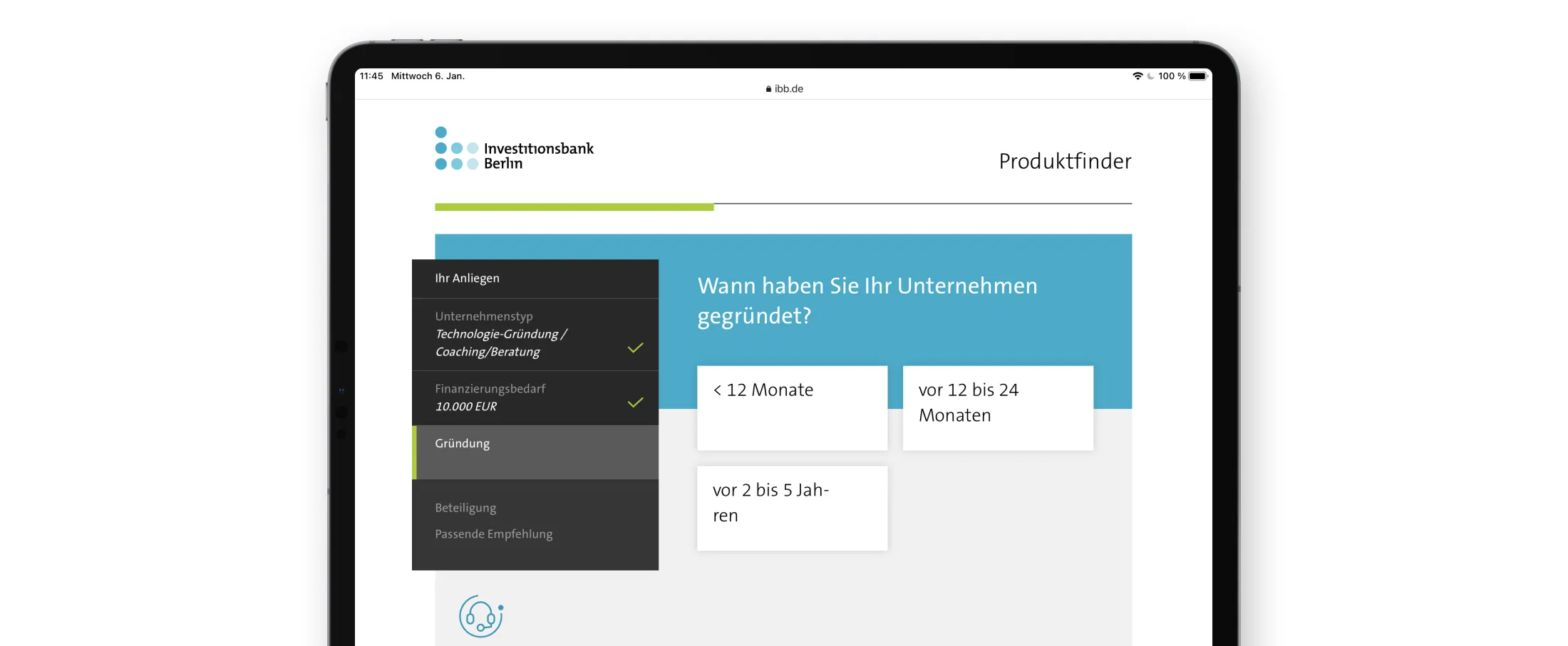
When user intent stays consistently front and centre, no problem asking for larger amounts of needed data — users' own concerns justify it. Actively building user intent into design can also mean splitting longer form journeys apart and showing progress visually. That way users know where they stand on path to their goal (we did this, e.g., for IBB Investitionsbank Berlin's product finder). Structuring into bite-sized chunks and making progress visible in the form journey mean fewer users run out of steam, so they carry process through to end.
6. Bringing forms into the content
Well-scoped forms, clearly justified by user intent, don't need to hide away, let alone be banished to dedicated form pages. Since the value of a form is often directly tied to the content it's communicating – landing pages, for instance – forms can be embedded directly "on site". What matters is suitable placement and a space-saving implementation, for example via a slider.
7. Use ghost text
Input fields pre-filled with grey text (ghost text) are especially user-friendly. Users immediately know what to enter and, for phone numbers or calendar dates, which format is required. This lowers the error rate and prevents frustration.
Listen first, then let your CTAs speak
8. Building trust through transparency
Germans are said to have a certain paranoia around their data. But why voluntarily forgo security and transparent handling of your own data? When user intent is paired with clear reference to data protection as part of communication and interaction in lead nurturing, that's a big win and builds even more trust. Placed right, notes on privacy policy or other security-relevant information can send a positive signal that shows up in a rising conversion rate.
9. Tie buttons to user intent and benefit
CTAs are rather "loud" elements, as they directly prompt users to interact. What's more, they often mark the transition from one stage of lead nurturing to the next; in other words, they're especially conversion-relevant. As with forms earlier, CTAs should therefore clearly reflect user intent and address users naturally, as a human counterpart. Instead of a stiff "submit contact request", users will respond more positively to "start free consultation". They feel their concern and reason for attention is being addressed and confirmed.
10. A/B test and optimise variants
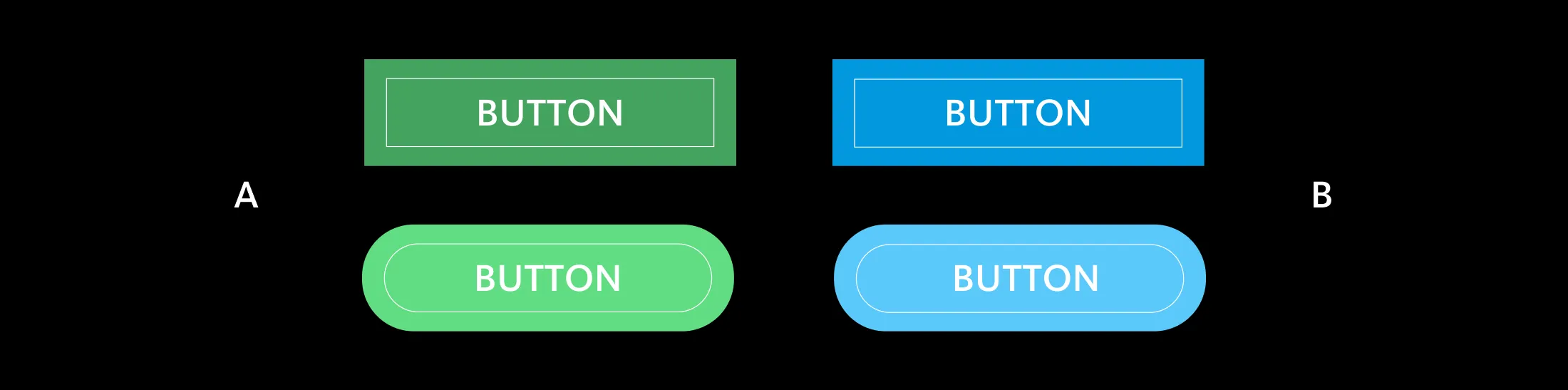
What's A/B-tested holds up better! In conversion optimisation, small details often turn out to be absolutely decisive. Colour, shape, wording and placement can be crucial – individually and in combination – for how appealing a call to action is. Fortunately, they're very easy to test: in A/B tests, different variants can be shown to real users. This makes it possible to identify the best combination.
How can we help you?
Has our 10-point plan left you with more questions than answers? Would you like to talk to our experts about conversion rate optimisation and lead nurturing, or do you have feedback on the article? Feel free to contact us by phone or e-mail! We look forward to hearing from you!
Start your conversion optimisation with us
Your contact person
- Marian Gertheim
Consultingsynaigy
Show phone numberShow email address