

These are the trends in the B2B sector
4 min read
What are the key topics and challenges in the B2B sector? Which trends are mid-sized companies relying on for online marketing? We brought the answers to these questions back from Munich. That's where the Online B2B Conference took place. interactive tools' Managing Director Klaus Cloppenburg and other digital experts discussed the most important online marketing strategies in the B2B sector. We've summarised the highlights here.

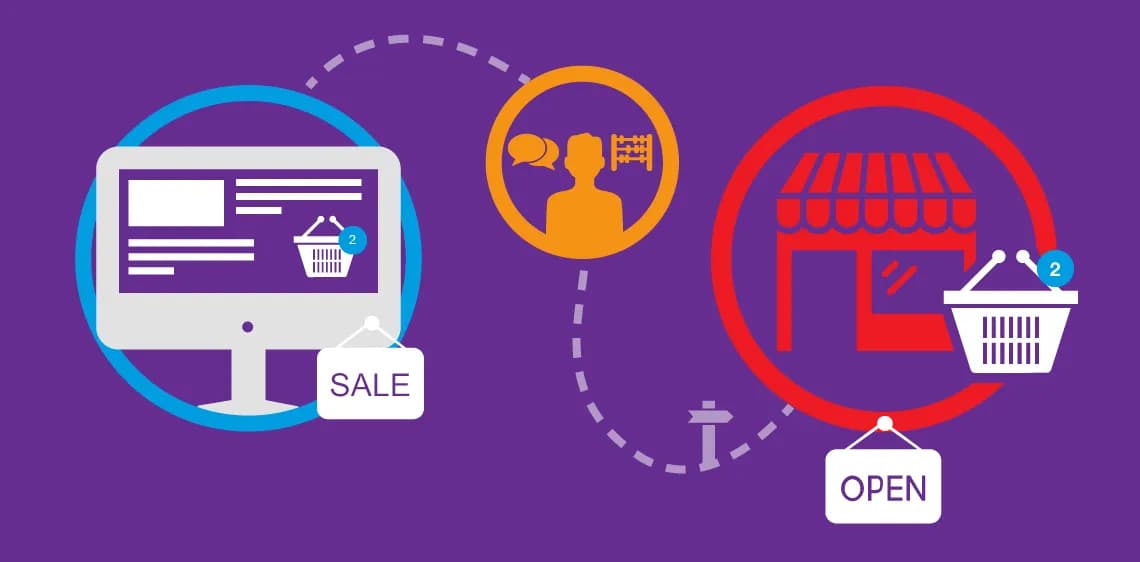
1. E-commerce vs. bricks-and-mortar retail
Bricks-and-mortar retail stands for qualified service, personal advice, and can score points with extra services such as equipment maintenance. How can this service be combined with e-commerce? In her presentation, Sabine MacDonald of Stihl GmbH & Co KG shared her experiences and the challenges that arose in this process.
High-quality products and loyalty to specialist retailers are the company's success factors. However, the increasing shift to the online market is forcing the international chainsaw and power tool manufacturer to act. The goal was therefore to find a strategy to establish the brand in e-commerce while involving local retailers and keeping the customer in focus at the same time.
Standardised platform for retailers worldwide
The solution consisted of several elements: specialist retailers were provided with internet contracts, and at the same time Stihl GmbH & Co KG developed a central internet platform where retailers can get started in e-commerce with their own online presences.
This approach enables retailers to build their own online shop, which can be personalised within the corporate design framework. Specialist retailers are supported in creating their websites/online shops, taking legal and local conditions into account. Starting in Germany as the pilot country, the rollout followed across the whole of Europe in 2015.
2. The "ROPOs" are growing
Franz Lehmann of Interstuhl GmbH addressed a similar topic in his presentation: "Digital challenges for manufacturers & retailers". He explored the question of whether specialist retailers are losing out to e-commerce. The answer was a clear no.
While the number of people who research and buy exclusively online is growing, the group of people who research online and then buy offline is growing even faster - known as webrooming or ROPO (Research Online Purchase Offline).
Digitalising the buying experience
Lehmann explained that this is the group to focus on, and presented the digitalisation of the buying experience using various channels. This trend - the growth of the ROPO group - holds enormous potential for specialist retailers.
Interstuhl GmbH makes use of the merging of the analogue and digital worlds. Digital touch points - tablets and digital walls or QR codes - are therefore deployed in-store at the retailer. They provide additional product information, and the full range of products is visualised.
Combining digital channels
As part of this strategy, landing pages serve as carrier platforms, flanked by beacon and NFC data transmission technology, apps, features ranging from virtual and augmented reality to spatial visualisations.
Lehmann summarised the success of this strategy by explaining that this broad use of various channels creates brand enthusiasm, strengthens customer loyalty and digitalises the buying experience at the retailer.
3. Internationalisation & continuous relaunch
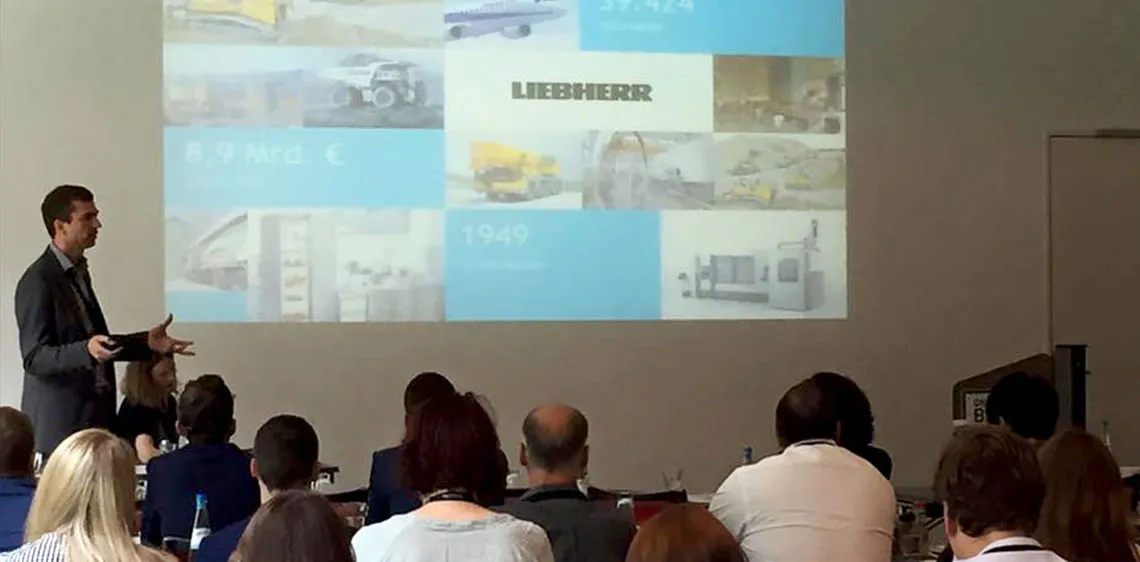
interactive tools Managing Director Klaus Cloppenburg reported in his presentation on how the internationally oriented B2B company Liebherr unites its eleven business divisions in a single brand portal.
The biggest challenges: the complexity of defining target groups across eleven individual divisions, positioning an international brand that is also a family business, and the country-specific, integrated management of relevant information.
Usability tests to identify user needs
To achieve this goal, the agency and the company first conducted a series of requirements workshops and, in an initial phase, developed a strategy with a target vision for the future web presence.
interactive tools also surveyed potential Liebherr customers and analysed their user behaviour in the agency's own usability lab. Ultimately, the aim was to reconcile business goals with user requirements.
Digital umbrella brand strategy
For this, interactive tools developed a digital umbrella brand strategy: liebherr.com becomes an international B2B portal that unites everything from products to careers to service, putting user needs front and centre.
In a continuous relaunch, the umbrella brand portal was developed with a central CMS and integrated division pages. The subnavigation brings together all product areas into nine web divisions. Thanks to a new, central PIM database, all products can be seamlessly integrated into the website. The connection to a central CRM database also enables targeted contact and long-term customer retention.
Global, user-focused umbrella brand portal
The result, as Klaus Cloppenburg summarised the project, is a user-centred web presence with interactive elements in responsive design. With the new umbrella brand portal liebherr.com, the corporate group presents itself as a global premium brand.
In our view, the effective combination of bricks-and-mortar retail and e-commerce, the opportunities arising from the growth of the ROPO group, and the trends towards internationalisation were the highlights of this year's Online B2B Conference. We'll be there again next year and look forward to exciting talks from interesting people with creative ideas.
Your contact
- Klaus Cloppenburg
Managementsynaigy
Show phone numberShow email address