

Digital trends 2016: what they mean for businesses
6 min. reading time
Digital transformation is advancing – and has long since reached established brands and businesses too. We explain what measures businesses should take in light of the digital challenges of 2016.
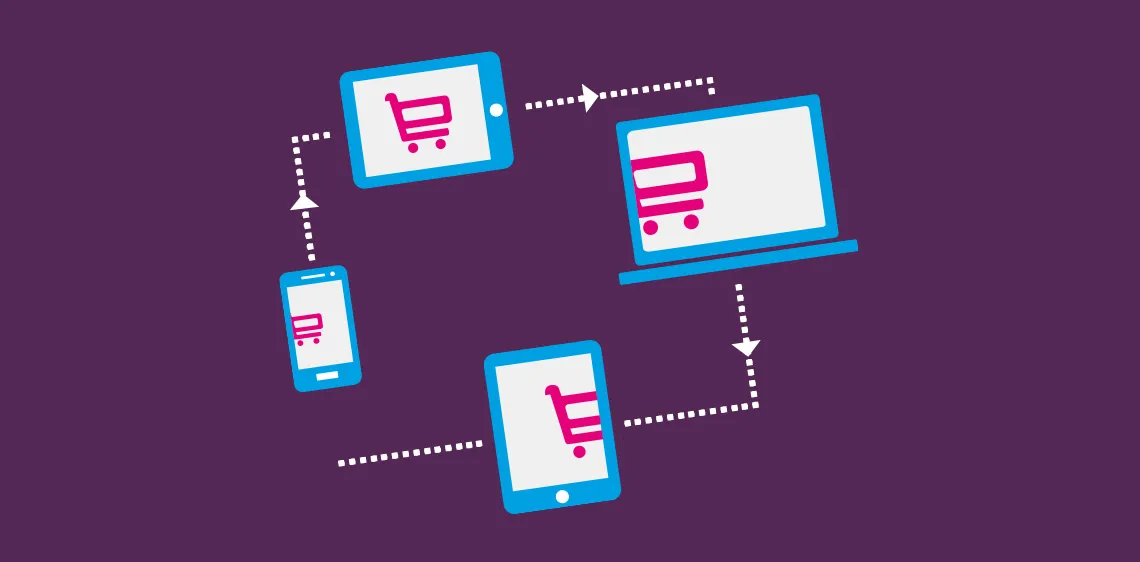
1. Device diversity continues to grow
Last year, people used more different digital devices than ever before. The rise of the smartphone can no longer be stopped. By 2020, more than 6 billion people worldwide will own a smartphone. And in 2015, Google announced that more searches now come from mobile devices than from desktop computers.
Google drew the consequences of this development with its Mobile Usability Update: websites that are not optimised for mobile devices barely appear in the top positions for searches carried out on mobile devices any more. Google explicitly recommends developing responsive web designs – i.e. websites whose design automatically adapts to the relevant output device.
Not only that: whether smart home solutions, connected cars and TVs, or smartwatches – the Internet of Things is becoming a reality in 2016, not just a vision of the future. Businesses therefore need to engage more closely with entirely new usage scenarios – so-called multi-device experiences. After all, customers naturally carry out tasks across multiple devices and expect a consistent brand experience while doing so.
For businesses, 2016 therefore means: the classic website accessed from a desktop computer has finally had its day as the sole basis of digital brand communication. Instead, businesses must adopt a user- and context-centred perspective: what problems, questions and wishes do our customers have – and how can we use digital media to solve them?
Consistently developing responsive websites is and remains the basic prerequisite for reaching the growing mobile target audience. On this basis, further digital presences for different devices can be conceived and realised.
Read in our case study on Stadtwerke Duisburg how interactive tools designs responsive websites in a contemporary style.
2. Corporate website becomes a central sales channel
In 2016, the corporate website is finally transforming, in the B2B sector too, from a mere digital business card into a central sales, information and marketing channel of strategic importance.
The potential for this is greater in 2016 than ever before: thanks to the mobile revolution, brands can communicate with more and more customers in potentially any location. Data insights allow businesses to use highly personalised marketing to provide potential customers with exactly the information they need – generating more qualified leads than ever before.
For businesses looking to make the most of this potential, two core tasks await in the new year in particular: one central topic remains the integration of products and product data into digital presences. After all, the availability of product ranges across all digital touchpoints forms the basis for a precisely tailored digital customer experience. The technical prerequisite for this is creating interfaces between PIM systems and content management platforms.
Internationalising digital offerings and content is the second major task that mid-sized businesses in particular must address. As the importance of global sales markets grows, so do the demands on digital communication. Integrating and maintaining different language versions, automatically displaying country-specific product ranges, and managing global, regional and local content all call for creative solutions in 2016.
Read in our case study on the CORPORATE WEBSITE RELAUNCH FOR LIEBHERR how interactive tools implemented the integration of product data and an internationalisation strategy.
3. Understanding users becomes a core discipline
In 2016, more than ever: brands that create genuine relevance and added value hold their own in the competition. Only businesses that understand the needs of target and user groups can achieve this.
User experience is becoming increasingly central to search engine marketing in particular in 2016. This is because the importance of pure keyword optimisation for search result placement continues to decline. Instead, alongside relevant content, a smooth user experience is developing into an ever more important ranking signal for Google.
What's more: an intuitive user experience is standard today. Customers expect more than just media that works well and simply. They are used to receiving content offers tailored to their current needs – at any location and on any device.

For brands, it is therefore even more important in 2016 to deliver precisely tailored information and offers to customers through personalised content. Proven user experience methods such as UX tests, in-depth interviews or eye tracking hold the key to understanding users and their needs.
Find out in our case study on Stiftung Warentest how interactive tools tests and optimises applications for comprehensibility and usability in its in-house UX lab.
4. Content comes of age
Given steadily growing volumes of content: brands that want to hold their own in the competition for digital target audiences will need to focus more strongly on authenticity, quality and relevance in 2016.
While purely keyword-driven SEO optimisation is finally fading into insignificance, in 2016 Google rewards websites that offer genuine content value more than ever. But precisely because there is more and more good content out there, users' expectations of web content are rising.
In 2015, many marketing managers stated that although they were engaged in content marketing, they were barely measuring their results. However, campaigns can only be optimised for lasting success if goals and KPIs for content are clearly defined.
To be successful, content in 2016 needs to become significantly more performance-oriented. Alongside a clear focus on quality and relevance, editorial teams will therefore need to strengthen their expertise in web analytics.
At the same time, creative formats, innovative stories and precisely targeted information are still needed to hold users' attention over the long term. Well-trained editorial teams combine journalistic skills with expertise in SEO and web analytics.
Read our case study on two Liebherr B2B product divisions to find out how interactive tools implements innovative content formats and multimedia reports.
5. Demands on content management systems increase
Content personalisation will also be a central topic in the field of content management systems in 2016. As user expectations rise, so do the demands not only on online editorial teams but also on backend technologies.
Whether technology-, location- or behaviour-based targeting: through real-time personalisation, businesses can use advanced CMS technologies to provide potential customers with ever more precisely tailored content. This enables a significant increase in conversion rates and ROI.
Two further central challenges in the field of CMS technologies: integrating interactive content and external applications into content management systems remains a perennial topic. Both users and editorial teams are used to operating web applications such as widgets, search applications or dynamic input fields seamlessly and conveniently – without confusing jumps to third-party systems disrupting the user experience.
Another task is consolidating data from diverse sources such as CRM, web analytics or product information systems into a single interface. After all, only when data comes together at a central point within the business can it also be used strategically for digital communication.
Read in our case study on Liebherr International Deutschland GmbH how interactive tools puts corporate websites on a solid technical footing with the enterprise CMS FirstSpirit.
If you want to know which trends are shaping B2B marketing in 2017, read our new article:
TRENDS 2017
Your contact
- Marcus Völkel
Consultingsynaigy
Show phone numberShow email address