
Digital trends 2021
8 min read
Most people can hardly wait for 2020 to finally end. But what comes after this year of disruption? Which technologies, topics and behaviours will we need in 2021 to emerge stronger from the crisis?
We asked our experts which trends will matter. Here are the six most exciting trends.
Remote testing – testing digital applications in their natural environment
Normally we test our digital solutions in our usability lab. This year, though, has brought changes to UX testing too: we're increasingly running hybrid or fully remote UX tests.
This means that not only we and the client side, but also our test participants, are at home or on the move. The tests are conducted entirely via digital channels, such as Skype, Teams or Zoom, as well as via observation software like Lookback. We use new tools to collaborate effectively. We summarise findings in a digital workshop – for example on a Miro board – and derive recommendations for action directly from them. Face-to-face exchange is of course missing. And the energy that arises during a test here at our agency is hard to digitalise.
But remote testing also has its advantages:
Test subjects can be recruited more easily and globally.
The results are even more realistic, as applications are tested with users' own devices in a natural environment.
Remote tests can potentially be carried out more quickly and efficiently.
For more information on remote testing, see our article:
Remote testing – how our UX lab works from home
Digital design pattern libraries – consistent brand experience across all channels
In large companies, many cogs interlock across different digital interfaces. Similar tasks are solved differently again and again: buttons, tables, stages, search, log-ins etc. Inconsistencies weaken the digital brand experience and harm the user experience. In addition, constant redevelopment costs money again and again.
It therefore makes sense to make digital functionalities, working patterns and their HTML code efficiently reusable – consumable for designers and developers alike. This is where the following trend stands out as the best solution: digital design systems, or pattern libraries.
In three steps to a design system:
Atomising design
breaking down the existing digital corporate design into its smallest units.Building organisms and processes
from these atoms, all larger units for every use case are then built.Make every atom and pattern available as code
In one tool, where elements can be viewed individually — and together. And used by other developers and designers.
With this trend, you also prepare yourself for future trends. New developments, too, can be made available to everyone directly, and since proven design patterns can be reused, you save time and money. Our outlook into an even more distant future: the "Living Brand Hub" – a digital place where all of this is brought together with brand, DAM, guides and more.
More on digital design pattern libraries
eBusiness to eBusiness – B2B is going radically digital too
More and more B2B companies rely on eBusiness solutions: customer portals, shops, etc. Corporate website no longer just pure information and marketing platform, it increasingly become transaction and sales platform. This shift also bring new responsibility. In past, corporate communications department often owned website. Now other areas need involving, such as sales, e-business, digital solutions, product marketing and trade fair department, to advance shared interests and digitalise customer relationships.
Against the backdrop of the pandemic, sales processes are being radically digitalised, requiring new solutions to offset the loss of trade fairs, events and customer contact. Sales and aftersales are gaining even more relevance and should be expanded digitally.
We're seeing commerce grow in importance. To keep pace with rising complexity, a multifunctional platform is needed that makes all the background services (CMS, PIM, shop, SAP, apps, CRM) centrally visible: the so-called digital experience platform.
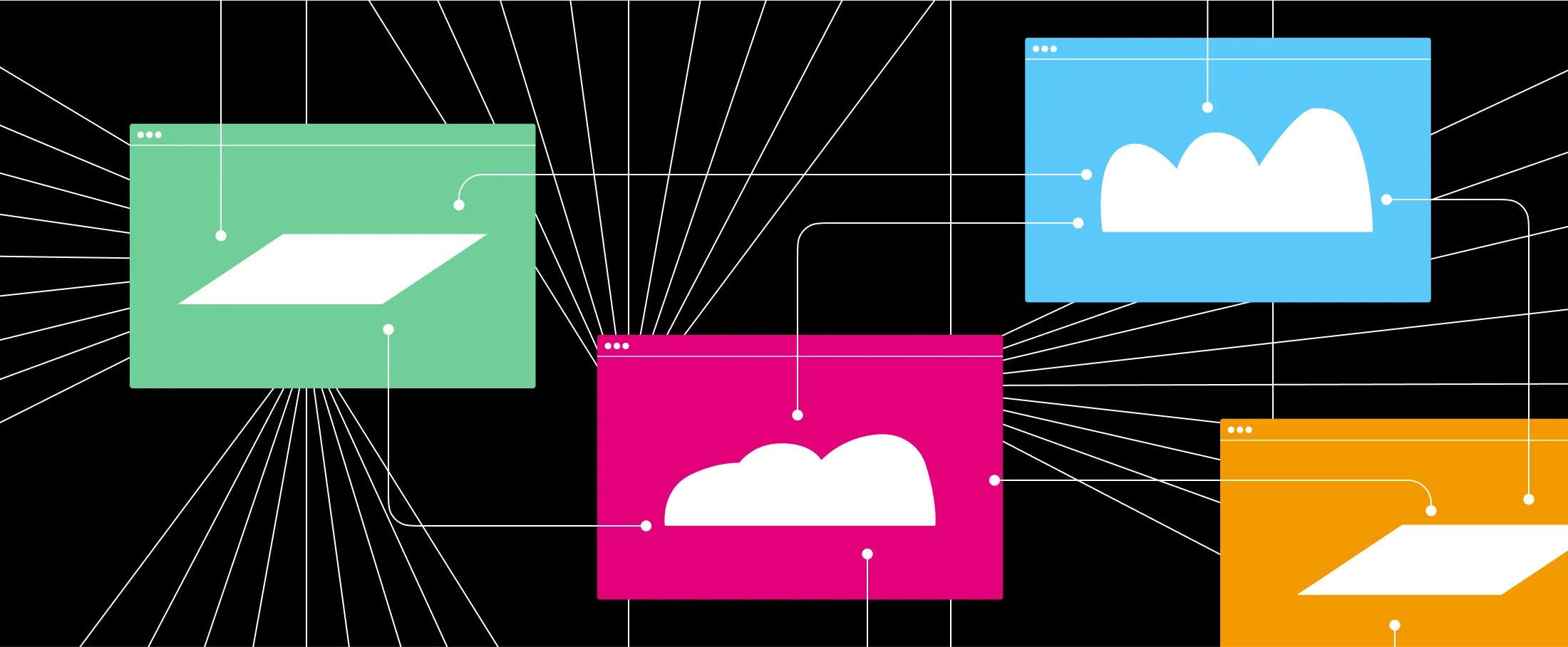
DXP – Digital Experience Platform
A major shift is underway — especially in B2B purchasing:
"The impulse comes from customers. They decide when and where sales gets involved, and in what form they want to interact with it." (study: The digital future of B2B sales, Roland Berger)
Half of purchasing decision-makers in Germany already belong to digital native generation. These customers increasingly use digital offerings today. To efficiently mesh these digital offerings and run them with limited editorial resources, early-adopter companies use a digital experience platform, DXP for short.
The three key components of a DXP are:
Headless CMS
Delivering content without dictating its presentation or layout (i.e. Without a head) is the prerequisite for real-time content marketing and a personalised customer experience.APIs
Interfaces that ensure smooth integration of existing tools and programs also enable secure, scalable connectivity for all new developments.Microservices
They enable a modular response to changing technical requirements, so the customer journey stays up to date.
The customer journey doesn't end with the purchase. It takes place continuously and across many touchpoints: desktop and mobile browser, app, voice assistance and other internet-enabled devices. A DXP ensures the experience remains consistent and on-brand across all these channels.
However, a digital experience platform isn't an all-in-one solution. There's no single DXP solution with seamless integration of all necessary tools for every company. A DXP is rather the interplay of adaptable technical infrastructure and strategic focus on digital transformation and innovation. All with the aim of staying as close as possible to users.
That's why it's now about quickly finding a strategy that fits your own company. And taking the first steps towards a digital platform. In our experience with clients, exchange in workshops with external experts can be an important trigger for this movement.
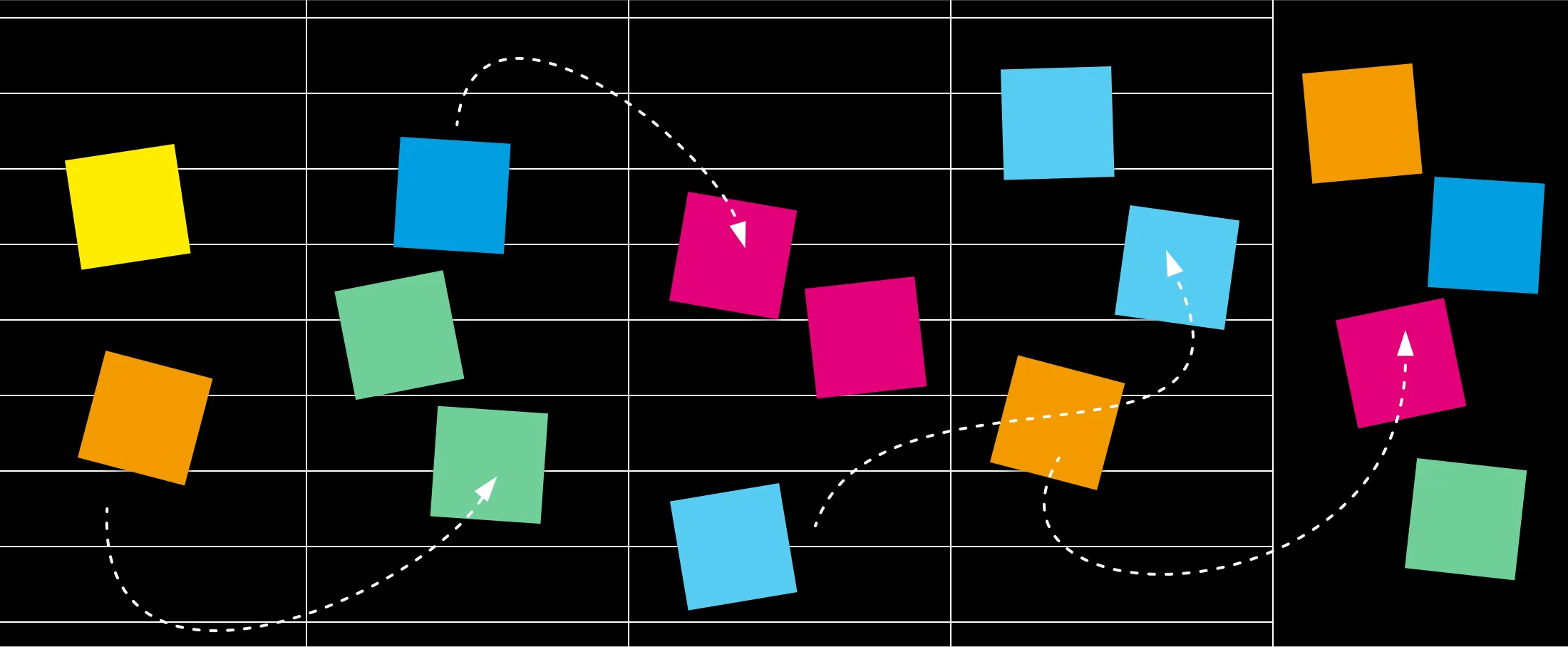
Overcoming silos – with a shared vision
What will our customers need in five years, and what will our business model look like then?
Does this question sound familiar?
Many tasks in the everyday development of digital offerings call for such guard rails and strategic goals. The question of the purpose of a new website, building a shop system, the future handling of trade fairs.
Most large companies have already tried a fair amount here or are currently in the process. And precisely because experimentation usually works better in encapsulated scenarios, one of the biggest challenges is a well-known problem: silos within a company.
e-commerce/e-business run separate from sales, sales not aligned with marketing, marketing suddenly generate digital leads that current sales structures cannot handle at all. And IT has its own separate goals again.
The way out of the tug-of-war is a shared vision: what do we actually want to achieve? Who needs to talk to whom to ensure a shared understanding of the objective? Which internal hurdles do we need to remove to achieve more exchange?
All companies that want to remain relevant, keep customers and retain employees in thirty years' time must answer these questions.
This often involves a change of perspective: leaving the inside view behind, thinking from the customer's perspective. Methods can help with this, as can external expertise. Our customers and we, for example, have good experiences with design sprints: there, within one week, we jointly develop new visions and pragmatically build bridges between different departments.
Hybrid working – how we work together after the pandemic
What this year has clearly shown us across almost every industry:
Presence time equals working time – that no longer works.
Our team members worked this year from home offices, from quarantine in hotel rooms, from childhood bedrooms at their parents' homes, on forest walks, but also quite "normally" from our office premises. So partly in the office, partly remote: hybrid working.
As an alternative to a live summer party, this year we held a digital future day and exchanged views on the joys and struggles, as well as the concerns and wishes, of the pandemic period.
How do we want to collaborate in future? What's good about working from home? Why do we value our office space? How are our customers coping with the changed conditions and methods?
The discussions gave us many great impulses, but they clearly showed:
It will never be like "before" again.
Many colleagues with families are pleased about the elimination of commutes and use the time gained to actively be a father, mother, sister or uncle. Others could only work well because, when the nursery was closed, they found a quiet retreat in the office. Some client meetings can only take place face to face. Other teams have become more efficient through the digitalisation of their appointments.
So we're preparing for a future where both need to work: coming into the office and working from home. Hybrid.
In future, the why will dictate how and where work happens. Do we routinely discuss the status of a project? Concept Shall we discuss stress levels over coffee? In the street café. Do we set goals for the coming year together with clients? In-person session. Depending on the purpose, there will be more and less suitable ways of collaborating.
Microsoft Teams and video conferencing are here to stay. At interactive tools, we've long worked remotely with colleagues and clients. In 2020, however, this was taken to a new level. We're already seeing that we can save money and CO2 through business travel. Consciously deciding whether direct contact is really necessary – we see this as a great opportunity for efficient, environmentally conscious collaboration.
The consequence for HR is a paradigm shift: theoretically, anyone can work from anywhere. When physical presence is only necessary and possible for special moments, employees can decide even more freely who they want to work for. Companies should prepare for this trend now.
Keen to learn more about interactive tools?
Join the team bring a project to life subscribe to newsletter
Your contact person
- Klaus Cloppenburg
Managementsynaigy
Show phone numberShow email address