



insights! #103: Team first, ego last – Christina Skoeries on genuine empowerment in e-commerce
Christina Skoeries is Head of E-Commerce at Camel Active – but really she's much more: an enabler, a culture-shifter, and someone who prefers to share responsibility rather than hoard it. What drives her? A mix of passion, gut feeling and a firm belief that every team can grow beyond itself – if you just let it. In the new episode she talks about: ✨ How to turn cheerleader spirit into genuine leadership ✨ Why trust within a team works stronger than any performance KPI ✨ And how female empowerment can truly succeed without clichés
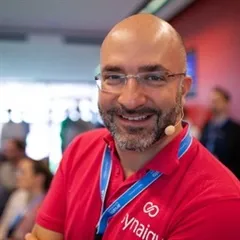
 Joubin RahimiManaging Partner · synaigy
5 min read

You need to enable your team so it can actually work without you – and still stay together.
What to do when Google traffic suddenly drops? For Christina Skoeries, Head of E-Commerce at Camel Active, no panic – instead analysis, attitude and teamwork. This conversation makes clear: this isn't about buzzwords, it's about genuine leadership. Christina talks about trust instead of micromanagement, responsibility instead of control, and female empowerment as lived encouragement – not as a quota. She shows how to strengthen a team, solve problems creatively and face challenges with passion. With a clear attitude, pragmatism and a healthy dose of can-do spirit, every crisis becomes progress. An exciting deep dive for anyone who takes e-commerce seriously – and understands leadership not as a title, but as an attitude.
When Google slows you down – and you keep going anyway
The situation was as follows: the webshop is running like clockwork – until suddenly traffic stalls. That's exactly what Camel Active experienced when changes at Google affected user behaviour. What makes many people panic, Christina Skoeries analysed with a cool head: instead of jumping prematurely into SEO panic, she first examined her own processes. Was it the discount campaigns that had ended? Was it down to the range? Only later did it become clear: Google had once again reshuffled the deck. And yet revenue on the marketplaces remained stable – why? Quite simply: platforms like Zalando or About You bring their own reach – often app-based, independent of Google's whims. For Christina, that's not a catastrophe, but a wake-up call. Her motto: talking achieves little, doing achieves more. So: test hypotheses, develop measures, learn. That's exactly how e-commerce works today.
Teamwork instead of superheroes – how to distribute real responsibility
Christina quite unassumingly calls her superpower "passion". But what sounds like a buzzword becomes lived company culture with her. For her, success doesn't begin with metrics, but with the team. And that doesn't mean control, but trust. For her, leadership doesn't mean knowing everything – but empowering the team so it would run even without her. Personal responsibility instead of micromanagement. Making yourself dispensable in order to enable great things. At the same time, she doesn't see genuine responsibility as a one-way street. Her goal: a team that is intrinsically motivated, that thinks along and wants to shape things – not just execute them. And that starts with clear framework conditions: briefings, guidelines, purpose. Only those who know where the journey is heading can set off themselves.
Celebrate mistakes, share responsibility – culture as gamechanger
What strike straight away with Christina: she talk not about hierarchies, but about attitude. Mistakes? Part of it. Successes? Belong to everyone. "We" count — e-com or marketplace, success or failure alike. This attitude create atmosphere where people act not from fear, but conviction. No fingerpointing, no silo thinking — shared growth instead. And that only work with open company culture. Christina experience her employer Bueltel as exactly this place. No turf wars, but collegiality. No standstill, but constant drive to innovate. Four values set the frame: passion, competence, courage, reliability. No empty phrases — everyday reality.
Whether success or mistake – with us it's always a team effort. That's what makes the difference.
(Female) empowerment without pigeonholing
Granted: the term Female Empowerment is easily said. But Christina means something deeper. It's not about quotas or special treatment for her, but about visibility and self-confidence. She often experiences women as reserved – despite excellent skills. Her answer: create spaces. Strengthen backbone. Simply let them get on with it. Because courage doesn't grow in the shadows, but in the light. Interestingly: she herself used to be anything but loud. Shy, quiet, observant. It was only as a cheerleader in a football club – including booking halls, organisation and media work – that things changed. She took on responsibility not because she had to, but because she wanted to. And that's exactly the experience she passes on today. “It's not about quotas for me – it's about women trusting themselves more and becoming visible.” - Christina Skoeries
Creativity isn't decoration, it's problem-solving
Anyone who thinks marketing is just making things pretty hasn't met Christina yet. For her, creativity isn't an end in itself, but the path to the solution. Whether process optimisation, traffic problems or infrastructure hurdles: she doesn't think in limitations, but in target visions. What do I want to achieve – and how do I get there? Agency experience from Jung von Matt helps her here, as does a healthy dose of perfectionism. "We remain dissatisfied" was the mantra there – and still is for her today. Not in the sense of grumbling, but as a permanent invitation to keep improving. Everything can still be done a bit better – if you dare to tackle it.
Conclusion: you "just" need passion and courage
Christina Skoeries shows how modern leadership works: with clarity, empathy and real responsibility. She doesn't think in positions, but in potential. For her, empowerment isn't a label – it's daily practice. And no matter whether your traffic is currently dropping, your team is uncertain, or you doubt yourself – the path always begins with the first step: just do it. Or as Christina would say: „Can't isn't a thing.“
Would you like to listen to the full episode?
Find the podcast of the interview here:
Please accept the corresponding cookies to view this embedded content.
Prefer to watch the episode? No problem!
You'll find a recording of the interview here:
Please accept functional cookies to watch this video.
Prefer to read?
Joubin Rahimi
Brilliant that you're back for a new episode of Insights! My name's Joubin, Joubin Rahimi, and today with me: Christina Skoeries. Hi, Christina.
Christina Skoeries
Hi, I'm delighted to be here at the trade fair today.
Joubin Rahimi
Thanks to the colleagues who connected us in the first place.
Joubin Rahimi
And in the preliminary talk I can already say, we can fill hours today.
Christina Skoeries
We yes, we could, yes. But then we'd still be sitting here alone afterwards, because-
Joubin Rahimi
I don't think so.
Joubin Rahimi
They'd be listening to us. Then it gets quieter. Pretty much every topic area we touched on was really deep and great. Maybe you'd like to say a couple of sentences about yourself and the company you're currently working at.
Christina Skoeries
Yes, exactly.
Christina Skoeries
So you also know who's speaking here today. I'm Christina Skoeries, Head of E-Commerce for the CamelActive brand at the company Bueltel. Not everyone always knows that. There are actually other brands housed there too: Calama. We also produce freestyle for other brands, but mainly we've been given the master licence for CamelActive, for EMEA, for the apparel segment. There are also sub-licences for this brand. Licences aren't always something everyone knows well. There are also sub-licences for socks, for shoes and for bags.
Joubin Rahimi
Well, CamelActive is well known, even when I walk down the street in Cologne. You had a store there too, or used to. I'm not sure now. I'm not in the city that often any more. Deliberately so.
Christina Skoeries
Yes, we actually now have 17 of our own stores. We took them over from our franchise partner back then, because we haven't been doing D2C for that long, and now we're gradually planning a store design too, and quite a lot is happening there.
Joubin Rahimi
And I'd like to jump straight into a topic where we also had another podcast on it with Ben. Ben from HubSpot called it Traffic Treaser. I asked you: do you have that too? Are you noticing, through the changes at Google, that something's shifting?
Christina Skoeries
Yes, we actually have that too. Funnily enough, we didn't realise it was directly attributable to Google. Of course we first looked for the error on our own side and said: okay, what's just happened here?
Joubin Rahimi
What were the effects for you? What changed for you?
Christina Skoeries
We simply saw that traffic had dropped off a bit and that revenues had accordingly declined a bit too. We also saw, or linked it to something else. At that time we'd just ended our sale campaign and had actually carried out a re-reduction of the very highly reduced items and also a clearance of remaining stock, and initially linked it to that, after first checking all channels, all ROAS figures, all conversion rates and so on, and really couldn't find any errors on the site. Then at some point it became clear, okay, this is definitely a Google issue, and we're not the only ones struggling with it, which is reassuring on the one hand, but on the other hand of course now also calls for a bit of action, looking at okay, how can we tackle this challenge now.
Joubin Rahimi
And you said your webshop sold noticeably less, but the marketplaces didn't, right?
Christina Skoeries
Exactly, so we screened everything very closely, but marketplaces stayed stable, which of course, in hindsight, makes sense somewhere, because the big players like Zalando and About You are probably used mainly via app, so naturally there weren't as many losses there.
Joubin Rahimi
Is it quite fresh right now, or do you already have a strategy for what you're currently doing? It's probably already outdated by the time we send this? It moves really fast. Or are you still looking into it? What can we do now?
Christina Skoeries
We did actually have some initial assumptions, and to a certain extent they were justified. So the topic of clearing out old stock, reducing it, and so on. We took another critical look at that and checked again which range sells when, and then of course adjusted our measures accordingly. As for how we're now handling Google, we're actually still working on that right now and considering together with partners what to do next. We already have a few next steps in the pipeline, but yes.
Joubin Rahimi
Still a hidden secret, try it out first.
Christina Skoeries
Yes, trying things out is an important keyword anyway, I find, because just talking and speculating too much sometimes doesn't help. Sometimes you just have to do it.
Christina Skoeries
Yes, doing is great. In the pre-interview, yes, I asked you about your superpower. Yes. And would you like to say where you'd say that's your power?
Christina Skoeries
My superpower, I'd say myself, and my whole team actually says so too, is the passion I can bring to every area, because I simply burn for it. But a really big topic for me is team building, team development, and also female empowerment, because that's something very close to my heart personally, and because I always think the business is built through the team, and the team is actually the valuable part. Every single person, with their intrinsic motivation, contributes to carrying and building up the department, and giving it a certain glow-up too. That, I think, is important.
Joubin Rahimi
The key essence is trust. You'd have said trust is it.
Christina Skoeries
Yes, exactly.
Christina Skoeries
You're already triggering all pre-discussion highlights here. Right, trust, I find, is one of most important factors for me, because ultimately I don't think it's bottleneck everything has to pass through, like some super-check authority. That won't work. You're far too slow, far too sluggish in company that way. You really have to enable your team so they can actually work without you. Actually you should make yourself redundant, but still hold team together strongly enough that it also feels like a team and has a bit of that ambition itself to grow itself and develop itself further. And then a team delivers top performance you don't even demand, but that they deliver from own self-motivation. And that's best thing that can happen in a company. You just have to understand that.
Joubin Rahimi
How do you handle that situation? You have hired team members or you have joined the company, and have also been introduced to a team. And there might be things you are really good at. And then there is a situation where you see something is not good. How do you deal with that?
Christina Skoeries
Yes, that's the whole topic of process optimisation, workflows and so on. When you join a new company, you naturally screen the status quo first and look, okay, what's going well? What's going wrong? Where do we need to act? And you have to look at the process as a whole, and also with all its dependencies on other processes. But I'm not someone who moans about existing structures and says: oh, it's all rubbish, rather I'm someone who really says: no, this isn't good as it is. We need to optimise this. And then I look for a team of people who are strong exactly in that area of expertise and together we build up a new process.
Joubin Rahimi
Point one, I think point two is also that the processes take long. There's the e-mail newsletter or similar, and we also write copy there with one of your strengths, right?
Christina Skoeries
Yes, this isn't a process as such, but that's where I come from. I was originally at Jung von Matt and Springer and Jacobi before that, and there you're instilled with the belief that you should be particularly critical of yourself. A Jung von Matt credo was: we remain dissatisfied. That's stuck with me like a mantra to this day. Which is also good, because it makes you keep challenging yourself: is this really the ultimate, or is there a bit more to be had? Is this the best solution, or should one think it through again? That's why texts are a bit… that's just my way of expressing myself, but it's not process optimisation as such. That's where my heart lies, for marketing generally too, of course, but what matters in process optimisation is understanding the bigger picture. You really have to look at the problem from 360 degrees, and also look at it a bit from above, not get too deep into it, and then try to get the right target thinking in place first. So not to think in small steps straight away, but to look: okay, what is my target picture actually? Because sometimes you're far too close to see that you might need to choose a completely different path.
Christina Skoeries
That's very high level now, but …
Joubin Rahimi
Yes, I'll get specific now … I have one point I'm getting at.
Christina Skoeries
Yes, okay. I'm curious.
Joubin Rahimi
You've got a text in front of you and you're shaped by Jung von Matt and you know: it's rubbish. What do you do then? Do you say: Okay, I'll sit down today and make it better and then hand it in? Or for empowerment: how do you go about it? And my example is probably the worst one of all.
Christina Skoeries
Yes, I was just going to say, that's of course quite mean, or you naturally chose that specially too. So it should work like this and I'm also working on it working like this, that you of course give your team good briefing, because text is only as good as you brief it too. You need guidelines, in which team can work. They need to know, what's tone of voice, what language may they use, what's message, what's purpose and so on. And if you specify all that, then team can also grow and learn from it. So everyone was once at school. So I too had to go through tough school and had nobody taught me to think like that and shape thought approaches that way, then I wouldn't have learned that so well either. That means, if I just write over it at night, team doesn't learn from that. But must say quite honestly, especially with text and in practice you usually only have little time. Then sometimes it just goes really fast, I sometimes just write it briefly too.
Joubin Rahimi
But that's very often the case, because it's then so obvious. Ah, let me shake that out. Right. That's one of those things where you say, teaching learning isn't the result.
Christina Skoeries
But on all other topics I'd rather say: think about what would you choose? Why would you choose that? Where do you see problem? Where do you see solution? What would possible solutions be? Which one do we want to go with? So that's more at that level.
Joubin Rahimi
You mentioned empowerment too. You said early on female empowerment matters to you. Yes. Want to build bridge to that. What do you mean by it? What matters? What do you do for female colleagues, and male colleagues too, in end?
Christina Skoeries
Well, first of all I want to say that it is not some quota that matters to me, or supporting women specifically so that as many women as possible get into certain positions. What matters to me is that women sometimes dare a bit more to stand by their abilities. We have a really great mixed team. There are some really, really great men in it, as well as some really great women. Simply great people. Simply super great people who have really great abilities and a lot of motivation. But often the women are simply more reserved. They are more reserved because they perhaps think: well, maybe what I am doing is not as good as what someone else is doing, or they just do not push themselves forward as much, are not as visible. And that is where I am simply someone who clears the way and who also says: just do it, just try it. It will work. Believe in yourself, believe in what you can do, and go for it.
Joubin Rahimi
You're a completely different type, you said.
Christina Skoeries
But I wasn't actually always like that.
Joubin Rahimi
Would you like to talk about that?
Christina Skoeries
Yes, I can do that.
Joubin Rahimi
Where was the point where it clicked for you?
Christina Skoeries
Also, when I actually had to. I was a very quiet one back in nursery and school, super shy. I think I mostly watched other people and learned from their behaviour – how do they behave? I think that also gave me quite good judge-of-character skills and a good gut feeling. That's partly emotional intelligence too, after all.
Joubin Rahimi
I think the core is emotional intelligence.
Christina Skoeries
Yes, exactly. And I think this ability to assess people, to assess behaviour, I think that's definitely a strength of mine. But how it came about that I came out of my shell like that... I was a cheerleader on my team and we had to organise an awful lot ourselves.
Joubin Rahimi
Which club?
Christina Skoeries
Hagen Bullets, don’t know that here. Think they don’t even exist any more. That was a football club in my home town. Right, and because you then had to organise things yourself, do things yourself, and then got the successes and the feedback, you grow bit by bit beyond yourself. And I think anyone can observe that who simply steps out of their comfort zone, does something they might not otherwise do, something that takes a bit of effort, and then you grow beyond yourself as a result.
Joubin Rahimi
Short anecdote: I also played football.
Christina Skoeries
Really?
Joubin Rahimi
Here at the Huskys.
Christina Skoeries
Oh, funny.
Joubin Rahimi
And in winter there was always the task for us lads to train with the cheerleaders. That sounds a bit silly now, but not silly at all. That was the toughest training.
Joubin Rahimi
Exhausting.
Christina Skoeries
Exhausting. We were all really stiff and the exercise for it. Afterwards it always really hurt, yes. And drill and structure, much more.
Joubin Rahimi
Yes, that's right.
Christina Skoeries
That was mad. Yes, I couldn't do it any more either, I have to say honestly. I mean, if you asked me to do the splits like that now, I don't know. I thought about it at the party yesterday too, after about two hours of dancing, my back. You do get older after all.
Joubin Rahimi
That was your point, that you do.
Christina Skoeries
Exactly. Step out of comfort zone, do it -So we also had to give an interview to WDR, we had to organise hall times for ourselves, we had to find a new club. So all of that too, out of a responsibility we then had, and taking on that responsibility as well. And then I think, for me, there was also the fact that I hold high perfectionism towards myself. Meaning everything always had to be perfect too. But I believe if you step out of your comfort zone and simply try to set things in motion and push them forward, then you notice just how much you can achieve with that.
Joubin Rahimi
And how do you do it today at the company? How do you empower people there?
Christina Skoeries
Yes, I'm still a very passionate type. That's actually fed back to me too. When it comes to reordering processes, rethinking things together, also taking a completely different path sometimes. I'm always the first to enable the team, not someone who always puts up a barrier and says: No, we don't do that. No, that's not possible either. We always listen very specifically to what ideas come from the team, but also, what challenges are actually there right now that need to be overcome? And I always find it exciting how you then deal creatively with solutions. I've also been asked before: Don't you miss the creativity from the agencies before? I said: No, not at all, because for me creativity is also about how you deal with problems and solve them and find new solutions for them. There are then goals like growth and so on, but of course there are also problems like, I don't know, missing infrastructure or similar.
Joubin Rahimi
Or now traffic.
Christina Skoeries
Or traffic, or, or. And honestly that only spurs me on more to find out, okay, how can we solve this problem? And the team is just as fired up. They just know, every idea is welcome, we can work together on that, one hand reaches into the other. And if the team hadn't been built so that everyone carries this responsibility, that everyone thinks independently and doesn't just execute, then such rapid growth and such agile scalability wouldn't be possible at all.
Joubin Rahimi
What I find exciting is that you never even used the word female. You've always said the team is for everyone. And I'd translate that as: it's also the credo where you simply say, it's about female empowerment, yes, but it's about people as a whole, that we have a different framework and a safe space. Is that where you can experiment?
Christina Skoeries
Definitely, an error culture is hugely important too. No one should be punished for making mistakes. I think with us it's always a 'we'. Whether successes or mistakes, it's always a 'we'. It's always, we messed up or we can celebrate, no matter who did it. So it's always a 'we'. We also have Marketplaces and E-Com. For me that's a 'we'. So if the Marketplaces are doing well, that's a 'we' for me. We're working well right now. Or if E-Com is doing well and marketplace isn't, that's also a 'we'. So I think you mustn't assign role clichés like that, because then you quickly end up in a fearful mindset and then no one dares to try things and do things any more.
Joubin Rahimi
That sounds wonderful for you. But you're now in a company that's existed for over 100 years, isn't it? I don't know, it's been around for a very, very long time. 100 years isn't quite right, I think, but it's been a very, very long time.
Christina Skoeries
With a great deal of experience.
Joubin Rahimi
With lots of experience, exactly. What about other areas that've been around much longer? Since e-comm and marketplace, I'd say, is rather younger area for you. How do they cope with that? Or do you have overall company culture that's like that?
Christina Skoeries
We definitely have a culture that's very fair and based on humanity, and everyone who starts there highlights that as a special feature. You feel really welcomed here, really supported. Everyone is really helpful. There isn't this classic, yes, this bit of competence jostling. There isn't really, because actually everyone is fighting for growth, for the brand, for the company, and people support and help each other. Of course, as you say, there are now some areas that are perhaps a bit more innovative, have a bit more innovative drive, push things forward, try things first. That exists among the population just the same. So first movers are always the ones who do things first. But I have to be quite honest, there's simply a lot of passion throughout the whole company. We also have four strategic core pillars in the company: passion, competence, courage, reliability. And these are actually lived, I have to say quite honestly. And other departments, I don't know, for example sales has grown a lot simply through our wholesale history and so on, but there too there's a lot of drive for knowledge, drive for innovation, drive for change.
Christina Skoeries
No one's holding back there. They're really all on the road, I'd say.
Joubin Rahimi
Mega. First off, what I have to say, which is really rare, you can just list the four values.
Christina Skoeries
Just did that.
Joubin Rahimi
Yes, you could. Yes, a lot of people can't say that about their companies.
Christina Skoeries
No? Okay.
Joubin Rahimi
What does the company do so that you can?
Christina Skoeries
That's important, isn't it? Exactly. I think we all identify very strongly with the company, and that's also why we all drive the company forward the way we do, because we're simply in it with heart and soul, and that's why we've internalised these company values so much. But you also always take something with you. I took something from Jung von Matt back then too, because there…
Joubin Rahimi
What was the motto there?
Christina Skoeries
We had loads of mottos, but the most important one for me was, we stay dissatisfied. There was a whole motto wheel, so to speak, but "we stay dissatisfied" is the one I genuinely took to heart, because it keeps driving me to deliver new peak performances.
Joubin Rahimi
They say you have to celebrate successes too. Does that fit with "We remain dissatisfied"?
Christina Skoeries
Yes, yes, yes. Actually, yes. Dissatisfied simply means that you critically rethink and reconsider your decisions and your initial approaches: Is this already the best proposed solution, or might we find another way? Or there are also plenty of people, often developers too, not to put anyone down here, but there are many who say: No, that's not possible, and that can't be done. And then I always say: No, not possible, doesn't really exist. The target picture is, we want to achieve this. What paths could there be? Sure, there can be paths that are super well established.
Joubin Rahimi
That can be a laborious one.
Christina Skoeries
Exactly, that can be an elaborate one, but then you can still make the decision: do I want that to achieve the goal, or do I not want that? For me, "not possible" is always … well, that doesn't really exist.
Joubin Rahimi
And that's a great closing line, “can't be done, doesn't exist.” That's a bit like OMR too. What you see here is incredible, all the very different things too. So, thanks for the insights. We haven't talked about logistics, nor e-commerce
Christina Skoeries
We're doing a part two and a part three. You could write a book about it. You vote on what else you want to hear.
Joubin Rahimi
Christina, thank you very much for now, for the preliminary discussion. And if you have questions or comments, write them below, message Christina, message us. We'll answer. Right.
Christina Skoeries
Pleased to connect on LinkedIn.
Joubin Rahimi
Exactly, always important.
Christina Skoeries
Yes.
Have questions or feedback?
Then feel free to contact us directly.
- Joubin Rahimi
Managing Partnersynaigy
Show phone numberShow mobile numberShow email address
Subscribe to the blog now and never miss any news
✔️free of charge ✔️weekly news ✔️expert knowledge
Please accept the corresponding cookies to view this embedded content.