
Fundamentals, methods and goals: design thinking workshops at interactive tools
6 min read
What exactly is Design Thinking? Where and how can it be applied? And what concrete benefits arise for companies from this innovative way of working? In following interview with our agile coach and expert for interdisciplinary collaboration, Timo Wirth, you learn everything worth knowing about Design Thinking. Basics, methods and goals are focus of our talk, plus you get exciting insights from workshops interactive tools run with its clients.
interactive tools: What are the key prerequisites? What does the working environment for successful Design Thinking look like?
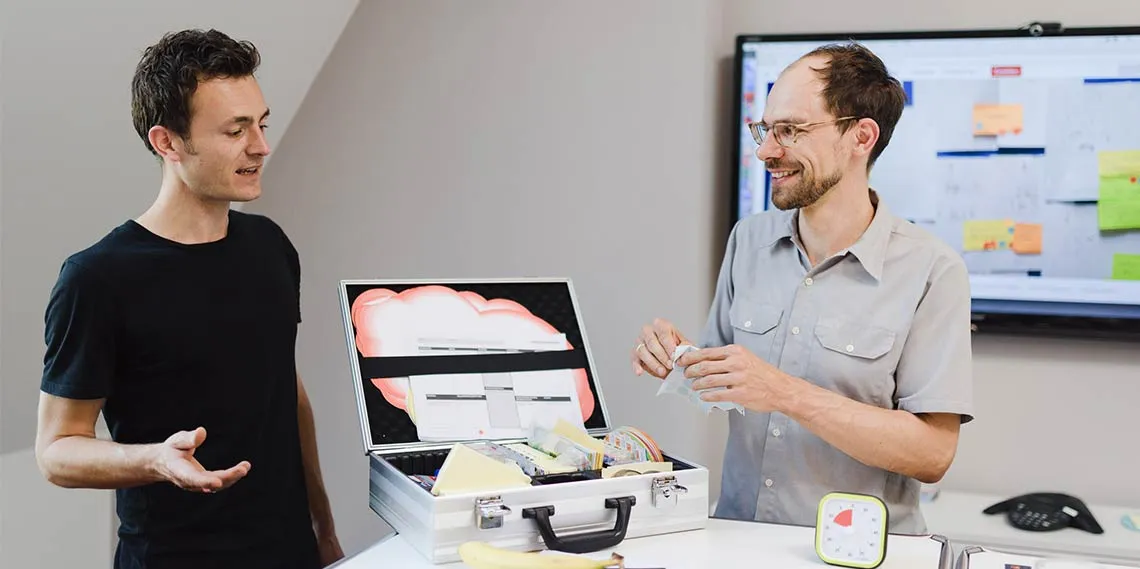
Timo: It's important to first create an open and cooperative atmosphere in the workshops. This starts with the room, continues with how the furniture is arranged, right through to the composition of the team. Teams should be interdisciplinary, incorporating non-experts, people from other fields, or even real users.
Different participants bring different experiences and perspectives. Outside, curious and fresh perspectives bring lots of new energy into idea process. And experts, through questions or doubts, often get pushed to think further within their field.
Become part of our agile team here
interactive tools: and what do the workflows look like in the workshop then?
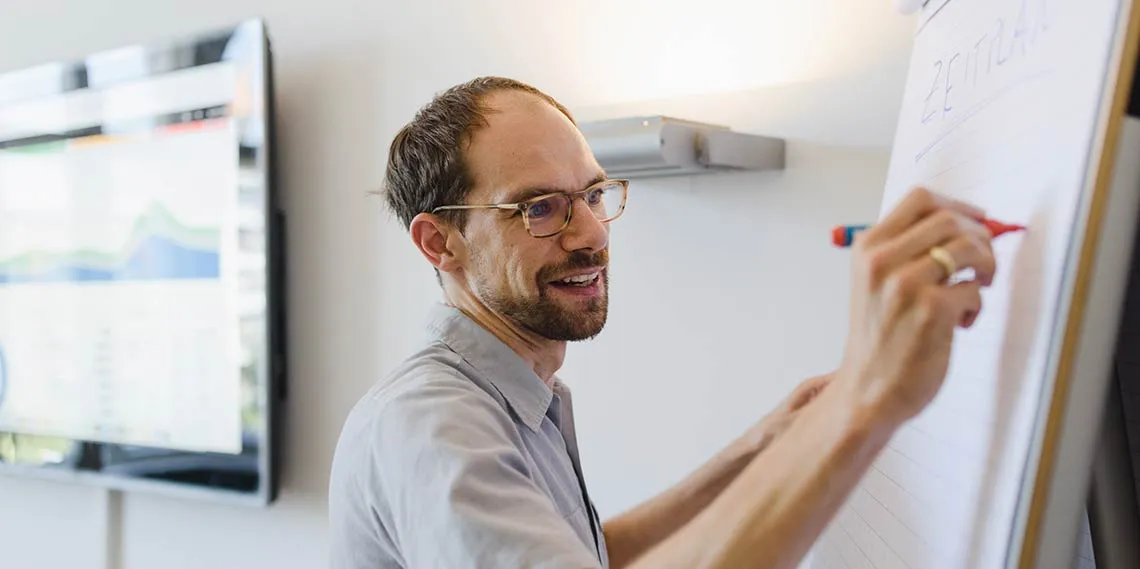
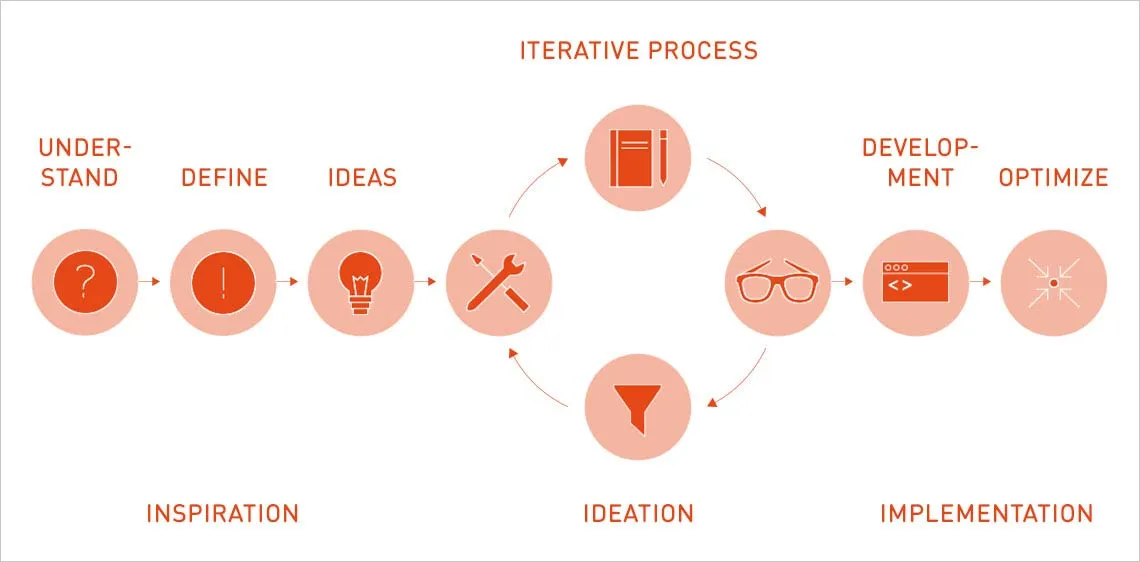
Timo: a design thinking workshop always consists of different phases. It starts with understanding (understand & observe): asking questions and taking the time to listen to the answers. Classic field research is also hugely useful here — observing and interviewing users/customers. And beyond that: experiencing processes and products yourself, not just talking about them. Many product managers and decision-makers don't use and experience their own product — not the way customers do. They often think only in terms of complex feature development and release cycles.
Next comes the reframing phase: what's the actual problem, and how do we want to proceed? That's followed by the ideation phase. Very broad, very open. We generate a huge number of ideas – driven by the courage to produce unfinished things and make mistakes. Because a mediocre, unfinished idea might become something brilliant in a colleague's hands. Mistakes work the same way. We want to make mistakes. We talk about them and make things better. The more mistakes we make early on, the more productive we become.
Afterwards we'll evaluate ideas again, more focused. We choose which ideas are worth taking into the prototype phase. Here ideas get condensed and developed further, made understandable, usable and testable. Errors surface again, which we improve in the next round. The whole thing is a highly condensed, iterative process. Getting ever more concrete, ever better.
interactive tools: what does this mean specifically for companies? What advantage do they gain from design thinking and agile working methods?
Timo: There are two fundamental benefits: firstly, dense, cooperative and cross-departmental collaboration within the team, and secondly, a clear outcome. No Excel spreadsheets, PowerPoint presentations, rough concepts or complex process diagrams, but a prototype that visualises the idea very simply and directly. A prototype you can present, use and experience - a tangible model that can be implemented directly. This prototype is designed to make the actual problem understandable to others in your organisation, generate enthusiasm for the ideas and be realised in the next step.
interactive tools: What concerns do companies bring to us? What role does interactive tools, or you, take on in that?
Timo: They come to us with a problem, usually with at least a vague idea of a solution. Together, we take a step back with them and redefine the problem, or the product, from various perspectives. We try to understand the mechanisms and structures behind it.
Take, for example, a customer who wants to establish or market a new tariff. But they don't yet know how to present it and implement it on the website. In the workshop, we take a different, a new perspective. In doing so, we usually recognise that the problems lie elsewhere, and so the solution must be different too. We redefine the problem statement. With this shared insight and the energy it generates, we continue working together. And find a quick solution to our customer's problem.
interactive tools: and how does further collaboration with the client look?
Timo: When you start a project with design thinking, the typical customer-agency relationship dissolves. A closer, more cooperative relationship emerges, which has a strong impact on the quality of the further work. This is also where the challenge lies. How do you manage to integrate this mindset and this type of collaboration into the subsequent course of the project? If you don't manage it, the design thinking workshop was nice and cool, but the team spirit and ideas usually fizzle out during the project.
interactive tools: how do you assess the future role or importance of design thinking in companies?
Timo: Design Thinking is more than a trendy workshop method and sticking Post-its. Design Thinking is a radical paradigm shift in the world of work. Many companies face the problem that they cannot react flexibly and quickly to digital trends or competing business models. Fixed structures, hierarchies, large departments and rigid processes make them sluggish. Innovations fail to materialise, and products get developed that miss users' needs.
Design thinking stands for connection, de-hierarchisation and a focus on user needs. Knowledge silos, departments and thought structures are broken down, and employees are connected with one another. Once you manage to embed this kind of openness and cooperation into everyday work processes, design thinking unleashes its full power.
The energy that was previously lost to departmental thinking, silos, positioning and meetings can be channelled into the product. This creates new solution paths and innovations within the company. The prerequisite for this is small, agile, self-organised project teams given the freedom and trust to be creative, make mistakes and learn from them.
interactive tools: Timo, how would you describe Design Thinking in a few words? What are Design Thinking workshops about
Timo: Design Thinking workshops create a safe space to be creative together, to think anew and change perspective. In Design Thinking, we develop ideas and concepts that are useful. Creative techniques and collaboration methods create an open, cooperative atmosphere in which people from different disciplines, with different experiences, work together.
Through design thinking, we leave behind departmental boundaries and hierarchies that, in everyday company life, often prevent good ideas and useful innovation, because different departments think within their own patterns and restrictions. Many companies never even get as far as the users and their needs.
Design thinking is all about user's needs. And it's about identifying those needs. We develop product along user needs. Focus isn't company perspective but customer perspective! Question therefore isn't "what's feasible?" but "what's usable?"
- Marcus Völkel
Consultingsynaigy
Show phone numberShow email address