

How to work better connected - network thinking with Ulrich Weinberg
2 min read
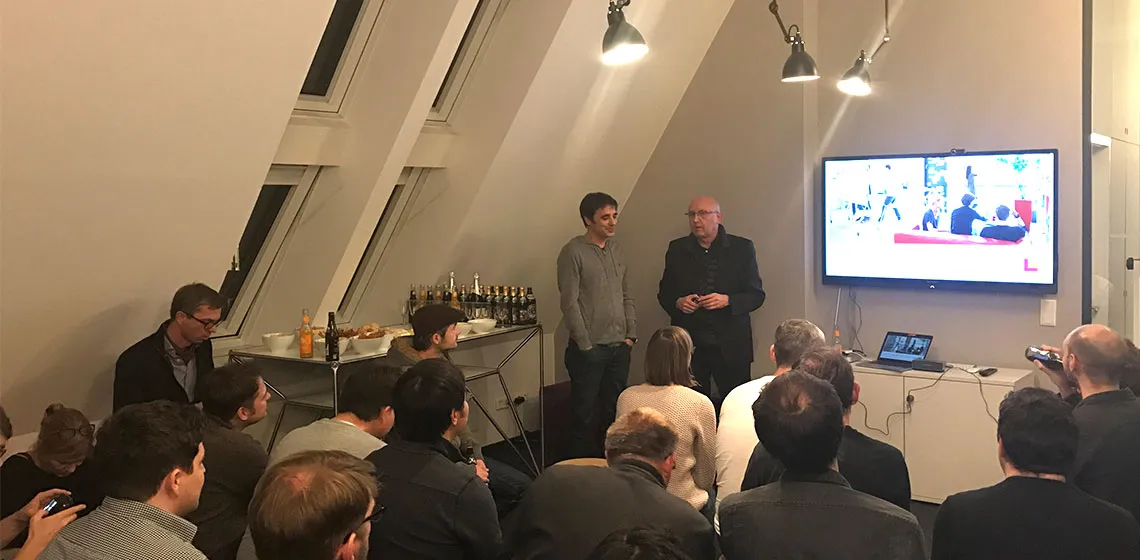
Design thinking is an approach to project work that's still unusual at many companies. At interactive tools, this approach has already been implemented for some time: interdisciplinary teams develop novel solutions through an iterative approach and creative methods. Prof. Ulrich Weinberg, the intellectual pioneer of design thinking, recently visited interactive tools as part of our iSpiration series.
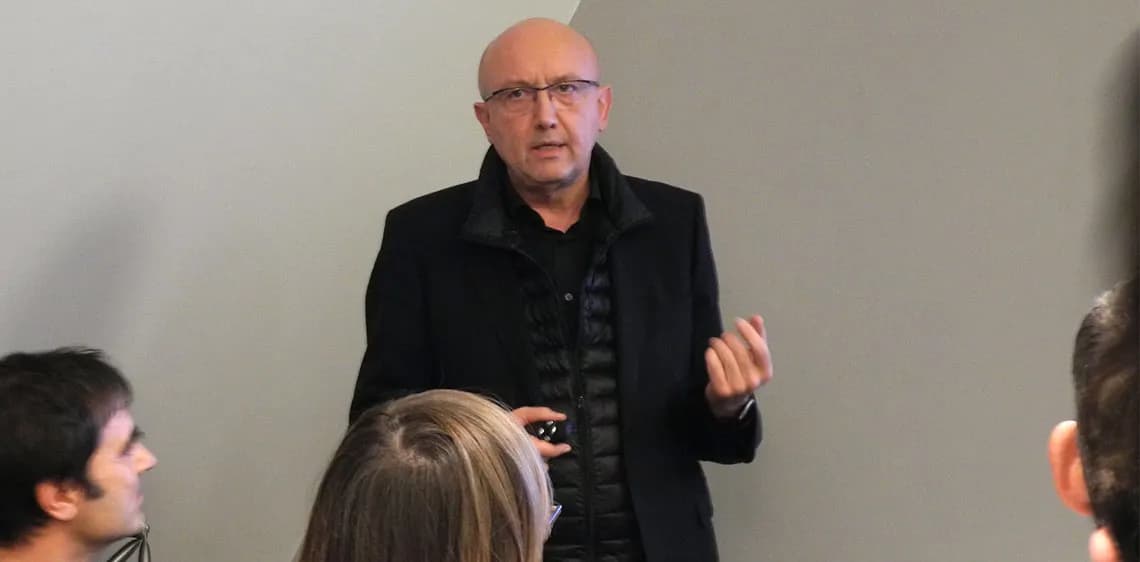
Ulrich Weinberg is professor at HPI School of Design Thinking and runs additional degree programme there of same name, "Design Thinking". Programme brings together students from all disciplines who develop software products in project teams, putting users and their needs at centre. Projects at interactive tools are implemented with this same focus – on users.
Group-based and interdisciplinary methods
His talk "Network thinking: working better connected" showed the audience why it's so important to overcome silo structures. According to Weinberg, this is the only way to find new approaches to solutions. Not rigid, fixed project workflows but group-based, interdisciplinary methods lead to innovation. In the network thinking method, project teams act and react with one another under three conditions:
These are interdisciplinary teams made up of 4-5 members,
They work in variable and flexible spaces and
They proceed iteratively – in incrementally repeating workflows.
Beyond linear models, this approach breaks thinking patterns and knowledge silos, overcoming the „Brockhaus thinking“ criticised by Weinberg. Brockhaus mode, standing for individual experts' isolated knowledge, gets replaced by network mode. Experts' knowledge isn't just pooled — rather, „minds get networked together“, as Weinberg puts it.
For Weinberg, future of work lies in strengthening employees' collaboration and interaction skills within a company – achieved through network thinking. Especially large, cumbersome companies in Germany still struggle with this though. Smaller, mid-sized companies and start-ups find it easier.
Please accept functional cookies to watch this video.
Small, agile and autonomous teams
They are more flexibly positioned, have flat hierarchies and mostly work in small, agile and autonomous project teams. According to Weinberg, they are the means to an end for solving new and unconventional tasks creatively and effectively. interactive tools already pursues this approach consistently and was able to take new impulses and inspiration for future projects from the talk as well as the closing discussion.
Your contact person
- Marian Gertheim
Consultingsynaigy
Show phone numberShow email address