



insights! #56: D2C study examines the question: is limited brand awareness the main barrier for product providers?
 Joubin RahimiManaging Partner · synaigy
4 min read
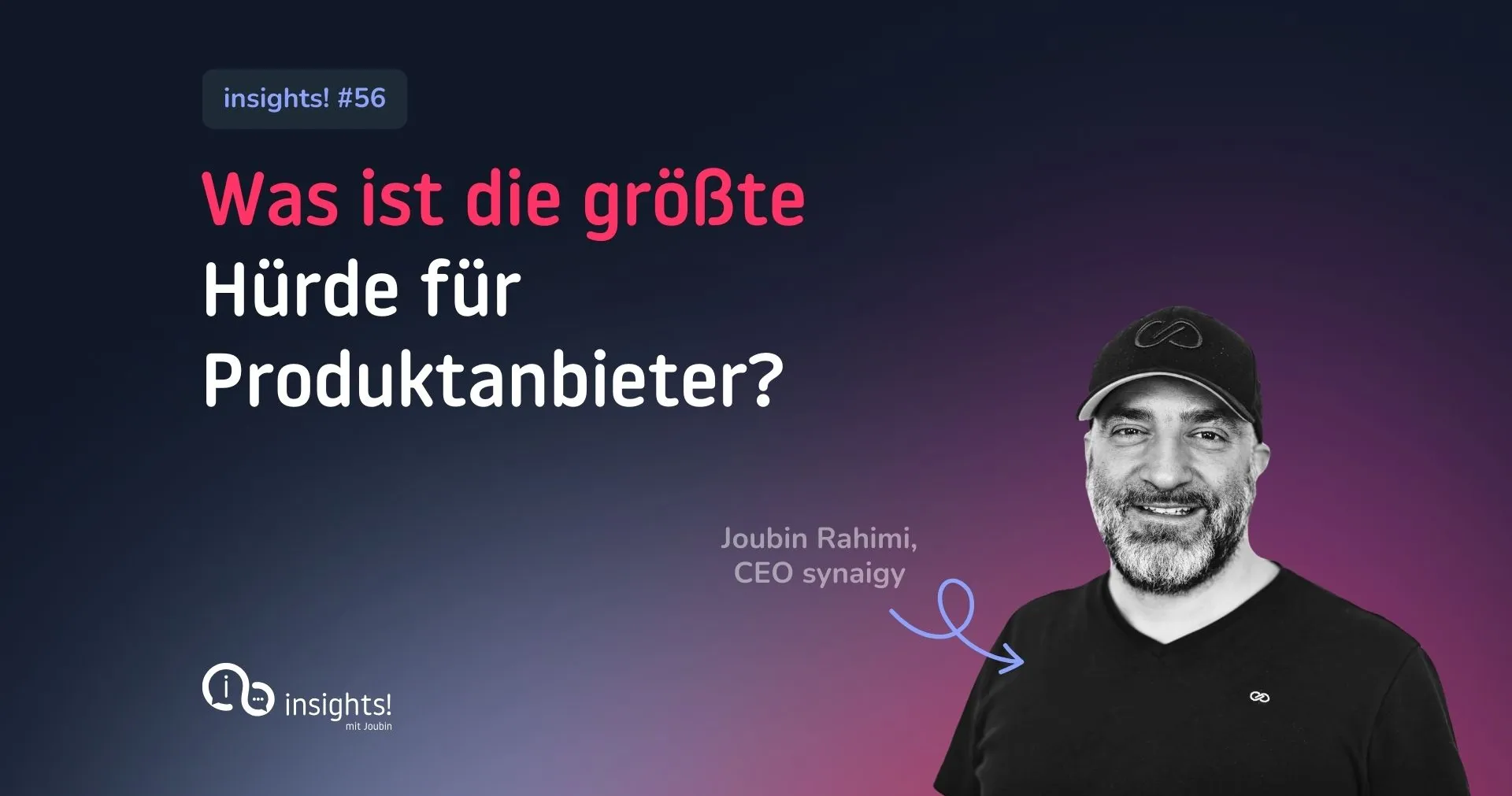
In collaboration with ECC Köln, we published a study on D2C strategies in the home and garden sector. Seven theses were thoroughly analysed and examined in depth. In this article we look at the fourth thesis: "Manufacturers' lack of brand awareness often drives consumers to retail." In this article you'll find concrete figures and exciting insights from the study
5% of non-D2C buyers say they don't even know there are providers in that purchasing environment where they could buy directly.
No awareness, no purchase: a simple but decisive problem
No awareness, no purchase. That's exactly what happens to many manufacturers who want to sell directly to end customers but lack the necessary visibility. Our study shows that 55% of consumers who haven't bought D2C so far don't even know it's possible to buy directly from the manufacturer at all. That's a huge problem – because without awareness, there's no revenue either. Everyone knows the Gardena or Stihl brand, but what about the many other, smaller brands? They often have equally high-quality products, but without the corresponding awareness, they simply get lost in the market.
Knowledge is power – and revenue: importance of visibility
Another important point our study reveals is that 35% of respondents didn't even know they could buy directly from the manufacturer. This means potential revenue is lost because consumers don't even think to look for a direct purchasing option. In a world where convenience is king, this becomes particularly clear: if customers don't know you exist or that they can buy directly from you, they'll simply shop with the next best retailer - even if that means choosing a possibly worse or more expensive product.
The jungle of retail: why manufacturers fight in the red ocean
Retail is fiercely contested terrain – a "red ocean" where numerous providers vie for consumers' attention. For manufacturers not used to operating in this environment, it's particularly difficult to prevail. Our study shows that 60% of D2C buyers still prefer retail. This is often because buying from a retailer seems simpler and more convenient. But what if customers knew they could buy directly from manufacturer – perhaps even on better terms? Here lies a great opportunity for manufacturers to position their brand more strongly and specifically highlight advantages of direct sales.
The solution: targeted positioning and a clear customer story
To succeed in this crowded market, manufacturers must clearly position their brand and focus on their strengths. It's not enough to simply have good product – you also need to ensure your potential customers find out about it and understand why they should buy from you. Good example is Gardena with their irrigation planner: useful tool that not only helps customers choose right products, but also shows Gardena is expert in this field. But next step would be that customers can also buy these products directly from Gardena, without first having to search around for dealer.
Reaching the next level: how to boost your brand's visibility
So what can you do to position your brand better and boost your awareness? It starts by engaging closely with your customers' needs and finding out how you can make life easier for them. Then you must ensure your potential customers know you exist and that you can offer exactly what they're looking for. A targeted marketing strategy that addresses both brand awareness and the benefits of direct purchase can work wonders here.
You'll find the full study here: https://kampagnen.synaigy.com/de/d2cstudie.
We also offer a customer experience readiness check to find out how customer experience stands in your company. Answer seven questions and get concrete recommendations tailored precisely to your situation. Go to the free CX readiness check here: https://kampagnen.synaigy.com/cx-readiness
Would you like to listen to the full episode?
Listen in directly and find out more:
Please accept the corresponding cookies to view this embedded content.
Prefer to watch the episode? No problem!
Here's a recording:
Please accept functional cookies to watch this video.
Prefer to read?
Great to have you along for a new episode of insights. My name is Joubin Rahimi and by now I've really grown fond of this table. Today it's about the fourth thesis: "Manufacturers' lack of brand awareness often drives consumers into retail."
What are we trying to say with this thesis? No awareness, no purchase sounds fairly clear at first. And the study proves exactly that too. Namely, 55% of non-D2C buyers say they simply don't know that there are suppliers in that space where they could buy directly. And so they don't even look for it. We're also of the opinion that it's not really the typical case that I'd say, I want to buy directly from the manufacturer. But everyone has a challenge, a problem, and wants to buy something to get that problem solved. And that's why it's hugely important within this D2C strategy to say: I have awareness. Sure, everyone knows Gardena, Stihl. But there are lots of other brands that also have top products, that have a particular niche, have their desired customers, but the end customer doesn't know about them. And in the course of the internet, it makes total sense to inform not just the intermediary, not just the retailer, but really the buyer too, accordingly, that there's one out there on the market.
The second area, which is really exciting, is that a considerable number of respondents said we don't even know, so 35% said, we don't even know that you can buy directly from you. I want to. I don't know. It doesn't even occur to me. And here too we say, that's simply money being lost. Either margin or indeed revenue, because then something else gets bought in retail instead. And this visibility, this purchase intent, needs to be captured much more strongly in users' browsing behaviour, so that you as a manufacturer can act directly too. Really important low-hanging fruit from our point of view.
The final insight from this thesis is that manufacturers simply get lost in the jungle of retailers. Of course, because manufacturers aren't used to fishing, angling, in this red ocean, this red sea. All the sharks are in there. And the figures on this were interesting too. So a large number of D2C buyers simply prefer to buy from retailers. That's 60%, and it's no small percentage either, but a considerable one, 48% of D2C buyers say, by the way, that they're not even aware that the respective manufacturers also sell directly, and 36% say it's far too much effort to search for that. I really understand that last part, because we want to buy convenience, and it's not about buying from the manufacturer for us. But what's interesting in this construct is that within this whole oversupply from retailers, I have to position myself very clearly again, work out my niche very precisely. Where do I move as a manufacturer, who do I want to address? What is their pain point that I offer the solution for? Then you have a much better customer story and can move forward massively there.
Example: I have garden and want water garden. Gardena have watering plan. Great, you have configurator. I can work it out. Great step forward. Only can't buy yet quite so easy. But that of course process where they must go. Other side, if I don't have watering project, but holistic garden project, where besides watering I also plant flowers, build terrace and co, then my case totally different. Situation different there. So we come back to episode number two. Totally important, which customer situation I move in, and I must know as manufacturer, where my added value, and place it best possible.
We have three further pieces of information:
Point 1: the study after providing your name, e-mail address and phone number. And yes, we'll call you too and look forward to a short chat. Even if you're not interested or not our ideal customer, you'll receive all the data from this study that will then help you.
Point 2: the core of this study is Customer Experience. That means we have developed a maturity model showing where you stand with your Customer Experience. You get this by answering seven questions plus recommendations for action tailored to your situation.
Point 3: as a starter package with ECCNext, the corresponding consulting arm of the Institute for Retail Research, and our specialists from strategic consulting, a starter offer to move forward on this topic quickly and efficiently, without any waffle.
Have questions or feedback?
Then feel free to contact us directly.
- Joubin Rahimi
Managing Partnersynaigy
Show phone numberShow mobile numberShow email address

Subscribe to the blog now and never miss any news
✔️free of charge ✔️weekly news ✔️expert knowledge
Please accept the corresponding cookies to view this embedded content.