

Joy of use: success factor for digital media and brands
“Joy of Use” refers to the positive user experience people have when using digital products. Experts consider Joy of Use to be a key factor in the acceptance of digital brands and media. But how exactly does Joy of Use come about—and does online banking really have to be fun?
7 min read
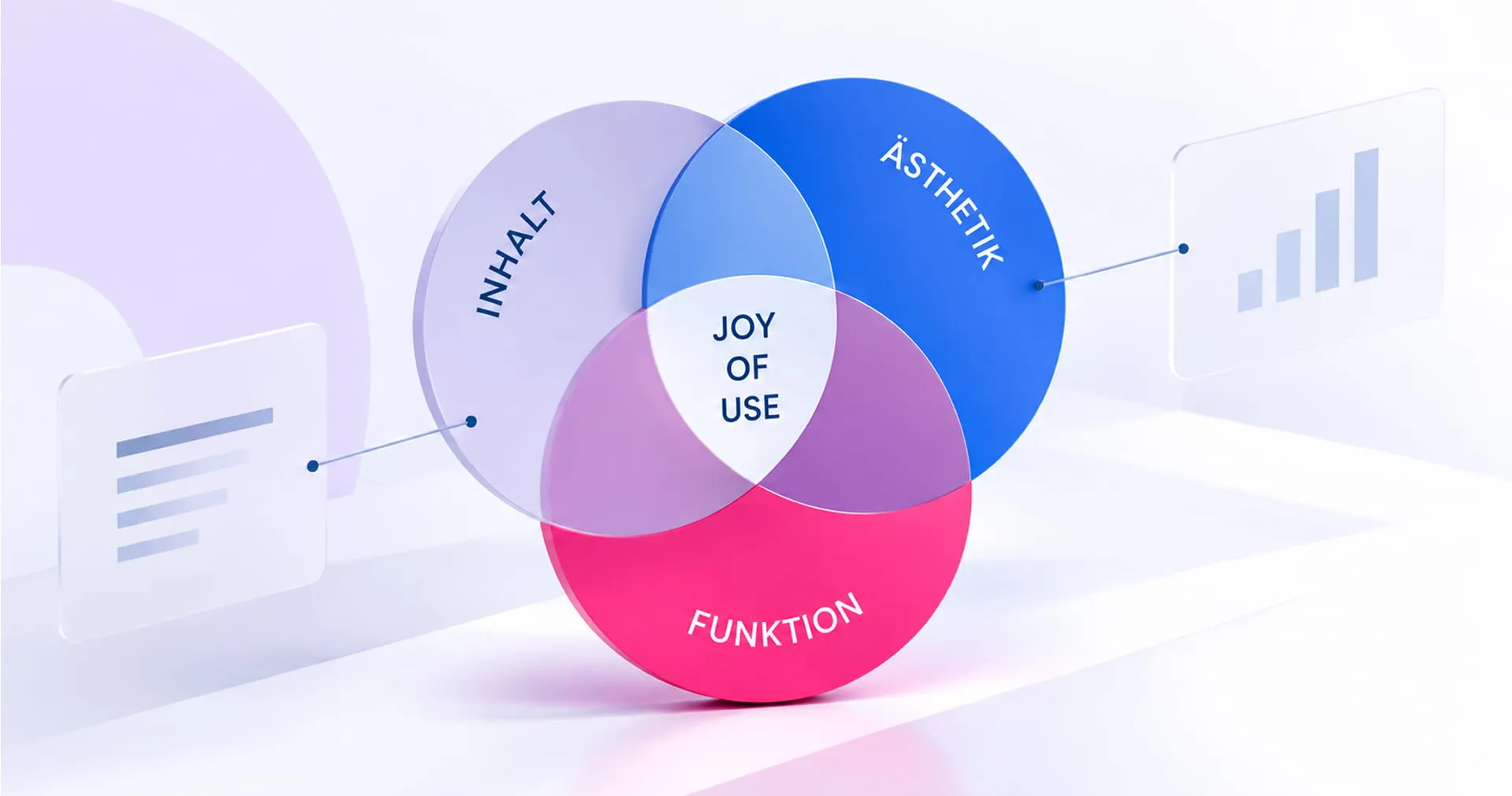
The fact that usability is a key success factor for digital media has reached the mainstream. After all, everyone knows the frustration that arises when websites or applications don't do what you expect as a user.
Whether website that loads forever, program that keeps crashing, or navigation that just won't make sense – users intuitively steer clear of digital products that aren't designed user-friendly. But what exactly does user-friendly design mean – and what's it got to do with fun?
Usability and user experience - what makes users happy
Usability refers to the usability of digital media. DIN standard EN ISO 9241-11 defines usability as the extent to which a product can be used by users in a given context of use to achieve specific goals effectively, efficiently and satisfactorily.
Besides rational criteria effectiveness and efficiency, definition of usability thus includes emotional component – satisfaction. Commonly, product with good usability is understood mainly as one that's intuitive to use and fulfils its purpose. Usability mantra accordingly reads "Don't make me think!" - after Steve Krug's usability bible of the same name.
The emotional component of usability – satisfaction – often remains underexplored in practice. Are users automatically satisfied once a product works and is easy to use? Or are there other, emotional factors that need to be met alongside such pragmatic aspects to satisfy users? Classic usability rarely engages with such questions.
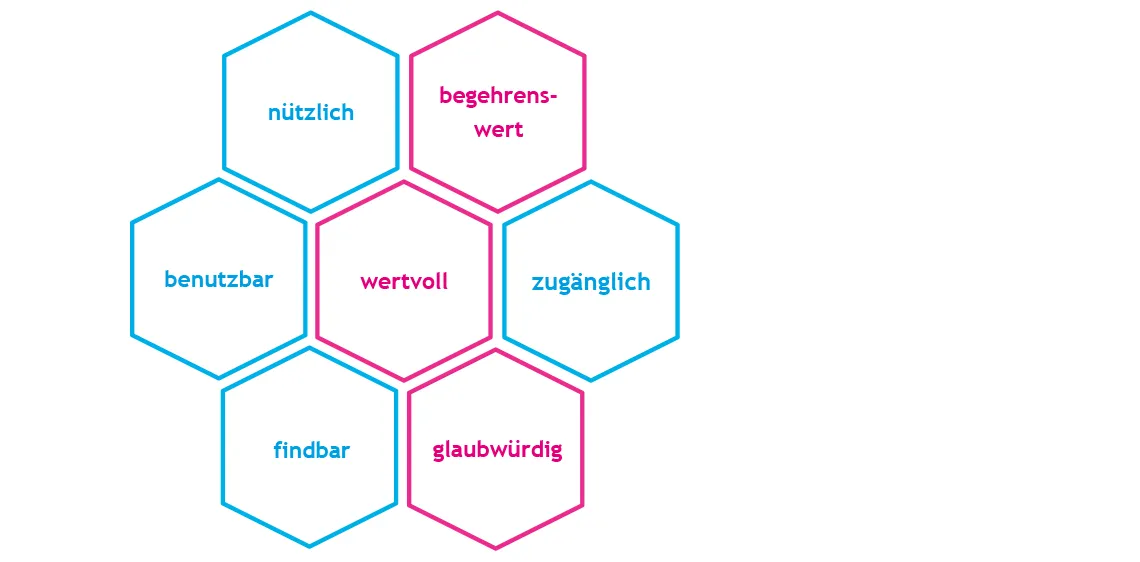
The broader concept of user experience (UX), by contrast, answers exactly these kinds of questions. Here, emotional qualities play a far more important role than in usability. According to the definition in DIN EN ISO 9241-210, user experience covers all perceptions and reactions of a person resulting from the actual or anticipated use of a product or service.
So does usability refer more to pure functionality in the immediate use of a digital application, while user experience refers to the entire experience people have with a product or brand – thereby also encompassing so-called hedonic qualities such as attractiveness, beauty or individuality. Usability is thus considered a subset of user experience.
On User Experience (UX) Joy of Use
So far so good – but what does that mean in practice? A user experience example: for the relaunch of mobile.de, alongside pure usability, we paid particular attention to the emotional staging of the product. The aim was to optimise the overall user experience of the online vehicle marketplace and to emotionally bind website visitors to the brand through a positive user experience.
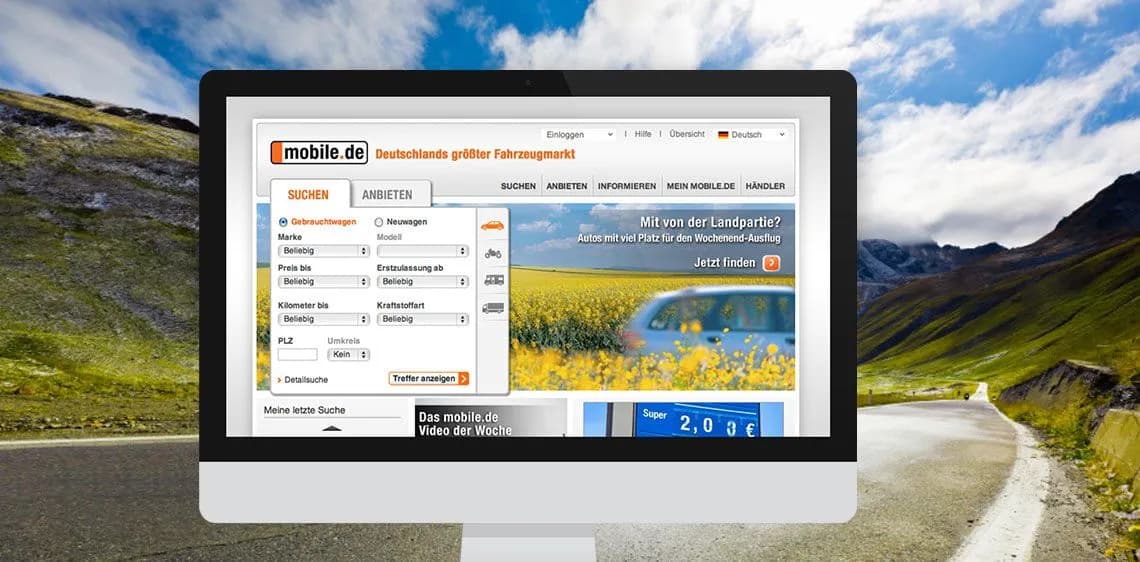
The content centrepiece of the site before and after the relaunch was search - an element that worked well but wasn't placed prominently enough. As part of the interface redesign, we not only optimised user guidance but staged search as the star of the page by combining it with an emotional key visual.
As a result, the homepage became not only more user-friendly, but now also conveyed the proverbial joy of driving that the portal is meant to evoke.
Joy of Use is more than usability
As example nicely illustrates, joy of use alongside usability is central part of successful user experience (UX). Because with products offering joy of use, users get – often unconscious – emotional added value: they get more than they expect. Interaction with brand stays in memory as positive experience.
The result: people keep using the product in question again and again to experience that positive feeling once more. And they recommend it further. Willingness to recommend is an important metric for optimising digital products. In user studies, we measure this willingness via the Net Promoter Score, NPS.
Especially in the competitive market for digital target groups, joy of use represents a decisive competitive advantage. A product that merely functions adequately is now considered standard.
Objection #1: Does online banking have to be fun?
Does that apply to every market and every target group? Or put differently: does online banking really have to be fun, as a popular objection goes?
There are certainly sectors and user groups where hedonic qualities carry more weight from the outset. The relevance of joy of use for a lifestyle brand is likely to be immediately obvious. But brands from the B2B sector or companies from the financial or energy sector also benefit from digital presences that bring users joy.
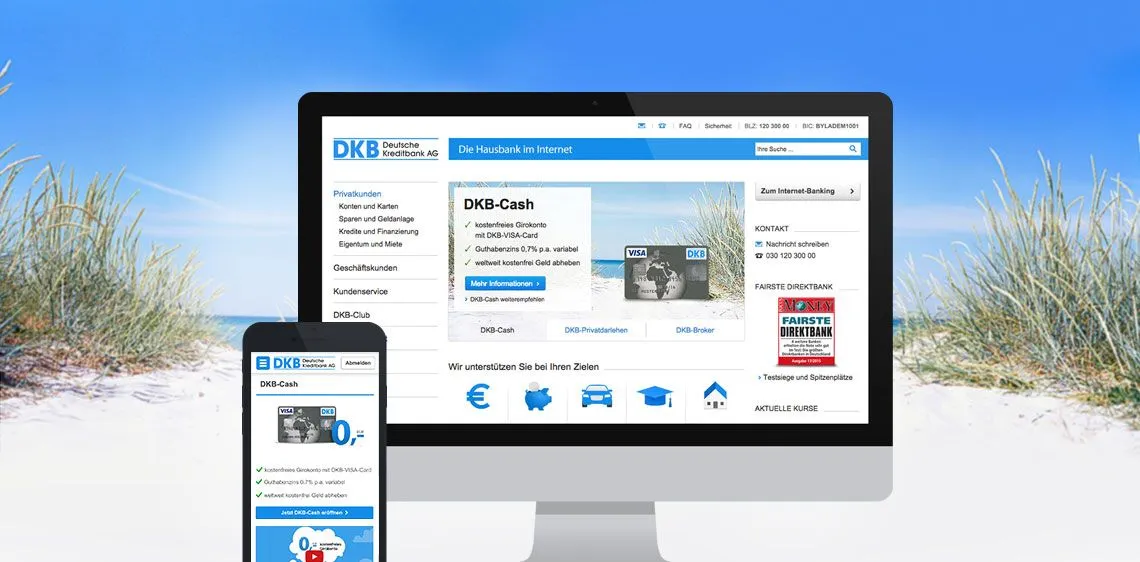
Our work for DKB illustrates that. Here too, alongside improving usability, we emotionalised the website through playful design elements and details. These do not impair functionality, but support it by giving users clear orientation.
User experience design: usability and joy of use are by no means mutually exclusive, but together contribute to a successful user experience.
Objection #2: Is joy of use even measurable?
Another point of criticism is that, unlike usability, hardly any quantifiable factors can be identified for joy of use. In fact, the usability of products, and therefore the user experience, can be reliably measured. Various methods have become established for this.
In a usability test, users are observed while completing typical tasks with the product, in order to uncover weaknesses in the product's effectiveness (e.g. Task success or task completion rate) and efficiency (e.g. Task time or number of mouse clicks).
Interviews using standardised questionnaires such as the System Usability Scale (SUS) are a proven way to measure and compare the usability of media.
Using eye tracking, the spontaneous perception of the website is measured via the user's eye movements. Eye tracking also delivers concrete findings on how well the placement of links, images, buttons etc. matches expectations.
With similar, slightly modified tests, emotional experience of users while using a digital product can also be measured.
Evaluation methods such as AttrakDiff test, for instance, make visible not only pragmatic (usability) but also hedonic aspects (stimulation, activation, identity). Additionally, methods such as in-depth interviews or measuring brain waves via EEG/emotional response tracking have become established for examining whole user experience.
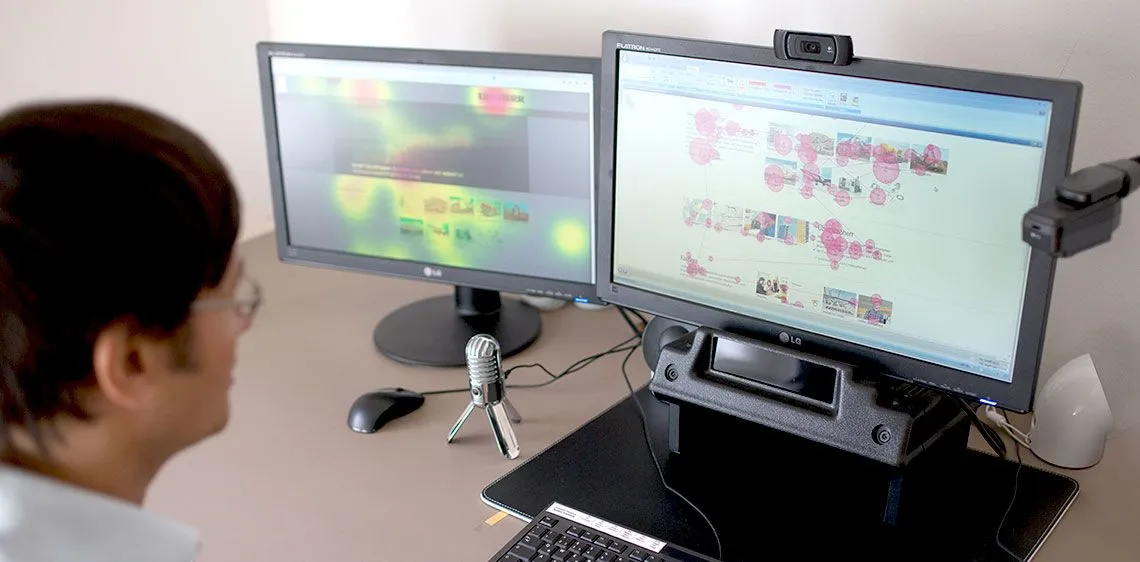
UX optimisation for more joy of use
A UX analysis of a website, for instance, can reveal that users find a product functional and understandable, but rate a competitor's product as more beautiful, more attractive or more interesting. Even small adjustments to the look and feel can then demonstrably increase the joy of use.
Large-scale visuals let functional elements on a website be staged emotionally.
Playful, interactive elements support users in reaching their goals and offer a surprising added value.
Small visual details and micro-interactions make brands emotionally tangible.
Seamless integration of social media and other user-generated content is experienced by users as added emotional value.
Investment in such optimisations pays off quickly. Digital products with an optimised user experience are not only characterised by lower bounce rates, longer dwell times and improved conversion rates. They also demonstrably contribute to loyalty to the respective brand.
Summary: joy of use is an important competitive advantage
The technical possibilities on the web today allow brands to connect with customers across multiple media and everywhere. Only those who put users and their needs at the centre succeed in the long run. And where good usability is standard, emotional brand loyalty through joy of use becomes a key competitive advantage in the race for digital audiences.
Your contact person
- Marcus Völkel
Consultingsynaigy
Show phone numberShow email address