

Automation
Marketing automation helps automate individual or even all of your company's marketing processes. Find out what other benefits automation brings here.
7 min read
Are you considering how to sensibly automate your marketing strategy? Are you hesitant because you can't estimate effort, cost, benefit and risk? Or are you already flirting with a particular piece of software? Either way: we'll explain what marketing automation means – and how to proceed so you can later work in a resource-efficient and effective way. Spoiler alert: your planning shouldn't start with choosing a tool.

Definition and benefits of marketing automation
Marketing automation is an umbrella term for very different software solutions that all have one thing in common: they help you automate individual or even all of your company's marketing processes. These often cloud-based tools enable the setup and management of databases, individual workflows, multi-stage campaigns and the associated success measurement. These systems can also be synchronised with various CRM platforms.
Get to know your customers' needs better
This is how marketing automation tools make planning, creating, managing and evaluating extensive marketing measures easier for you. The focus in campaign management is on lead generation: the software solutions allow automated and personalised communication with potential or existing customers along customer journeys. Through web tracking, the user's interest profile is analysed and thus the customer relationship and ultimately customer satisfaction is improved.
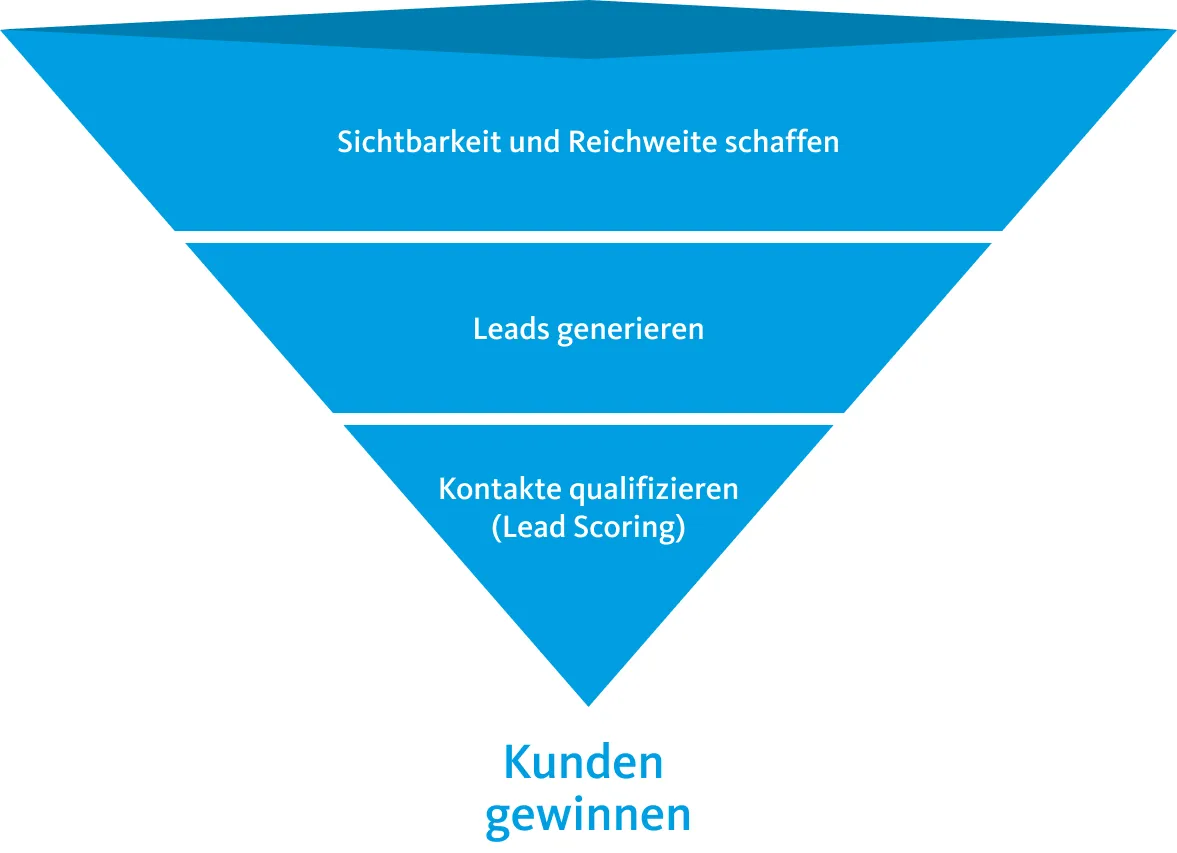
Marketing automation also scores when building sales processes based on sales funnels. Set up this way, communication starts with marketing activities that create visibility and reach, generates leads from this, qualifies these contacts (lead scoring), and finally turns them into customers. All of this happens within automated processes that help you increase interactions and conversions — all without burdening marketing and sales staff with time-consuming manual tasks.
You can use a marketing automation tool for the following measures, for example:
Planning, creation, control and evaluation of multi-stage, audience-specific and cross-media marketing and sales campaigns
Automated workflows for recurring tasks (e.g. Newsletter dispatch, distribution of social media content)
Building and maintaining customer databases with existing and potential contacts
Automating lead management
Used correctly, marketing automation mainly benefits B2B companies that communicate continuously across channels and want to better align marketing and sales. With properly planned automation, the results of communication measures can be made visible and improved. Naturally, this requires thorough groundwork.
Marketing automation is only successful when strategy, content and technology are thought through together – where there's nothing, there's nothing to automate.
Success factors for marketing automation
A marketing automation tool holds many opportunities to understand your customers even better and so move your business forward decisively. Nonetheless, there are a few pitfalls to watch out for during implementation:
Success factor 1: start by thinking from the end
As just described, marketing automation is primarily understood as software that carries out marketing measures automatically, making the work more efficient compared to manual processes.
But be careful: Still, you shouldn't start introducing this technology by selecting such a tool! Because the key to a successful marketing automation strategy for your inbound marketing is to think from the end backwards, that is, to start with your goals! Consider in advance: what exactly do you want to achieve? For example, do you want more revenue, more leads or simply more visitors to your channels?
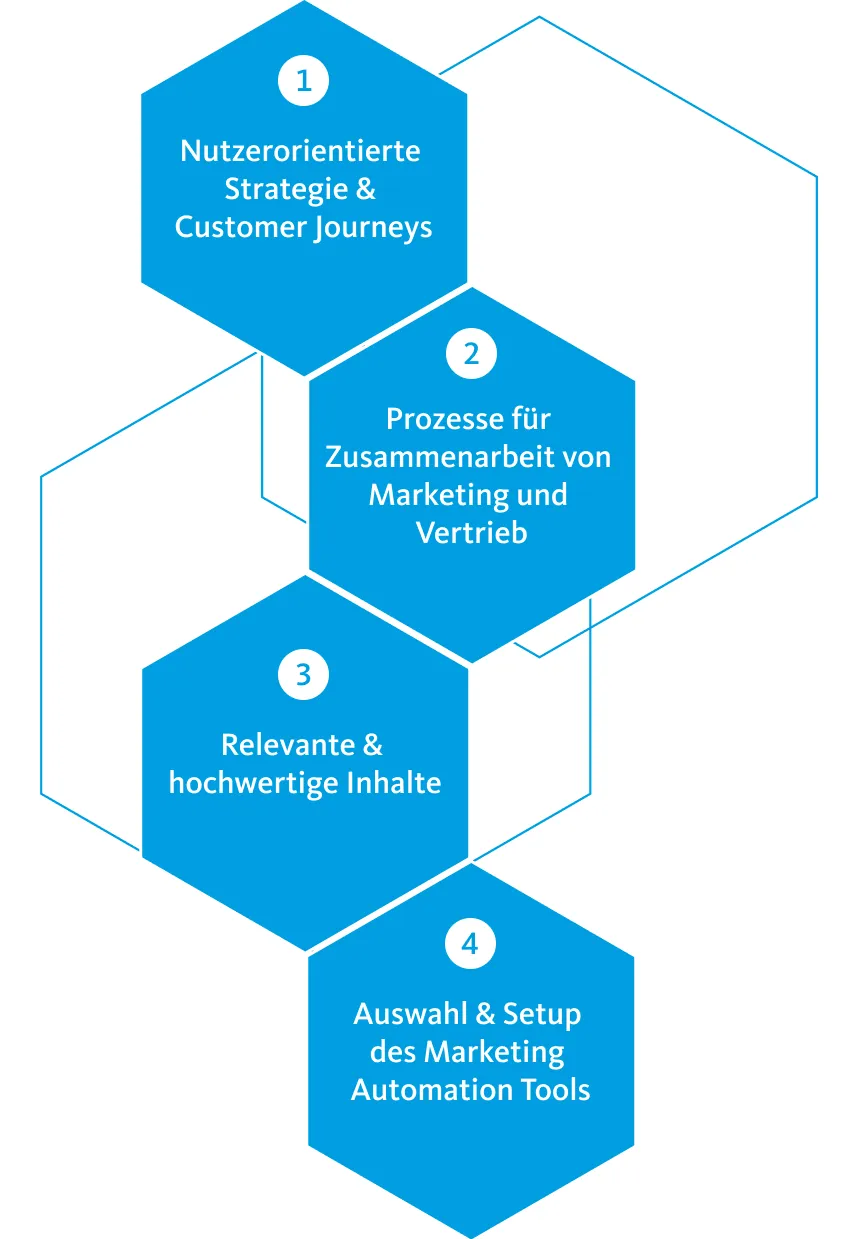
You should also consider these five requirements when planning:
a consistent user orientation,
Clarity on the target groups' customer journeys,
The close collaboration between marketers and sales professionals,
Sensible processes (because poor workflows won't improve through automation either)
And above all high-quality content.
On this basis, choosing the right digital tools for you will become much easier.
⇒ Salesforce, HubSpot and co: here we explain how to find the right system provider.
Once everything is finally ready, you should start small with your automated marketing and realistically assess what you can achieve in the first step. Use, for example, the next trade fair and inform your customers about your stand and the fair highlights. The better you understand your market and audience over time, the more precisely you can decide where to invest more time, money and resources. Good customer data and the CRM processes built on it are a success factor here.
Success factor 2: create relevant, high-quality content
Strategically planned content is the fundamental prerequisite for any marketing automation. If you don't have high-quality content that is valuable to your audience, none of the other elements can work.
The precise breakdown of topics and content differs from industry to industry, but we have a few universally applicable tips for you:
Develop a content strategy that unites company goals and the interests of your audience.
Identify the challenges and needs your target audience(s) have.
Create content that serves these interests and offers real added value.
Ensure visibility by optimising your content for search engines (SEO).
Link the content to measurable success criteria.
Through consistent measurement and analysis, their content mix keeps becoming more relevant.
Here your marketing automation tool comes into play again: good solutions support you in developing, publishing and monitoring content. They also help you with editorial planning, which is easily accessible to all team members. The tools should also offer you functions that don't require you to be an analyst to see whether the content is meeting expectations.
Success factor 3: bring marketing and sales together
Brand communication no end in itself. Within customer journey or sales funnels, you want to convey company's expertise to your target groups, build trust and ultimately convince prospects to buy your products. To create compelling user experience for this, marketing and sales departments must work closely together. Once sensible mode found here, this process can be mapped and activated in automation software. If you manage that, you turn reach into leads and finally into satisfied customers.
And off we go with marketing automation!
With newsletters, landing pages or whitepapers…
Have you completed your planning and, on this basis, implemented the best software solution for your purposes? Then it's now time to get your marketing automation rolling. You already have contacts interested in a specific subject area? Great, then supply this target group with, for example, monthly newsletters and use this automated e-mail campaign to drive targeted lead nurturing.
A multi-part campaign could shine a light on all the important facets of your topic, following a funnel that systematically guides recipients towards your offering. Readers first receive content with valuable, brand-independent expertise. Step by step, practical examples, services and product recommendations from your company are then added. The newsletters offer links to in-depth articles on your website and the option for prospects to get in touch at any time.
In short, marketing automation helps you deliver the right content to the right people at the right time in the right place.
… get to know your customers better
You can track how many people open your emails, which content gets clicked, and whether contacts with sales ultimately arise. At the same time, appropriate promotional measures can generate further newsletter sign-ups. Postings and ads on your social media channels and landing pages are well suited here – or you can even win over potential customers with a high-quality whitepaper, which customers receive in exchange for their email address. With your automation tool, you can now plan, set up and send this entire outreach from one place. Your newsletter series even starts at an individual point in time for every newly registered prospect. That's how automated, user-oriented communication works.
Some ways to get your automated marketing moving:
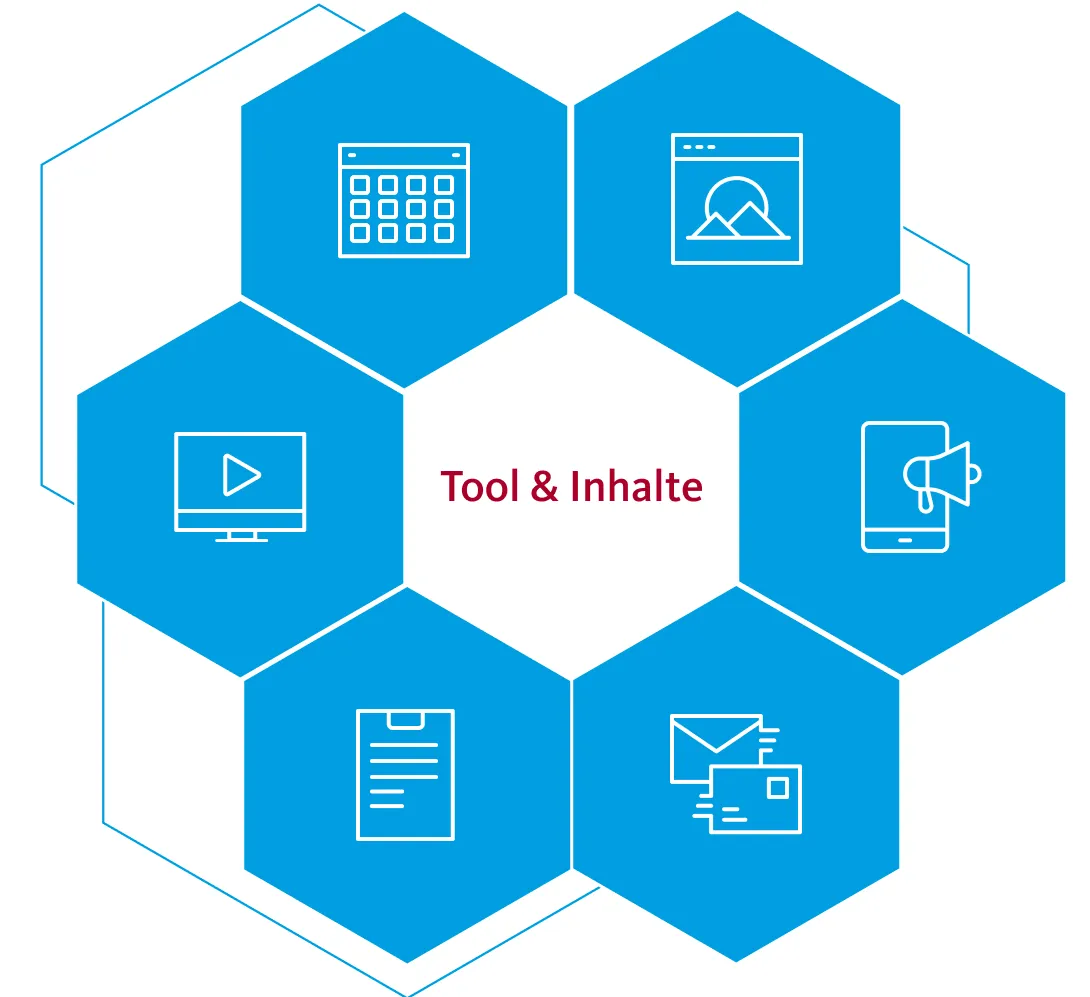
Newsletter campaigns/landing pages on specialist topics or product launches
Whitepaper for e-mail address (gated content)
Invitation, reminder and thank-you mailings for events and trade fairs
Announcements of training courses, webinars, etc.
And of course various accompanying advertising measures on social media, on Google, etc.
Feel free to contact us any time!
We support you through every phase – from fundamental planning of your marketing automation, selecting the right tool and platforms, through building channels and media, to creating content for successful campaigns.
How about a one-day workshop on your customer journeys? A very good shared starting point for planning marketing automation.
Get in touch now
Your contact person
- Wolfgang Metz
Consultingsynaigy
Show phone numberShow email address