



insights! #109: Speed is strategy: what Silicon Valley understood - and we haven't
 Joubin RahimiManaging Partner · synaigy
5 min read
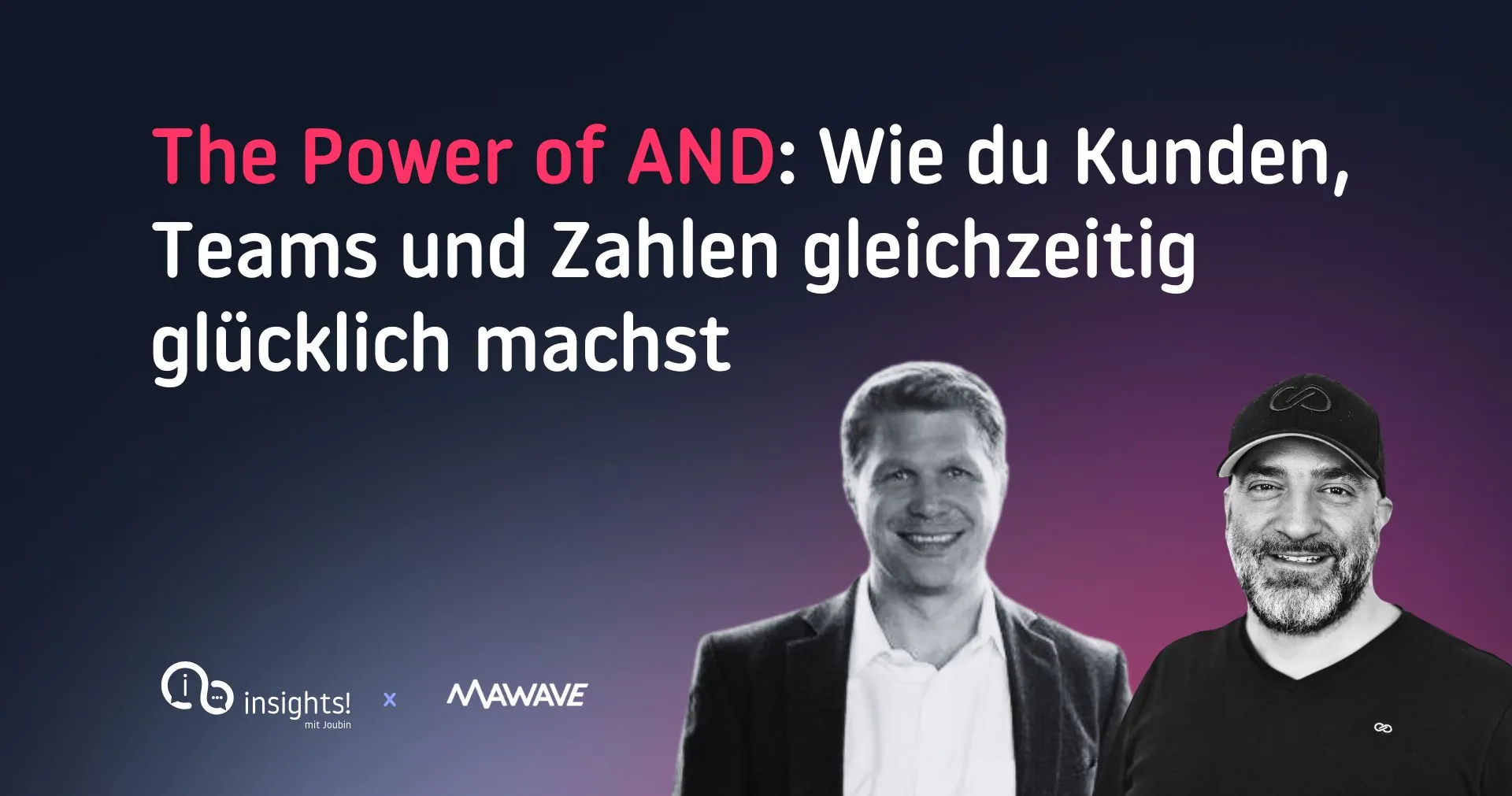
"In Germany we have an incredible amount of innovative strength and stability – especially in the Mittelstand. But we mustn't rest on that. If we want to keep pace in global competition, we need to decide faster, think more boldly and act more ambitiously. Speed can no longer be a foreign word."
In public debate, it's currently not particularly fashionable to view the USA as a role model. Political tensions, economic differences and cultural differences often lead us to distance ourselves reflexively. But this is exactly where the great opportunity lies: instead of shutting ourselves off, we should start looking more discerningly. Because even if not everything from Silicon Valley is worth emulating – there's one thing companies there do better than almost anywhere else: speed, growth mindset and an uncompromising culture of innovation.
Decelerating into the future? Please, no.
Oliver Busch, former COO at Meta DACH and today advisory board member and managing director at social media agency Mawave, describes the discrepancy between European and American pace in organisations with a striking image: while companies in Silicon Valley move at 100 kilometres per hour, most German companies – even the self-proclaimed agile ones – manage at best 50. The innovative Mittelstand? More like 10 km/h. That may sound provocative, but it hits a sore spot. The difference lies less in the quality of ideas and more in decisiveness. While weeks often pass here between a meeting and the next round of alignment, the Valley lives a culture of fast, sometimes bold decisions. Instead of analysing for weeks, people try things out. And when a mistake happens, they learn from it – fast and efficiently. This mindset isn't accidental, it's part of a deliberately cultivated high-performance mentality.
High performance starts in the mind – and in the calendar
A central element of this mentality is how work gets organised. Busch describes meeting structures where, in 30 minutes, things aren't just discussed but decided. Five minutes of small talk, twenty minutes of focused discussion, five minutes of summary – and on we go. Such processes make it possible to move topics forward in a single day that would take a whole month in other organisations. This speed is not the same as superficial activism. On the contrary: whoever decides quickly creates room for corrections and iteration. Whoever waits too long, on the other hand, loses not only time but also relevance. Especially in a global market environment where Asian and African companies are increasingly operating with high dynamism, pace is not a luxury but a survival necessity.
The happiness triangle: satisfaction as a performance driver
But how do you prevent employee burnout amid all this pace? Busch points to a model he calls the "Happiness Triangle". It describes the balance between three equally weighted objectives: the company's success, customer satisfaction and employee wellbeing. Only when all three aspects are considered simultaneously does a stable, future-proof organisation emerge. This way of thinking breaks the classic trade-off. It's not about "either/or", but about "as well as". Anyone who takes this seriously creates a corporate flywheel – a cycle in which energy isn't dissipated but reinforced. However, this also means leadership must be rethought: not as control, but as shaping the conditions in which people are happy to deliver sustained performance.
Social media: from side channel to central communication space
Another area where German companies urgently need to learn is social media. Busch puts it well: social media is no longer a supplementary channel – it's the central medium for almost all target groups. Whether in a B2C or B2B context: whoever isn't visible isn't noticed. And whoever isn't noticed loses relevance – both in recruiting and in competition. Particularly in the B2B environment there's often uncertainty: does a company like mine really belong on LinkedIn or TikTok? Does a managing director have to speak publicly? The answer is: yes – but with a clear goal. Visibility, transparency and approachability are no longer optional extras today, but a prerequisite for trust. Even institutions like the Federal Intelligence Service now use social media – not because it's trendy, but because it's necessary.
Especially in the B2B space, uncertainty often prevails: does a company like mine really belong on LinkedIn or TikTok? Does a managing director need to speak publicly? The answer is: yes – but with a clear goal. Visibility, transparency and approachability are no longer optional extras today, but a prerequisite for trust. Even institutions like the Bundesnachrichtendienst now use social media – not because it's fashionable, but because it's necessary.
Courage for "and": why either-or leads astray
According to Busch, the biggest mental block for many organisations lies in the assumption that you have to choose: either performance or humanity. Either efficiency or creativity. Either customers or employees. But it's precisely this dualism that hinders innovation. Those who instead start thinking seemingly opposing things together open up new scope for action. Busch calls this "The Power of And". Those who consistently think in terms of "and" discover solutions that weren't visible before. It's about setting priorities – without giving up other important aspects in the process. That requires courage, but also structure: for example in the form of clear goal systems, psychological triggers or training sessions that dissolve mental blocks and enable new ambitions.
Would you like to listen to the full episode?
Find the podcast of the interview here:
Please accept the corresponding cookies to view this embedded content.
Prefer to watch the episode? No problem!
You'll find a recording of the interview here:
Please accept functional cookies to watch this video.
Prefer to read?
Joubin Rahimi
Brilliant that you're back for a new episode of insights! My name is Joubin, Joubin Rahimi, and joining me today: Oliver Busch. Hi Oli.
Oliver Busch
Hey. Lovely to be allowed to join.
Joubin Rahimi
Yes, that's mega. And to all listeners and viewers, you should be there, because we not only learn why we can still learn from Silicon Valley. Before we look into that, Oli, maybe you'd like to say two or three sentences about your really quite extensive CV first, and then we'll dive straight in.
Oliver Busch
Okay, great. I've been in marketing and sales organisations for 30 years, including ten years in management at Meta DACH, most recently as COO, have a passion for marketing and organisation, and today I live that out as advisory board member and managing director at the social media agency Mawave. I'm a trainer, I'm a podcaster, and I try to bring a bit of that Silicon Valley drive and growth hunger into ambitious companies in various ways.
Joubin Rahimi
We talked briefly about Silicon Valley, and with your ten years at Meta DACH, you were also under a Head of Agency during that time, so you saw a lot of agencies, and in the podcast you also learn a huge amount. I know that from my own podcast series too. But what makes you say we can still learn from Silicon Valley, even though Trump is in power and that's not exactly hip right now.
Oliver Busch
Yes, it's a bit unpopular to say we can learn something from America. Right now our reflex as Europeans is: under no circumstances will we learn anything from them. But I think this is exactly the right moment to actually break free and say: yes, we do have our own identity. We have our strengths. We have European values. We have German business values we can stand on. And yet we can choose for ourselves, self-determined, what we want to learn, without just copying it. For example this speed, this big thinking, casting the anchor far out into the future, opening up the big vision and running in that direction. Planning the path in between a bit less in detail, but really putting the pedal down for the next few metres. Those are things Silicon Valley can just do better than us. And Silicon Valley are now the biggest Trump fans, at least if you leave the tech bros aside.
Joubin Rahimi
Even though they're always hanging around him.
Oliver Busch
And they really have to learn too.
Joubin Rahimi
But exactly, speed really is a genuine difference. I'd guess, if you could give it on the km/h scale, how fast were you moving at Meta, and how fast do you typically now see companies in the space you look at?
Oliver Busch
I started at Meta when the whole company was just under 4,500 people, and I was there for a decade, until it was around 100,000 people. And the pace was enormous at every point in time. I always thought: right, now it's happened. Now we're 10,000, now we're 20,000, now we're 30,000, 40,000 people. Now it has to slow down somehow. And up to 50, 60,000 people that didn't happen. It always felt like a start-up, and that was in the way things were organised, the way performance management was done, the way things were steered, the way goals were set, the way goals were revised, the way it was decided what's good and what's bad, what's better or worse than others, the way approvals were granted, when do I need to ask, when don't I need to ask? Don't ask for forgiveness. A lot of cultural topics. And that's something I still bring today into start-ups, scale-ups, and into mid-sized companies too, either as an advisory board member or as a trainer for a day. You can genuinely cultivate this high-performance mindset, you have to cultivate it.
Oliver Busch
If you're saying right now, in these times, that we're in global competition, we don't want to let the USA show us up anymore. The Asians, by the way, are fast too. Africa is also stepping on the gas. South America, by the way, would also like to share in prosperity. We need to get a notch faster. And bring this high-performance mindset into the Mittelstand, as well as into younger, more agile companies, there's still room there. How many km/h? Good question. If we say Silicon Valley is the 100 km/h people drive at, I'd actually say most German companies, even if they consider themselves agile, are at most at 50 km/h. We have a truly outstanding Mittelstand, super innovative, no question. But the pace of decision-making, the pace of movement, is more like 5 or 10 km/h.
Joubin Rahimi
So extremely slow in that respect
Oliver Busch
Extremely slow. And you really notice this, this okay, then we'll decide again next week, or let's meet again next month at the next session, talk about it again and then we can look at it again, instead of saying: okay, let's decide now, and if it's wrong, we'll do it differently tomorrow. Then you could try setting the decision-making speed for everything really ten times higher. What would happen if we did that? There are always some things you have to go slowly on, but there are very few of those.
Joubin Rahimi
What are executives there for anyway? For the decisions that need making? Of course, one could say those must always be well considered. Why did you perceive that as good?
Oliver Busch
It's actually true, when you first join a Silicon Valley company, you don't perceive it as only good. Relaxed lunches disappear. Times where I take a business trip for one appointment, maybe fit in two exactly, are gone. Hour or two-hour meetings are gone. You actually, once you adopt this speed and feel competitiveness as price for it too, you get used to having half-hour meetings where in first five minutes you show interest, how's other person doing? Maybe you learn more there than often in a normal German business meeting in a stuffy conference room. Then you go 20 minutes all in on topic and make decisions, and five minutes summary, and then next meeting already begins. And you do that...
Joubin Rahimi
At least 16 times.
Oliver Busch
You do that 16 times in a day, and that every day. Now imagine, if you let that sink in, that all your people in the company did it this way or similarly, then you'd have more speed, more productivity. Sure, mistakes will be made too, but whoever makes no mistakes gets pushed out. We know that from Sun Microsystems? Don't ask for permission, ask for forgiveness. All these sayings make sense once you get them into the company culture too.
Joubin Rahimi
High-performance culture is quite a topic, an advisory board, and also a topic of yours. Then it carries through so that you say we miss that, or "we need that as a German company or even as Europe". And that's why you have all these initiatives with ASAP and also, I don't know, how the whole advisory board thing relates.
Oliver Busch
That's getting a bit too personal for me now, Joubin. I think my own core, and you have to listen inward for that yourself, is a bit of a digitalisation impatience. That's somehow part of it. Impatience, ambition, is also part of many others. In the Silicon Valley environment, in global work, I had the chance to get a taste of it. Now passing that on in advisory board roles to companies that can really use it. First at C-level, then at D-level, then into the teams. It makes total sense to bring high-performance mindset training into C-level, D-level teams. Makes total sense. As managing director, I'm firmly involved at Mawave, in what is probably the fastest and most dynamic social media agency Europe currently has to offer. I have to be careful not to become slower there. 130 Gen Zs who run faster than anyone at Facebook. It's incredible. I'm keeping up at a normal pace there. I have to make sure I keep up. It's incredible how fast they move. But also my podcast ASAP Digital, the podcast about digital impatience, has a lot to do with finding guests who have stories to tell, where digitalisation and transformation succeeded better than elsewhere.
Oliver Busch
And that's always quite interesting - it's never about the cable, never about the software, never about the tech provider. Whether it worked out or not. It's about the mindset of the leaders and how they're able to transfer their mindset to other people. That's the common thread I found in it. Okay, very cool.
Joubin Rahimi
Mindset can vary a lot. What would the mindset need to look like if you could draw it?
Oliver Busch
I think it's important to create awareness that time is precious, that lifetime is precious, that as humans we tend to indulge our inner couch potato, letting the weeks just slip by, that as humans we're also very much in a security mindset, carrying a lot of fears around with us, and shrinking our ambitions before we've even said them out loud. In fact, that we never say our ambitions out loud at all. Someone might overhear and hold us accountable for them. And once you convey the feeling that it's absolutely human to be a couch potato and to be fearful, and then you say: come on, let's get more out of our lifetime. When are you truly happy? Wow, I'd be truly happy if I achieved this and that this year. That would be great. When would you be a bit happier still? And then add that on top too. Is that completely unrealistic? No, but you know. I think we all need to get past that, both in personal development, in the ambitions we set for our customers, and in the ambitions we set for our companies. And you can actually do this in a very structured way, set your sights higher and then actually achieve it too.
Oliver Busch
There are plenty of role models.
Joubin Rahimi
Exactly, tackling this bigger thing. Many are always afraid: yes, then I won't reach it and will have failed in the process. Right.
Oliver Busch
And making peace with that, this stepping out of the comfort zone, committing to it, being fine with not everything being achieved. I think that's really important so you even set yourself something big in the first place. Setting 50% goals, that's the model for it.
Joubin Rahimi
I can tell bit of this from our company. We have really small marketing team, within synaigy, and we set ourselves goals there too, and I always set them relatively high. And at start it's like: yes, and if I don't reach it, I just get bad school grade. What I learned back at IBM is no fear of big numbers. You think differently. It's not about you reaching your goal with what you're doing now, but about thinking differently to reach bigger goal. Don't know, is it something like that or other topics?
Oliver Busch
So when I go into teams for high-performance mindset and train, then we actually proceed quite structured through the day, in that we first become aware of the excuses we have as humans. If we're not aware of our fears and excuses, then we also can't consciously break through them. That we then cast the anchor further out: What's actually great, what would What would make us truly happy? What will make the company truly happy? And then we talk about: How do I get that operationalised now? And: How do I make sure that will actually happen by the end of the year. An interesting trick here by the way, and you know this as an old psychologist, hobby psychologist too, is that as humans we tend to defend something we already have far more fiercely than something we still want to get. That is, something where we've put ourselves into the situation, an ambition, where we say: I can really imagine what it will be like once I've reached this goal. As a company, with the reason for myself, we'll defend that far more fiercely than something I write on my to-do list. That's quite interesting too, bringing in such psychological tricks like that, but we're right in the middle of many topics at the moment.
Joubin Rahimi
Yes, but okay, that's part of the mindset, isn't it? That's how I understood it.
Oliver Busch
Mindset is a big thing, but we also talk about ambitions.
Joubin Rahimi
But isn't that the whole field too, how Silicon Valley thinks? Or not just Silicon Valley. Amazon isn't Silicon Valley, but he always says Day One or Day Zero, doesn't he, Jeff Bezos. That's where we think Day Zero. Aren't those similar patterns then, too?
Oliver Busch
I actually said this only last week in a training session, this feeling in the company that often spreads, that up to now things have been quite simple, but the next challenges lying ahead of us. Right now it's genuinely hard. And if you then approach that thought a bit more critically: right now everything is hard for us. Up to now it was simple. Was it easier back when the company was founded and you somehow prevailed from nothing against a top competitor? No, that wasn't simple either. And it isn't simple now either. But if we now take this day-zero, this day-zero mindset, what if we were starting right now with full strength and energy and set ourselves something big now? Then you can approach it completely differently. That's the case at Facebook, for example, with this journey, one percent, finished. That's the mantra everyone grapples with every day. What if we're not 80% done, but if we've only just scratched the first 1%? And if it feels like 2%, then you should set bigger goals. And that's fun, that brings joy. That way you can inspire others too.
Joubin Rahimi
Germans would then say: well, then I'll always just be trimmed for high performance. Then I'll still be running at 100% and then I'll burn out. Right. But that's probably what you also encounter in such discussions.
Oliver Busch
That's why I was actually able to develop the happiness triangle for myself out of practice. Happiness triangle - it makes no sense at all to say: come on, let's give 300% for the company. Everyone can still give 100%. 300% is total nonsense. Then I get this feeling, I give 300% for the company, but then I burn out. It's nonsense. I need to make sure I give my all for the company, have my KPIs on that, when good is good and very good is very good, what I do for the customer so the customers are also happy - second axis of the happiness triangle - and what I do for myself. And if I now make sure I get all three sides permanently happy at the same time, and not one after another. At the same time. Then I actually get a flywheel going, with which everything keeps moving forward. That's what you have in a company where employees are seriously happy and the company figures also add up, where the customers are also totally satisfied. That's unstoppable. We now need to make customers happy. Employee satisfaction doesn't count right now. At that moment you've already lost.
Joubin Rahimi
You do actually build a perpetual motion machine. So if you handle all three things properly?
Oliver Busch
It sounds totally theoretical. I actually live this at Mawave, in the social media agency. I live this with the other founders of the companies I advise. And I actually got to develop this practically for myself at Meta or Facebook in the team, so that teams from Singapore, Sydney to New York have actually adopted this Happiness Triangle. This mindset: try an and, not an or, not customers or employees or neither at all. Try an and. And this and actually triggers us into ideas that lift us above mediocrity. Either/or always brings us into mediocrity. How could I achieve both opposing things at the same time? That brings us to peak performance and high performance. And I start with what.
Joubin Rahimi
I think that... I've got an analogy right now. Let me share something from experience. We've got a customer situation where we're nearly 30% more expensive than the second-place competitor. We're in the pitch. We roughly know that. But we've simply gone right down on our offer. Nothing more to give there. Purely arithmetically, every extra euro then brings in money, in the costing, effort estimation and so on. How the others do it? No idea. But now we've started a project, a hackathon, and said: what if we manage to make the customer even happier and need less time? And now they've got five days with an AI case, to work out: how can I work through the project with AI, i.e. all the steps, somehow with AI support?
Oliver Busch
Great.
Joubin Rahimi
That really frees up a lot right now, but within our group it also always means a lot of consideration, because you can just invest 15 days, 25 days, you could go down the drain. We'll probably still need your advice too, but I find it really exciting, because the people there are now genuinely fired up. They already were before, but now they're even more fired up.
Oliver Busch
But there you've just brought in Silicon Valley mindset par excellence. I've seen this situation again and again in practice, that people had a fraction of the capacity of a competitor to do a job. And this artificial scarcity of we have to manage it with so few resources keeps bringing people at a Facebook, a Google, a TikTok and the like to think differently. I remember a controller where I said: Wow, it's incredible what this one person does there, and the manager said: Yes, at Microsoft I had ten people for the same job. There I forgot that the person here still works half the time for the Europe head. If you have so much more to do, you prioritise differently. That's one thing. You don't do a whole lot of things. We're all only human. At some point we have to sleep. It's not this squeezing until burnout, but rather not doing things. And the other thing is doing things differently, perhaps also asking IT for help, external IT, proposing a project, bringing in a new tool to do things differently. But if we don't do that, if we simply hire more new people or nine and a half in this example, then we bring in all this complexity, all the costs. We won't get any better at all.
Joubin Rahimi
And that's a nice segue to my next topic focus. You're a marketer, among other things. You once started …
Oliver Busch
Marketer by passion. I wanted to go into marketing for eight years.
Joubin Rahimi
Okay. We operate very much in B2B, also in manufacturing industry. Two things come into play here: speed comes in, AI comes in, the way competition presents itself. And from my point of view many companies stumble at that point: what do I do now? What do I do now with social media? I can't exactly go on TikTok. We're a B2B company. Or do I really now have to say something on LinkedIn as managing director or not? Or what strategies exist for that? That would be my second block. Okay, that you say yes is clear. But do you also already see – you're rather active in the B2C or D2C space, I believe, quite strongly. But do you see certain patterns there that can simply be seen globally too, so also for B2B?
Oliver Busch
So I think everyone has to actually find their own way in social media today. It's a question of defining the objective first: what do I want to achieve by going in there? I don't think there's a company in the B2B segment either that has no objectives at all in social media, or should have none. Just under corporate branding alone I have to be active in the social media environment. As employer branding, everyone has a skills shortage and everyone wants to bring in the next target groups. How is someone from the young target group and future target groups supposed to decide to join a large company there if it's as opaque as in the 1980s? Of course I want to see the leadership team. I want to look inside the company. Even the Federal Intelligence Service has just launched an award-winning campaign.
Joubin Rahimi
Are we looking for terrorists or something, right?
Oliver Busch
Yes, yes, correct. Actually found that quite a nice example. We can't show the company, we can't show the colleagues and we can't show the executives. And yet, even we as the Federal Intelligence Service, if we want to win anyone over, we have to get out there and become more visible. We have to become part of the public sphere. And I think that applies to every Mittelstand company just the same, and I can only urgently point out that whether it's my target group and how I actually reach my target group for marketing, sales goals, and where and how. That's something you have to look at case by case. If I sell nuclear power plants or large ships, possibly not. If I'm thinking in terms of trucks or plant or consumables, then I really would think about how to get into fast-moving media too. But also about telling stories from your company, stories you really should and can tell.
Joubin Rahimi
Gen Z is practically right in the middle of it. You said 130 colleagues at Mawave.
Oliver Busch
130 colleagues, exactly, and all considerably younger than me, yes. About 20 years minimum.
Joubin Rahimi
On LinkedIn I've also posted personal things sometimes, political things other times. Publicly, the feedback was mostly good. Then as direct messages, I also got mixed reactions. Also the question, do you really have to comment on this on LinkedIn? Does a company really have to comment on this? But the thing is, those were mostly from older people. How do younger people see it?
Oliver Busch
That's a very good and very interesting question. I think it's about becoming tangible for people. I'm also active quite a lot in my various roles. I find it quite remarkable, if I post something purely factual, it performs worse than if I put up a photo of myself, I find it totally awkward to put up a photo of myself and bring in a point of view with a professional component, that often performs so well. I think our time today, even among older target groups, is such that while we don't want to see anything purely private on LinkedIn and don't scroll through our Facebook feed during work, we do want something personal. I want to get access to this person. How do they tick? How do they think? How can I do business with them? What can I ask them about? Where do I get advice from there? I think we're all aligned on becoming more tangible there. But if I now step outside the B2B field, social media is no longer the supplementary medium in media usage for nearly all target groups, but has meanwhile developed into the core medium for almost all target groups.
Joubin Rahimi
I think that has to be underlined. You're saying that so calmly.
Oliver Busch
It's no longer TV, it's no longer billboards, it hasn't been print for a long time. Whoever mourns those times, fine, that's okay, but I can understand it too. But there are only a few newspapers left that are still profitable. Social media is the core medium, and if I, as a business leader, decide not to use social media at all for my business goals, then I'm leaving the core medium on the table. I think that's very dangerous. I'd urgently call on people not to do that. If I'm addressing young target groups, it's a must. If I'm addressing older target groups, it's a great opportunity. Let me take the example: The social media agency Mawave delivered a fantastic campaign for the client ATU over the last few months. ATU was known on social media for "Amateurs causing mischief" [Amateure treiben Unfug]. That's what the target group always played back whenever the brand did something. Translating this brand into social media so it really works there, fits, and doesn't come across like someone with a megaphone in a dinner conversation. That's led to young people hyping ATU these days. The main protagonist, Maddie, has just appeared in the advertising and sales campaign too, and it's going through the awards circuit.
Oliver Busch
The young target group is reached. What I find so exciting is that the older target group, 50 plus, 60 plus, isn't so critical about advertising content on social media. But they don't mind if it's done decently and in an entertaining way. That also means — not meant disrespectfully — all the Klaus Dieters following the ATU brand don't mind a newer, fresher style, a more youthful style. And I can reach them with it too. It's not that binding. Doing it well doesn't hurt.
Joubin Rahimi
Now I know ATU too, because we have our fleet serviced there or get tyres changed.
Oliver Busch
I think if we're just messing about like amateurs, don't underline that, you're with the modern one …
Joubin Rahimi
There's mixed feedback on that. It depends heavily on the branch. I think it's great that they're pushing ahead there. Does the company then just follow the spirit? I don't know the campaign, but does that follow the business too?
Oliver Busch
That's always the nice thing, that well-made marketing, which has an external effect, whether B2C or B2B, always has an internal effect too, and can, must and should be taken up internally. Bosch is, I think, one of the best examples from Germany, Like a Bosch. They were just as externally focused as they were internally. And a good HR team and internal communications team has to pick that up, to also ignite the employees. Then you also attach your employee development, your people development topics to it, use the spark. You attach your objectives and goal achievement to it too. You have to take the momentum with you. If ATU didn't do that, that would really be a missed opportunity. There's so much energy there right now, being a star again and again, being approached by friends. My 18-year-old just had a mate round. The mate says: I appeared in the social media video. I say: that's a great thing. Do more of that. At Mawave a young employee has just become famous through this. She does the ATU thing: "ATU, Maddie" It's so interesting to see how that spreads like wildfire and reaches the groups.
Joubin Rahimi
Yes, brand really is the guiding light in this context.
Oliver Busch
Yes, correct. Both internally and externally.
Joubin Rahimi
How do you rate German SMEs on this, in terms of marketing? I think everyone you see has already crossed a threshold by saying they work with you. But you also have a lot of contact with companies that don't work with you. What's your sense there?
Oliver Busch
So the big consumer brands are noticing that social media isn't yet delivering what it should actually deliver in terms of usage intensity. That's why the big consumer brands from the major advertising industries are currently in very close dialogue with Mawave, to achieve the breakthrough there and translate brands, and above all also to change the way marketing is planned and set up. If you separate media and creative right at the start of planning, you've already ruined it for social media at that point. You won't be able to see and optimise the feedback there anymore. On the B2B side, I actually see a lot of potential there too, to bring in dynamism, and also a lot of enthusiasm and a lot of potential. I recently had the chance to open an SME congress in Hesse with a keynote, on the topic of what SMEs in Hesse can now learn from Silicon Valley. I give talks like that with great enthusiasm, because I can pass digital impatience on to others again. That always makes me happy. And I left that place with pride and also with the impression that we should all be proud of our SMEs in Germany.
Oliver Busch
So unbelievably much innovation, genius, so much stability and resilience, so much thinking in family histories. Long-term thinking we have. Just different way than Silicon Valley. Unbelievable lot to build on there. And if manage add few ambition and speed values on top and get bit more agile, bit more bold, think bit bigger, phrase bit bigger. We always make everything quite small too, and performance word in Germany that doesn't work so well anymore, doesn't resonate so well. Must free ourselves from that again. May free ourselves. And there see huge potential for Mittelstand. Build on enormously good base. But now step on gas.
Joubin Rahimi
Time to step on it now. Step on it now.
Oliver Busch
There's a lot at stake and we have a good starting position.
Joubin Rahimi
I think this is often forgotten, that we in Germany, especially with the hidden champions, do a great, great deal in the world too. Of course we also have a lot to lose, but I think that brings us back to the general point from the start. When you have things you can lose, you always try to protect them. And probably now the path – and I'm putting this philosophically now – is to say: yes, I understand, but you need to rethink, and maybe you'll break something you built, but otherwise someone else will break it instead.
Oliver Busch
But I'd actually like to jump in there. This rethink towards, now we're slowly getting to the point where I could lose something I've built up. I think that's the right moment to bring the advisory board topic back in. On one hand I sit on advisory boards at companies, on the other hand I build advisory boards for companies under diebeiratsarchitekten.de. With the same people in the Mittelstand that I've been marching along with for the last 20, 30 years, I can't get new ideas out anymore. Rarely do completely new impulses come, thinking sideways, questioning yourself, rubbing up against something and saying: No, I see that completely differently, or let's think completely freely. I can't achieve that with a fixed, homogeneous crew, nor can I achieve it with the hierarchical thinking you often have in leadership teams. That's the moment when German companies too, and it's not that widespread with us, should consider bringing in a voluntary advisory board, I like to call it a challenger board. Not the advisory board that controls me and keeps giving me a bad feeling, that I sort of work for. No, no, a completely different advisory board. A board that stirs in my worries and my thoughts in between and that organises itself.
Oliver Busch
He says: I've prepared everything, you just need to join, and we'll talk about your biggest worries today, and bring in the perspectives and experiences, because they've already done this before, where I want to take my next growth-stage company. We need more advisory boards like this in Germany, and they're easy to build. It's not difficult. I just need to design it well up front, think it through, find the right people, and then make sure those people help me as an entrepreneur, not that I somehow have to help them.
Joubin Rahimi
Well, the advisory boards are essentially there for the company, so in that sense not for the shareholder, that's the classic old thinking. Age is simply right. Not the typical one, but rather the sparring partner for management.
Oliver Busch
Right. One is more the supervisory board, I think, trying to control the owners' capital and dismissing the CEO. That's the control mindset. And in fact in Germany we have an excessive number of boards shaped that way, and advisory boards at start-ups and scale-ups are often built that way too. The challenger boards with: I'd like my leadership team to simply get more input. I myself want more input as CEO. I want my leadership team to have more input. And we bring in a few people who've already been through our next challenge before. That's what I think will carry us far better through the next two, three difficult years and also bring us a different kind of input. And trust is a huge topic there. Expectation management belongs in there, and a proper, I like to call it rigger, a proper setup where it's absolutely clear, this is how we work here, so that everyone ends up happy. And that way you actually get it set up quite well.
Joubin Rahimi
And I'd like to finish with this triangle, because there again you actually have the triangle in it. I didn't take that as the essence, but as one of the key topics I've taken away, taking the triangle with me. The triangle. Taking the triangle with me. Where classically people used to always say, you can't do all three. And you say: yes you can, and maybe you don't have to think of it as a triangle.
Oliver Busch
The Power of And really something everyone can take away, easiest thing I reckon to take from a podcast like this. The Power of And. And, the and, not the ant. The Power of And. And meaning really push harder. I just give bit more. Step out the comfort zone. And meaning: I try not think either-or on things that seem incompatible, but additive, and suddenly I land on idea where you say: works after all. And And meaning: I try not just do good for myself, but look that all stakeholder groups involved right now, that they all end up happy, and sustainably so. Then flywheel kicks in.
Joubin Rahimi
And that's essentially what we can learn from Silicon Valley, among other things. Bang, on and on.
Oliver Busch
It was a pleasure.
Joubin Rahimi
Great. Thanks for all the insights, Olli. And if there are questions, I'd guess direct messages on LinkedIn and so on are fine, or do you have another channel?
Oliver Busch
Great.
Joubin Rahimi
Great. Then I'm hoping for comments, likes and above all the discussion around it, because that's still the most valuable thing, when others contribute their own input. Thanks for listening and watching. Thank you, Olli, for your insights.
Oliver Busch
Very gladly. Thanks for having me.
Have questions or feedback?
Then feel free to contact us directly.
- Joubin Rahimi
Managing Partnersynaigy
Show phone numberShow mobile numberShow email address
Subscribe to the blog now and never miss any news
✔️free of charge ✔️weekly news ✔️expert knowledge
Please accept the corresponding cookies to view this embedded content.