
New Work Trends
5 min read
In its current Work Report 2019, the Zukunftsinstitut defines seven trends or key themes that are shaping (or will shape) the way we work. Behind this lie questions such as: which tools and strategies lead companies to success in a changing world of work? How can employees best unlock their potential?
We continuously engage with new work. It is not about doing things the way everyone else does, or about chasing trends. We try things out and see what feels right for us and what fits. Does that put us on a path that matches the vision of the Zukunftsinstitut?
We're putting ourselves to the test: which of the seven themes do our employees already notice in everyday life? And how does that show up in practice?
1. Reporting to God – organisational model of self-responsibility
There's a trend where employees define their own tasks, set their own goals and take on more personal responsibility.
Status at interactive tools: lived daily
We work in self-organised teams without fixed hierarchies. No middle management. No externally imposed targets. Shared responsibility.
2. Social entrainment – getting in sync with each other
New team members settle in gradually to eventually be "on same wavelength" as rest of team. But pace of this settling must not be dictated from above. System settles itself and creates flexible security.
Status at interactive tools: lived, not just stated
For us, the probation period exists for exactly this: settling in. Over the first few months, both sides can assess whether they're already on the same wavelength or could get there. Alongside this come conversations and training to include new colleagues as well as possible. Openness on both sides is especially important here.
Sometimes it just doesn't fit. That's okay too.
3. Pro-aging goes real – using the wisdom of the elders
Growing older is no longer to be associated with declining performance. The significance of older employees' experience is increasing. Especially in crises and complex challenges, life and work experience are key competencies.
Status at interactive tools: lived in practice.
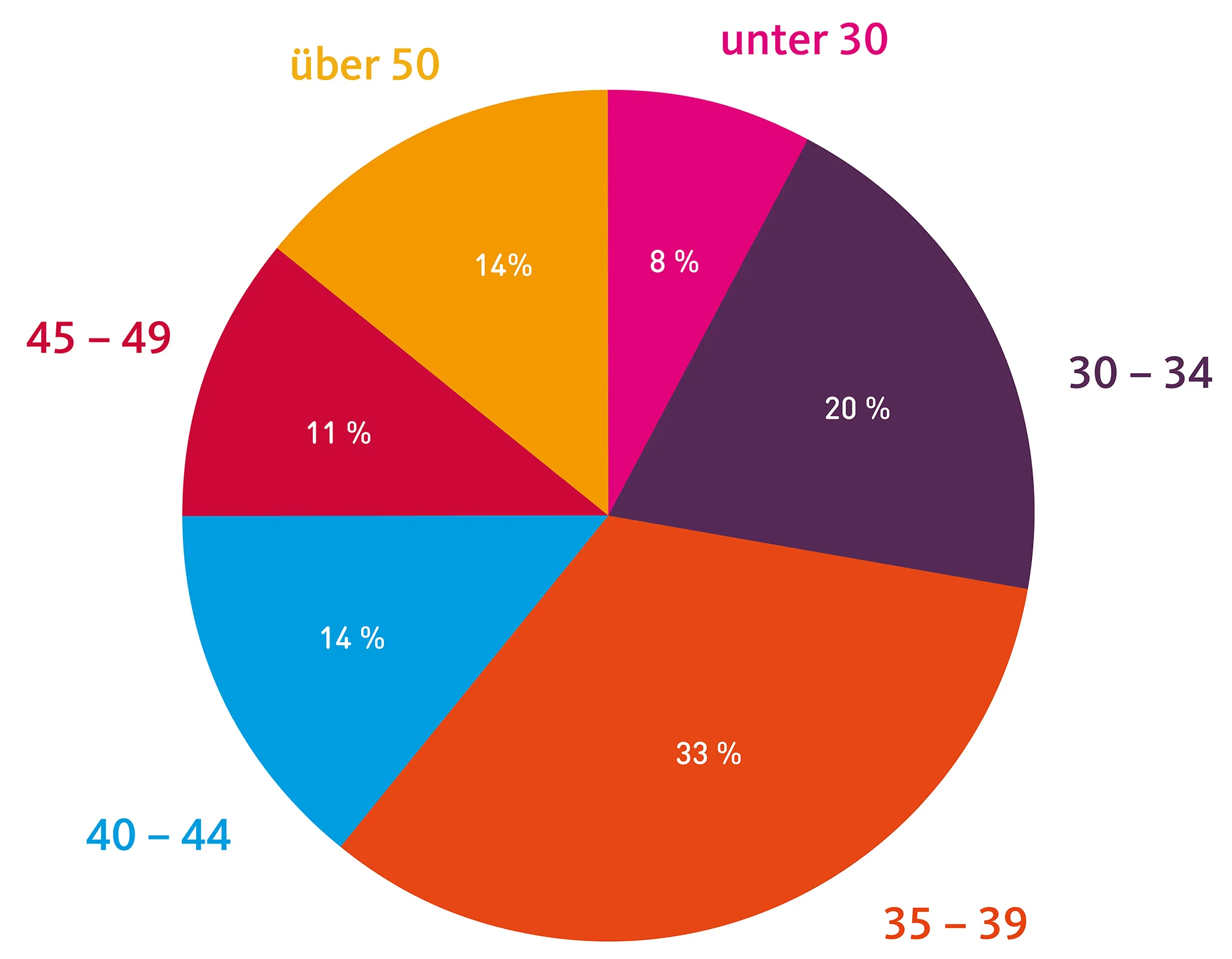
For a Berlin digital agency, our average age is comparatively high. We know how valuable our experienced colleagues are for us and our projects, and we have very good experiences with people who join us via a second or third educational path.
Age distribution at interactive tools in percent
4. Inside the box revolution – change from within
Our working world isn't being revolutionised from outside or from above. It develops through slow, internal processes within companies: through employees being heard and having a say.
Status interactive tools: lived, or work in progress
That's exactly how it happened for us. A few years ago, everything felt off. Then we focused on ourselves – our colleagues. What do we need, what do we want, how do we get there together. We're on that path, and we keep developing and moving forward.
5. Playful Work – Daring more play
Creative economy already dissolve contrast between "real work" and play. Because whoever grasp work as play too, has potential for new creativity and innovation.
Status at interactive tools: introduced / still potential
The freedom for playful work is there: every Thursday can be shaped by us however we like — in theory, playfully too. And twice a year there's an interactive tools fair, where things get tried out and expertise shared, sometimes playfully. We occasionally run Scrum workshops with Lego, and now and then brainstorms happen on a playground. Still, the idea of "colleagues at play" hasn't really caught on yet.
There's still potential here.
6. Mindful solutions – solutions for a mindful life and work
A mindful approach to each other and to oneself is essential. Mindfulness is even becoming part of general education. The work-life see-saw has been dismantled. Now people simply live and work more consciously.
Status at interactive tools: lived, not just talked about
For two years now, our colleague Anja has been offering yoga and meditation classes. Even in everyday work, we occasionally create space for breathing exercises or mindfulness practices. Everyone knows the rules for constructive feedback, and we resolve conflicts together, calmly. We're also more conscious of our environment: our sustainability team checks that electricity, waste, coffee and everything else we need for work is sourced and handled as sustainably as possible.
7. The laziness principle – creative idleness for greater productivity
People doing physical work naturally need rest breaks. But this logic also applies to people doing mental work. Our economic system is changing enormously due to automation. That means more free time for people. But whoever has free time doesn't work … or do they?
Now is the time to ask how the time freed up can be used sensibly.
Status at interactive tools: work in progress
We take breaks seriously and work with trust-based hours. This means everyone can, in coordination with project teams, take breaks, go for a walk round the block, come in earlier or leave earlier, and so on.
Still, most people would probably raise an eyebrow at a colleague sleeping at their desk. So we haven't entirely shaken off the ideas of the achievement-oriented society just yet.
Conclusion: New Work trends are reality
Most new work topics haven't just arrived with us, but are already integrated into everyday working life. Through our development process we were able to rethink many old thought patterns and change them where necessary.
Satisfied employees and a low turnover rate are the results of our process on one hand. On the other, we also find that our clients greatly appreciate our mindset and our approach. Because a better working atmosphere and more freedom for our experts also improve the results of our work.
Interested in New Work?
- Timo Wirth
Creationsynaigy
Show phone numberShow email address