



One Voice, One Vision – One PIM: the importance of consistent communication for trust and loyalty
 Hanno KortmannE-Commerce Consultant | Data Protection Officer (DPO) · synaigy
5 min read

Nowadays personal relationships and trust matter more than ever. A central system for information about products and services, such as a PIM system, enables consistent communication and matching information. Employees always have up-to-date data, while outdated information becomes a thing of the past. Information can also be centralised and coordinated across different languages and markets. This way the challenge of consistent communication across various channels is mastered. In this article you'll learn how, through clever use of PIM, you can overcome not only external but also internal challenges and thereby drive your company's success.
With the increasing comparability of products and services on the internet, paired with the choirs of marketing messages trying to out-shout each other on every channel, the old topic of personal relationships and trust takes on a new, current significance. Meanwhile, a provider's visions and values play a relevant role for an ever-growing number of target groups, and loyalty arises from the trust that these values are not just propagated by the provider but also actually lived. Inconsistent communication, or the fact that you receive different, sometimes contradictory information at different touchpoints of a company, means that trust cannot be built up as quickly, or is lost again.
A shared source open to all employees for information about products and services is – alongside support materials, training and a company-wide unified culture – a building block for keeping messages and information in harmonious alignment.
Consistent information and golden records
You experience it time and again in companies of all kinds of sectors and sizes:
A customer asks for information material, an employee searches for information, finds it only partly in an old document, quickly adjusts the essentials and forwards the document to the customer – true to the motto: "Fast is better than pretty - as long as the content fits."
Aside from fact that document sometimes still shows who predecessor was addressed to, and that not necessarily all carried-over information is still correct and current, today's regular improvement of communication templates likely relies on old template with some probability – perhaps even with outdated details about company, its address or its bank details.
Who should be blamed? The employee who answered a request as quickly and efficiently as possible to the best of their knowledge? – Certainly not. A content department that can't update all documents for every company offer ad hoc on suspicion or hearsay? – Probably not either.
The majority of such enquiries concern products, services and their terms, information whose structure and content you should not only know precisely but which practically lends itself to automation.
Modern PIM systems now master not only the automatic generation of technical data sheets, PDF outputs or connection to DTP programmes, but Office product lines are now also so well supported that not only tables and documents, but also presentations can be populated with information already held in the system – in the current, centrally stored template and ready for further processing by the employee.
In addition, if the data model and processes in the PIM system are set up accordingly, this is always where the "central truth", the so-called "golden record", is available, from which every communication about a service or product draws.
This means outdated information, transmission errors and information gaps become a thing of the past, and staff can focus on what's far more essential instead of research, copy-pasting and manual formatting: communicating with the customer, building and maintaining the relationship, and ultimately earning trust.
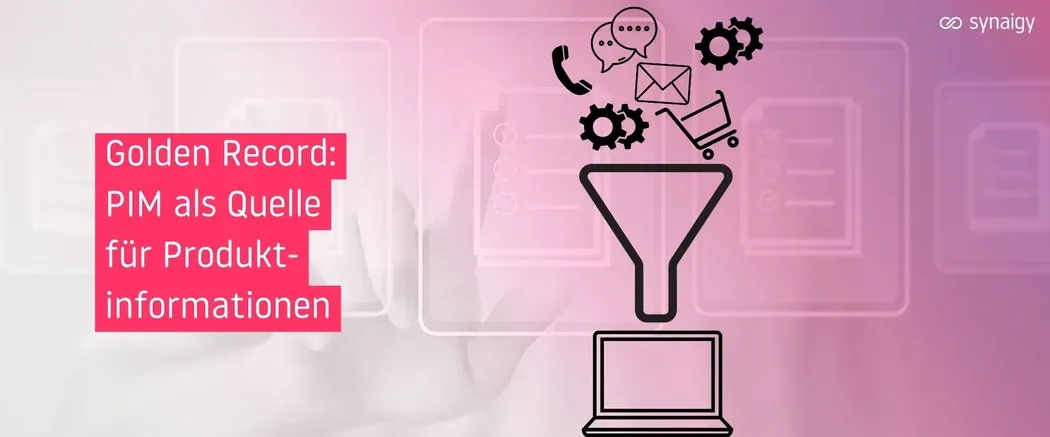
Current, consistent information at every touchpoint
No matter how hard many companies try to centralise communication channels and steer them into quality-assured paths — contacts always reach the company via back channels and detours that nobody has on their radar. And even when communication does run in an orderly way, it's often a big challenge to ensure that information from the marketing channels is consistent with that from PR, the service desk, customer care or the sales departments.
What can already be difficult at one location and in one language becomes significantly more complex once other countries and languages are added — was that measurement in centimetres or inches? Is that gallons or litres? And are we even allowed to sell this device in Kenya?
Centralising this information in a PIM system that ensures the information is available to all employees within the company – in their language, in the local units, filtered for the respective local market – renders many of the daily challenges obsolete. Mapping and supporting translation processes, whether through internal staff, external agencies or automatic translation, helps ensure consistent external presentation even across multiple languages. Information silos are broken down, and knowledge previously confined to individual people is unlocked so that bottlenecks no longer arise.
Conclusion
Consistent communication about products already addresses a large part of the usual challenges around external presentation. With clever use of a PIM/DAM solution, employees can also be supplied from the same source with up-to-date templates, information materials and assets for creating their own documents. When this support meets a unified corporate culture with a shared set of values and a strong vision, nothing stands in the way of building trust and loyalty from this side. We're happy to support you in selecting and introducing your PIM system. Feel free to get in touch with us.
Have questions or feedback?
Then feel free to contact us directly.
- Hanno Kortmann
E-Commerce Consultant | Data Protection Officer (DPO)synaigy
Show phone numberShow mobile numberShow email address

Subscribe to the blog now and never miss any news
✔️free of charge ✔️weekly news ✔️expert knowledge
Please accept the corresponding cookies to view this embedded content.