



PIM for e-commerce – activating the boosters
 Hanno KortmannE-Commerce Consultant | Data Protection Officer (DPO) · synaigy
5 min read
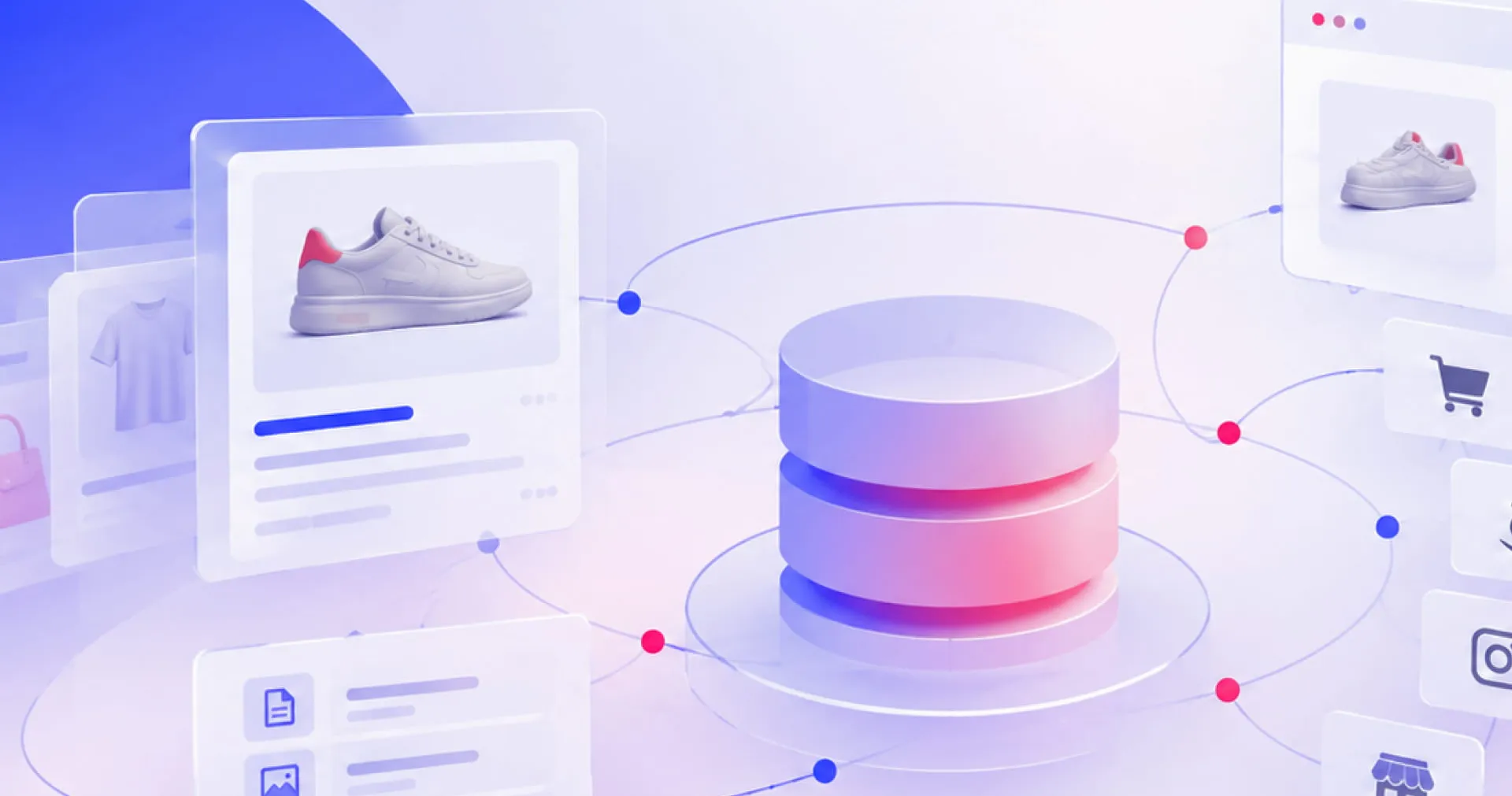
How centralized product data improves the customer journey
Today, customers expect more from e-commerce than just a webshop to buy from – they demand seamless integration of research, product pre-selection, purchase preparation, purchase execution and after-sales services across various analogue and digital touchpoints. This blog post uses an example to explain how the KANO model helps increase customer satisfaction. You'll learn how to provide the right information in the right form and specifically highlight the benefits for your customers at the optimal moment.
At the various touchpoints and in the many steps that lead to a purchase decision, prospects use different product information to form a picture of what purchasing options they have, which criteria are relevant to them, and by which considerations they ultimately choose the product and provider they buy from.
At every point along the decision journey, however, there's a risk that exactly the information the prospect wants to use to narrow down their product choice isn't available – whether because it exists with the provider but not at the touchpoint being used, or because it's hidden in a data sheet the prospect would first have had to download.
That's why a system that holds this data centrally, where information can be added flexibly within the shortest time and optimally prepared for the various channels and contexts, is one of the keys for successful players in e-commerce.
The relevant criteria are constantly changing
Every marketer and every product manager learns at some point (usually quite early) in their career: what was yesterday's unbeatable USP becomes today's one selection criterion among many, and tomorrow it's simply assumed to be a given. The KANO model distinguishes, on one hand, between basic features that the customer expects, performance features that the customer compares, and delight features that positively surprise a customer, and on the other hand, rejection features that are grounds for exclusion and irrelevant features that play no role in the purchase decision.
An everyday example might look like this: a prospect wants to go out for an affordable meal after work. Basic features in their search could be suitable opening hours and decent transport links. Performance features would be selection and range as well as pricing. That a restaurant uses only ingredients from local organic farms might be just as much an excitement feature as a free starter. A comment that the restaurant is plagued by mosquitoes and cockroaches would be a classic rejection feature; the availability of high chairs is, for our example prospect, an unimportant feature. For another prospect looking for a restaurant for an evening date, the criteria will partly overlap but also partly differ significantly. On top of that, the relevance of criteria changes – whether a restaurant offers vegetarian or vegan dishes, whether online reservations are possible, whether contactless payment is available, have been added as criteria. The relevance of, for example, the presence of smoking areas has by now almost completely disappeared. The general option to reserve, which used to be a performance feature, has by now become a basic feature.
Every new trend, just like every new target group, will place different demands on the availability of information, and the flexible preparation of product information for different target groups decides whether an offering gets noticed or falls by the wayside in the decision process.
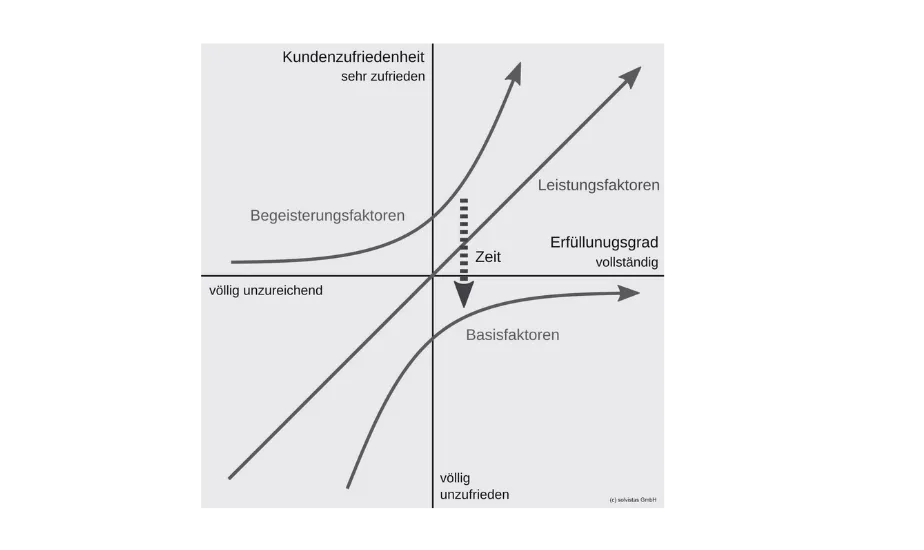
Source: solvistas GmbH
Information needs to be available where and how it's relevant
Project experience in a wide variety of setups shows: accessing product information via an ERP system is often an issue associated with effort, delays and low flexibility. On the one hand, configurability and product maintenance are often technically, organisationally and in terms of personnel limited; on the other hand, the data models for ERP and e-commerce do overlap but differ in important respects, which usually leads to workarounds that squander at least part of the potential of the product knowledge.
Depending on the prospective customer's use case, identical product information serves different purposes – sometimes as search keywords, sometimes as filter facets, sometimes as parts of descriptive texts. This flexibility in usability, combined with the dynamic change of the relevant attribute sets, makes it difficult to tackle the topic using workarounds.
What's required is the ability for departments from product management, marketing and sales to repeatedly restructure, add to and recontextualise the communicated information, so that ultimately product presentation can become part of the personalisation strategy of e-commerce systems.
Segment- and intent-dependent delivery, optimised for the various channels and touchpoints, was still a thing of the future a few years ago, but the time when sales could provide selected key information in lists and catalogues to prospects on request, given sufficient qualification, is over in almost every industry, and the development – and the customer expectations tied to it – is rapid.
Fast information about products and services, optimised for the various decision-making steps, is now understood as part of the service a company offers, and in some industries it's still an excitement feature, in others already a performance feature. In times of increasing comparability of offers, missing or hard-to-access information is quickly penalised with exclusion from the relevant selection set.
On the other hand, good information and communication policy is rewarded with better performance and higher sales rates and builds loyalty through trust and transparency. The same applies to product information - only if the product meets the buyer's expectations and requirements will they buy again. What happens if it doesn't can be seen in the comments and reviews on, for example, Amazon or Google.
Conclusion
Good, flexibly usable and dynamically extendable product information is currently still a differentiator, with which a company can stand out positively from its competitors and position itself as a "customer expert". Whether for B2C, B2B or D2C – whoever puts barriers in the way of their customers' decision-making gets penalised. Whoever, on the other hand, provides the right information in the right form and specifically highlights the benefits for the customer at the right moment, can thereby gain a clear strategic advantage.
Key information must not be locked away in document graveyards or lost in the noise of irrelevant data – it is the beacon that guides the customer to the provider.
And the better the data model and channel delivery of product information can be tailored to the requirements and demands of target groups and their customer journey, the brighter these beacons shine amid the wealth of offerings.
PIM systems offer here not only options for optimal preparation for other systems and communication of data itself, their tools for controlling and monitoring data quality and their options for swift adjustment and expansion of offered information, directly controllable by business users themselves, make them ideal starting point for product communication strategy.
Have questions or feedback?
Then feel free to contact us directly.
- Hanno Kortmann
E-Commerce Consultant | Data Protection Officer (DPO)synaigy
Show phone numberShow mobile numberShow email address

Subscribe to the blog now and never miss any news
✔️free of charge ✔️weekly news ✔️expert knowledge
Please accept the corresponding cookies to view this embedded content.