



A public cloud cheat sheet of the leading cloud providers
 Marc AchsnichTeam Lead · synaigy
5 min read

In an era where cloud technologies are revolutionising how companies build and manage their IT infrastructures, staying up to date is essential. The public cloud has become an integral part of modern business practice, with services such as AWS, Azure and Google Cloud shaping the digital landscape. On top of this, OVHcloud has established itself as the European standard, as the leading European cloud computing company with Europe's largest data centre by area, and the first European company to be compared with hyperscalers in international studies such as Gartner or IDC. With its cloud services, it offers data-sovereign and sustainable services that can cover much of a modern IT landscape.
But with the sheer number of functions, services and abbreviations these cloud platforms offer – sometimes over 200 services – things can quickly get overwhelming. Even trying to compare what's available across the different clouds can quickly get complicated, since naming conventions vary by provider and service and aren't always obviously logical at first glance. This is essential, though, for designing your IT landscape. But just because a cloud provider doesn't offer a dedicated service in one of these categories doesn't mean it can't achieve the same goal, or complement the IT landscape with other services as part of a multi-cloud approach. You'll find examples of this in our blog post on multi-cloud (https://blog.synaigy.com/cloud-strategie-ovh-multi-cloud)
With our "Public Cloud Cheat Sheet" you get a clear overview that guides you through the complex jungle of public cloud. Here you gain insight into which services you could operate, for example, with data sovereignty via OVHcloud. For better clarity, it is divided into 8 disciplines of the cloud, making it easier for you to start your analysis and cloud comparison.
Storage services
Storage services are virtual platforms that let you store and retrieve data flexibly over the internet. These services offer scalable storage space, data security and simplify access from various devices. Cloud providers offer different models such as object, block or file storage with varying provisioning times and speeds to meet diverse needs. Cloud storage services enable efficient data management and shared use of resources and support the requirements for modern, flexible data access.
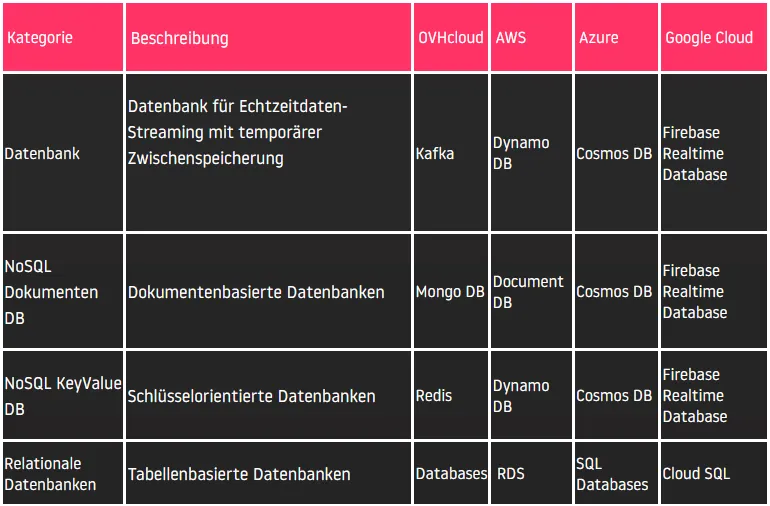
Databases
Databases are virtual services that let you flexibly store, manage and access your data in the cloud. These services offer scalability and flexibility as well as straightforward data backup. You can access your data over the internet and update it in real time. Cloud providers offer various types of database to meet the widest range of requirements. In doing so, they enable efficient data management without physical hardware and offer optimised performance while meeting high SLAs.
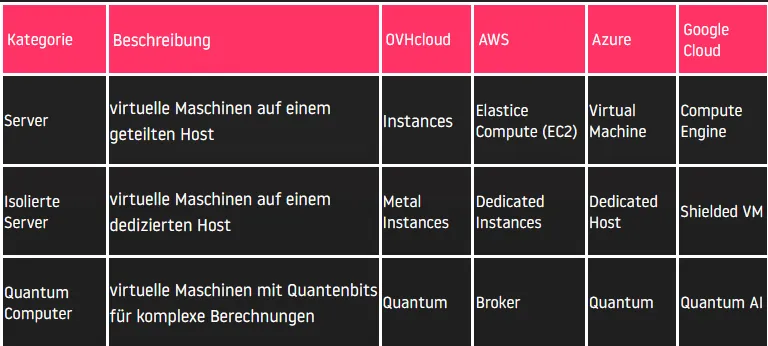
Computer systems
Computer systems are virtual platforms that let you use computing resources over the internet without owning physical hardware. Cloud providers offer scalable computing power, storage and network services. You can scale resources as needed to access requirements flexibly. These systems make it easier to access powerful computing infrastructure for applications, data processing and complex calculations. Computer systems offer efficiency, cost savings and enable a focus on software development without having to worry about physical resources.
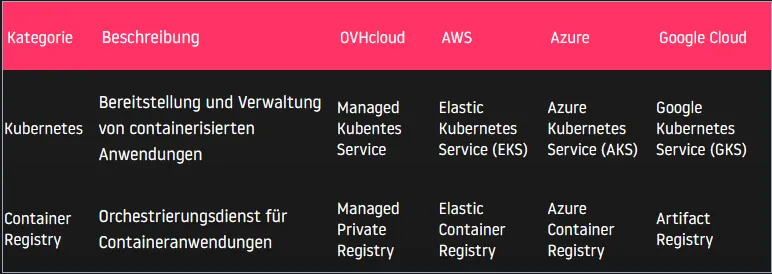
Orchestration
Orchestration refers to coordinated management and automation of various systems, services or processes, to ensure seamless integration and efficient workflows. In cloud computing world, orchestration includes automated provisioning, scaling and management of resources, including virtual machines, containers and applications. Tools like Kubernetes offer orchestration environment for containers. Containers are virtual units that enable packaging, shipping and running applications and their dependencies consistently and efficiently. They offer isolated environment that ensures portability between different systems. Containers, such as Docker, can be deployed quickly in cloud and enable efficient resource use. Through their lightness and scalability they revolutionise application development, by enabling you to develop and deploy applications independently of underlying infrastructure.
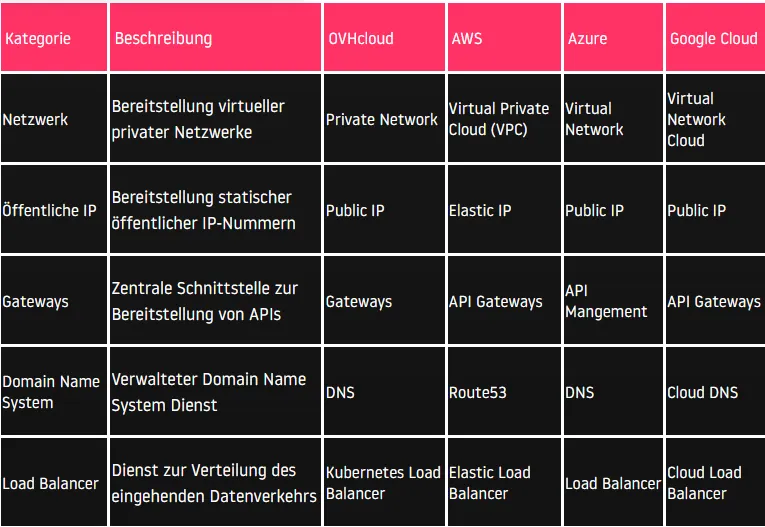
Network
Virtual network environments let you create isolated, tailor-made networks in the cloud. This allows you to organise resources such as virtual machines, databases and applications in a private network and connect them securely. It also lets you configure public IP numbers, IP address ranges, routing tables and network gateways to shape the network topology according to your requirements. Cloud networks offer security and scalability by controlling and isolating traffic while also enabling flexible resource management.
Data & Analytics
Data & Analytics comprises extensive services for processing and analysing large volumes of data. These platforms enable advanced analytics and insights. Data integrations orchestrate the seamless flow of data between different systems and sources, creating a coherent data landscape. In addition, managed search services offer efficient search functions to filter data volumes effectively. Together, these elements enable a holistic data strategy, improve decision-making and foster innovative insights in complex, data-rich environments.
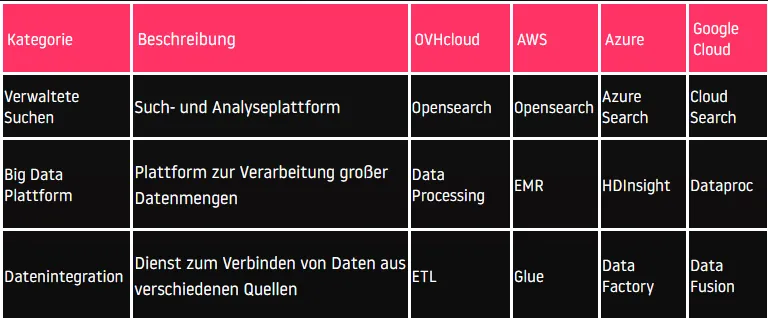
Artificial Intelligence
Artificial intelligence (AI) covers technologies such as machine learning (ML), where algorithms learn patterns from data to make predictions and decisions. AI notebooks give you an interactive environment that lets you build, test and optimise ML models. These notebooks offer a user-friendly platform for experimenting with AI algorithms. Together, these AI technologies enable innovative solutions in areas such as image recognition, language processing and autonomous systems.
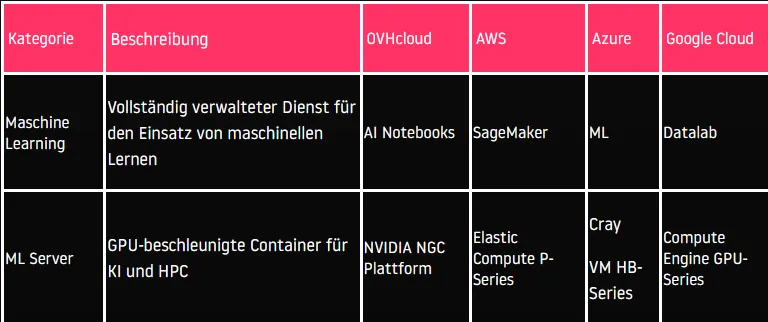
Management
Management refers to administering and monitoring IT resources, including infrastructure, applications and user identities. Within this discipline, configurations for creating and managing these are maintained.
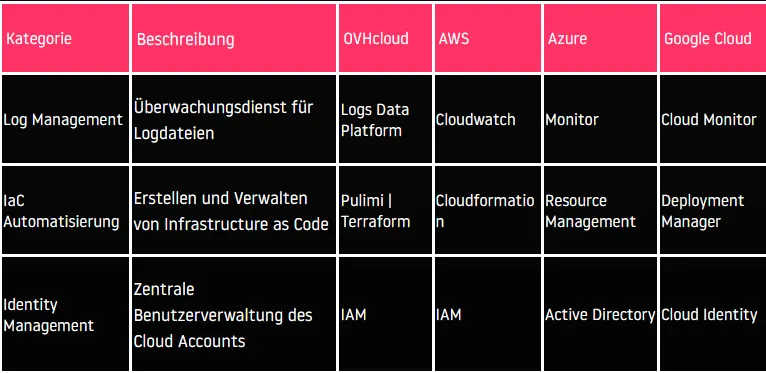
- Marc Achsnich
Team Leadsynaigy
Show email address

Download the Public Cloud sheet now
✔️free ✔️available immediately ✔️from experts for experts
Please accept the corresponding cookies to view this embedded content.