

Looking to the future with virtual reality
3 min read
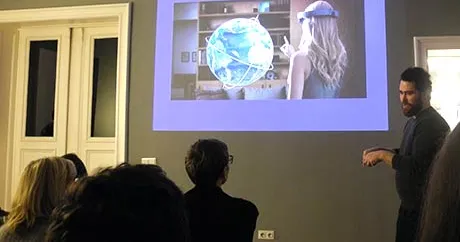
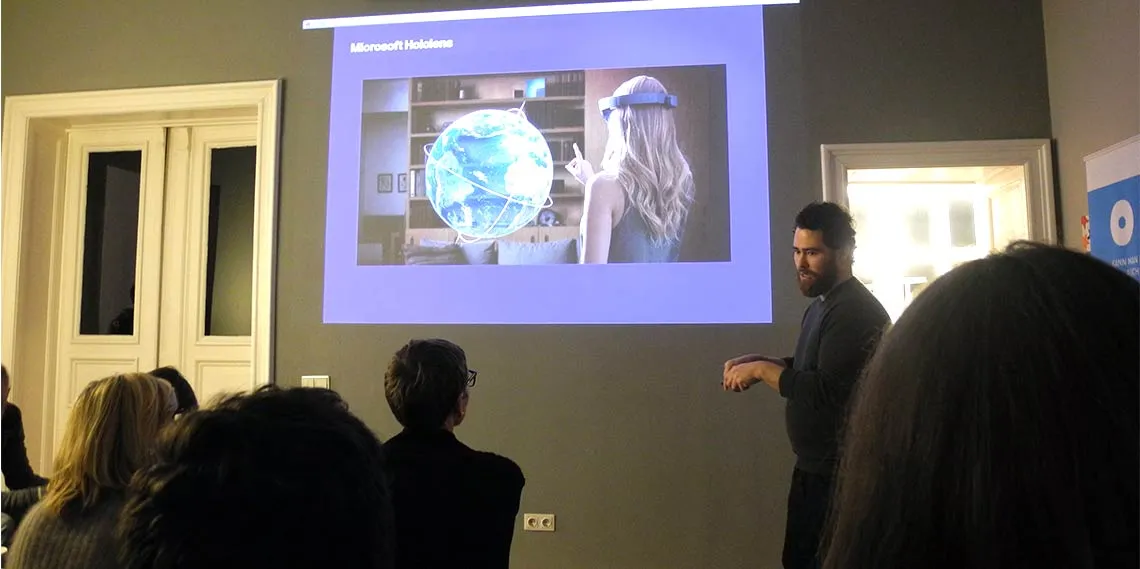
"There's a certain pioneering spirit," is how Philip Hausmeier describes the virtual reality scene in the USA. Philip Hausmeier is an artist and expert in virtual reality (VR). Fresh back from Silicon Valley, he speaks at iSpiration at interactive tools about the VR scene there, draws comparisons with the local scene and takes a look at future developments in VR technology.
Rising revenue with virtual reality
An initial hype around VR already existed in the 1980s, as Philip Hausmeier shows in a historical overview. The technology was still in its infancy, costs were immense, and the hype soon faded. But for some time now, virtual and augmented reality (AR) have been strongly on the rise again, with many VR headsets on the market.
Snapchat, for example, has good prospects for success in the B2C segment with its Spectacles glasses. And Microsoft's HoloLens is already in use at various companies – Audi, VW and Thyssenkrupp. It offers new ways to visualise work processes through holograms.
According to a recent survey by consultancy Deloitte and industry association Bitkom, revenue in the German consumer VR market will rise to one billion euros a year within four years. The technologies are becoming mass-market ready, and tech giants such as Microsoft, Samsung, Intel and Facebook are investing heavily.
Dynamics of the American VR scene
For Philip Hausmeier, born in 1980, VR is far more than just a hardware set. The current main target audience for developers may be gamers, but there are other fields of application too. The Berlin-based artist has, for example, shown a VR exhibition at the Computer History Museum in Silicon Valley. Hausmeier also sees applications for VR in therapy, for example to combat social and psychological anxieties.
He's enthusiastic about the dynamism of the American VR scene, characterised by a spirit of optimism – and, unlike the German scene, it speaks more openly about development challenges and supports each other.
Strong appeal for users
After the informative talk, the future areas of application and the enormous potential of VR and AR are discussed in the closing discussion. Marketers, too, have already recognised the potential of these technologies: the creation of 3D worlds and the blending of the real and virtual world exert a strong appeal on the user.
The experience leaves a lasting impression on them and creates strong customer loyalty – an important field for marketers, therefore. And wherever the customer spends their time, advertising budgets flow there too.
VR and AR in e-commerce
VR and AR already offer very concrete approaches in e-commerce: AR is particularly suited to impressive product presentations, and with a VR headset users can start a virtual shopping tour through a department store. Undisturbed, they can browse the range and pay with a nod of the head.
That's exactly what Macy's from New York did at Alibaba's Singles' Day – the Chinese equivalent of Amazon's Black Friday – last year. In one stroke, the company became famous in China.
Continuous development and new areas of application
Starting with AR games, through shopping in VR worlds, to AR repair instructions and VR art exhibitions – devices for VR and AR are constantly being further developed and new areas of application are being opened up. In contrast to the 1980s, VR and AR will become established and, in a few years, part of everyday life.
Your contact person
- Marian Gertheim
Consultingsynaigy
Show phone numberShow email address