

Service Jam: 48 hours to make the world better
5 min read
In over 90 cities worldwide, creative minds met from 17 to 19 February for Service Jam 2017. Similar to a jam session among musicians, this event works the same way – except here it's service designers developing digital products and services meant to improve people's everyday lives. In Berlin, seven teams came together who had never worked in this line-up before – and our Creative Director and Senior Concepter Stefan Freimark took part as a coach.
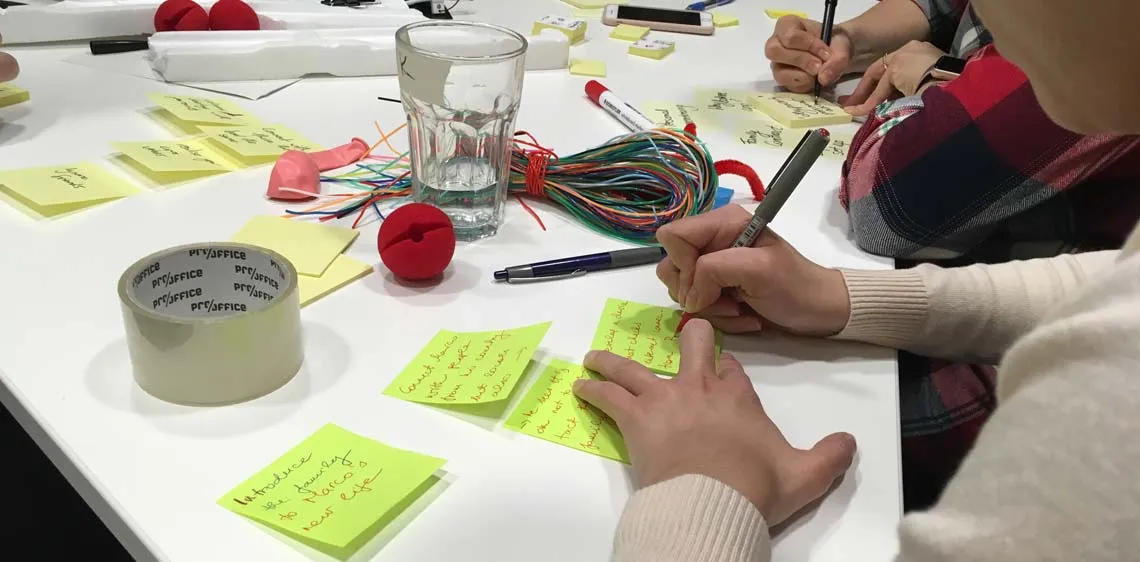
Innovations in service design: the double diamond process
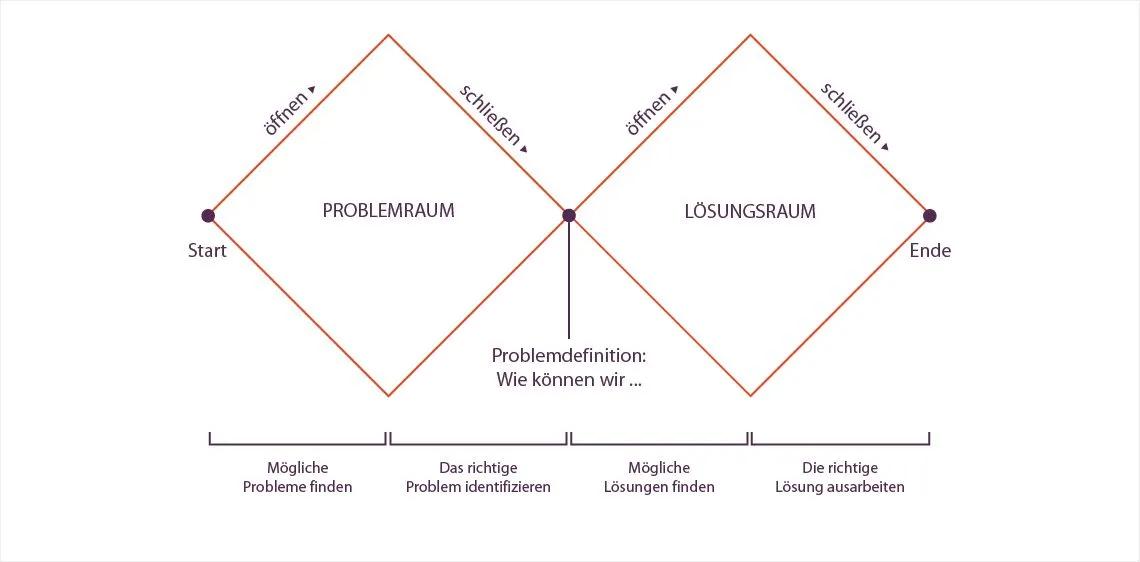
Stefan's job was to guide his team through the double diamond process. This innovation process closely resembles the design thinking principle and underpins user-centred design in service design.
It started on Friday evening: in all participating cities a 10-minute video was shown explaining the Service Jam and announcing the theme. "hello? lo? o? o." was this year's Jam theme. Participants are deliberately given something this abstract so they don't already have solutions in mind. They are meant to start their project with an open mind.
The participants initially found the first task of the evening not easy, but eventually they were able to draw inspiration from the topic and settle on a team name, a team motto and three keywords. These were meant to serve as a starting point and inspiration for the following day's tasks.
Download Double Diamond diagram DE
Download Double Diamond diagram EN
Day 2 at Service Jam Berlin 2017
Saturday morning was entirely dedicated to the first diamond in the design process: opening the problem space and gathering as many problems of possible target groups as possible. Stefan's team had the following assumption:
People who move to Berlin or Germany miss the friends and family they left behind and want to stay in touch with them.
To test the assumption, user research was carried out at Alexanderplatz. The result: this problem is already being solved brilliantly by FaceTime, Skype, WhatsApp and other messengers. A really key aspect of product innovation and service design became directly clear to participants as a result: product discovery first, then product development.
No product development without product discovery
The product discovery phase consists of analysing existing solutions and identifying genuine user needs. Anyone who starts without user research develops products that miss the market and user needs.
The short interviews conducted by Stefan's team at Alexanderplatz, however, brought other problems to light, from which the teams could derive key insights and develop personas. The one real problem people had was crystallised out of the mass of possible problems:
While first diamond of process concerns problem space, second diamond focuses on solution space: here too it's important first to open up solution space, rather than diving straight into developing any solution.
How can we help busy people reduce their guilty conscience because, for example, they call their parents too rarely?
Develop solutions through to the prototype
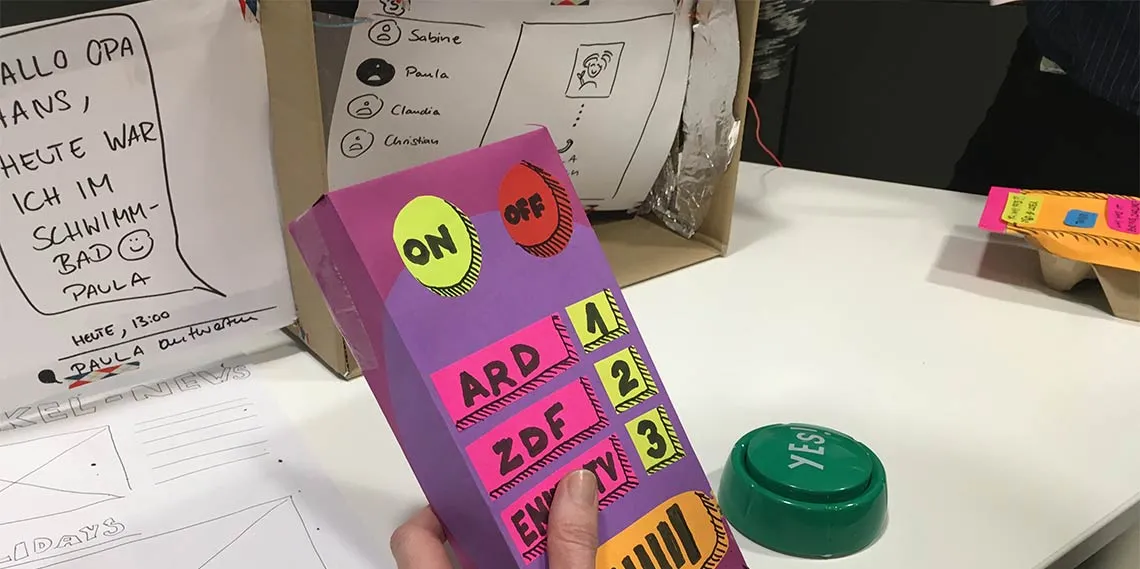
So on Saturday afternoon the teams first gathered ideas and possible solutions and drafted several prototypes. Using quick craft work or a sketched storyboard, they visualised their solutions to convey them clearly to others. That's why the teams visited each other at an idea bazaar in the evening and gave each other feedback.
Final stretch followed on Sunday: with feedback from other teams, participants found it easy to focus on one solution — closing down solution space. This let them focus on one prototype and improve it iteratively.
Conclusion: the user as starting point in service design
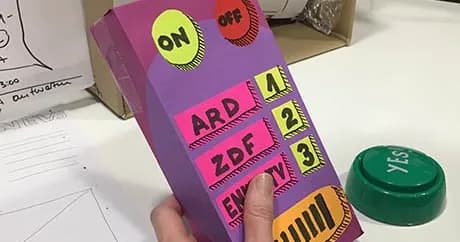
In the end, all seven teams presented a prototype. These were advanced enough that, after another round of user testing, they could have already moved into the product development phase. Stefan's team demonstrated the app "Callagotchi" to the audience. This app encourages users to call friends or family more often. Other teams presented virtual assistants that help new Berliners with integration – whether visiting the doctor or dealing with the local registration office.
In the 48 hours, participants and coaches not only had fun, but everyone also learned something along the way: the coaches practised moderating group work, while participants tried out various Service Design methods. In doing so, they identified the starting point for innovative products: the users.
I can only recommend the Jam: whether as a weekend taster session into the user-centred design process or as a kick-off for your next innovation project.
If you also want to run a service design workshop to improve your services and digital products, write to us! We have long-standing expertise in realising digital projects, from corporate websites to web-based processes to online services. Our clients include enercity, Bosch, Deutsche Telekom, IKEA, Liebherr, Stiftung Warentest, Sparkasse and many others. With our 60 employees in consulting, development, design, conception, usability, content and editorial, we develop interactive brand experiences with Joy of Use, the maximum of positive user experience.
Your contact person
- Marcus Völkel
Consultingsynaigy
Show phone numberShow email address