

This is how sustainable communication works
7 min read
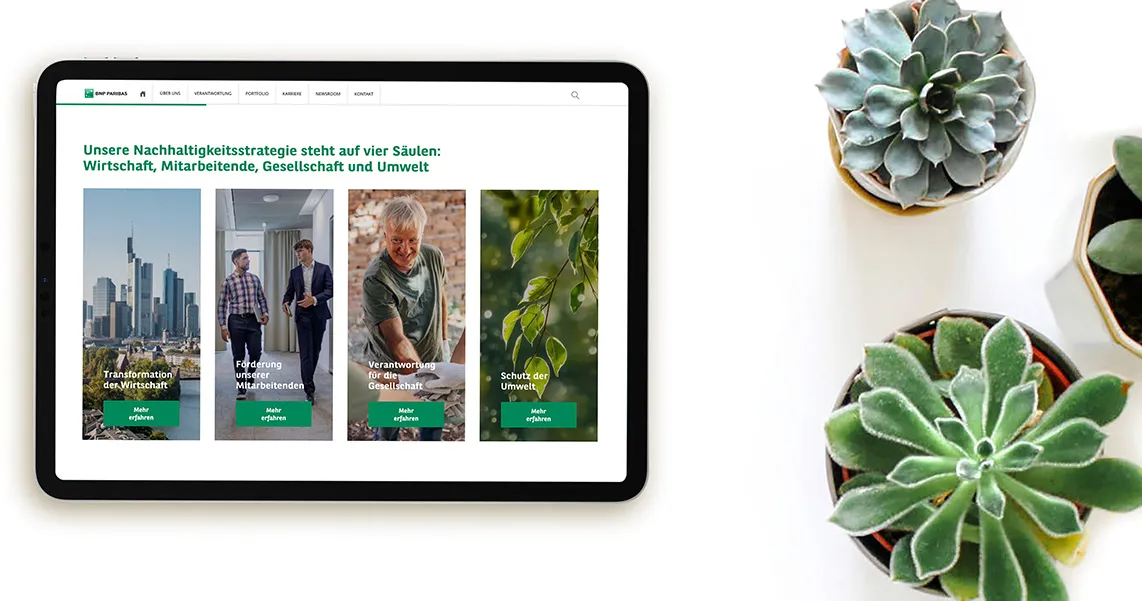
Does your company engage systematically in sustainability? Do you already regularly produce a detailed sustainability report? Is this meta-topic still not properly visible to your target groups? Then you're probably missing a strategic sustainability communication! We'll show you what sustainable communication actually is, what it achieves, and what such green marketing can look like in practice.
Definition – this is sustainability communication
Buzzwords like "sustainability communication", "sustainable marketing" or "ecological marketing" refer to internal and external green corporate communication reporting on sustainable activities. No big surprise, right? But it's often overlooked that sustainable action is about much more than just protecting climate and environment. Sure, ecological aspects are important, but to build a credible sustainability strategy and communication, social and economic measures must be included too.
The three pillars of sustainability
The so-called ESG criteria have become established as the standard for sustainability reporting. There are various certificates that follow this structure, such as
The German Corporate Governance Code,
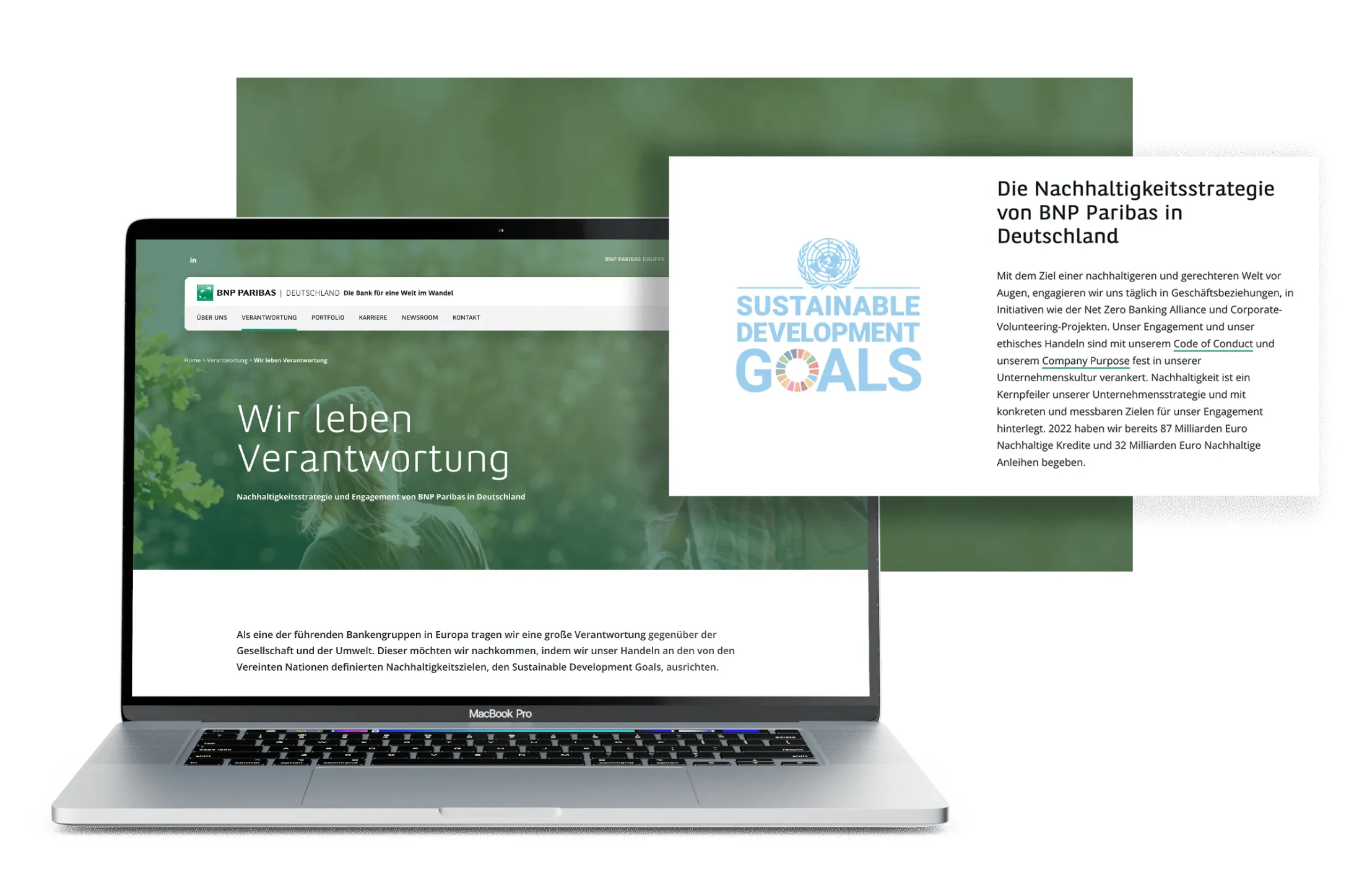
The UN Global Compact with the 17 "Sustainable Development Goals" (SDGs),
The ISO 37000,
The OECD principles of corporate governance,
The German Sustainability Code (DNK) or
The Global Reporting Initiative (GRI).
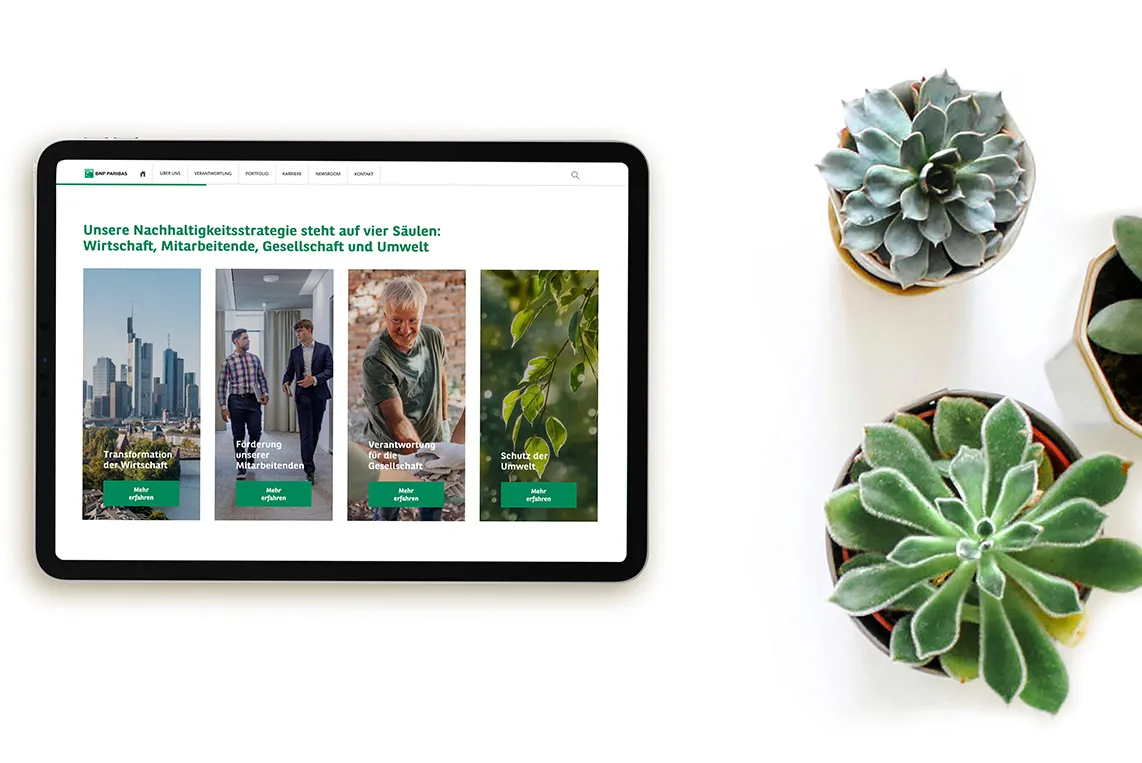
Here "E" stands for Environment, meaning ecological topics. Under "S" for "Social" all social and societal concerns are gathered. And the "G" for Governance deals with responsible corporate management. These ESG criteria are a good starting point for systematic green marketing – and can also be used beyond the sustainability report that will become mandatory for many companies from 2024.
Credibility instead of greenwashing
Companies should only talk about sustainable plans and measures if they're actually happening. Sustainability is therefore only a reason to communicate for your company if there's a firm intention to actually act more sustainably. Anything else falls under the term "greenwashing". Greenwashing is often not just unconvincing – it can even be misleading and ethically questionable. So it's not only important to actually act sustainably, but also to communicate about it transparently and authentically. Put another way: you shouldn't try to use sustainability purely as a marketing tool.
Goals of sustainability communication
Sustainability holds high value for customers and the public – that's beyond dispute. So it's no surprise that sustainable topics are a fixed part of the strategy at many companies. Usually, the goal of this communication is to boost positive perception of the company's own brand or to support sales. But sustainability is also an important factor for employer branding and thus for recruiting as well as retaining existing staff. Companies that act sustainably not only have a positive impact on the environment and society, but also convey a sense of purpose. And that goes down very well with applicants and employees – after all, more and more people want to work in an environment that matches their own values. Sustainability can therefore make not just the brand but the company as an employer overall more attractive.
The most important corporate goals in sustainable communication at a glance:
Visibility
Positioning and differentiation from competitors
Building image and reputation
Relationship management and building trust
Employer branding
Sales promotion
Would you like to communicate your sustainability efforts effectively?
As a sustainability communication agency, we support you holistically – from developing a comprehensive sustainability strategy to conceiving and creating suitable content. We advise you every step of the way and ensure your messages reach the desired target audience.
How we support you with sustainability communication
Raising awareness for sustainability
Companies working with, for example, renewable energy, e-mobility or environmental and bio-resources in particular often pursue a further goal – namely, building green awareness. Because sustainability is a complex topic that goes far beyond materials and production conditions. There are still many knowledge gaps and misconceptions among target audiences. This often involves projects, products and solutions that require substantial ecological or technical background knowledge. That means we need communicators who can present these complex topics in a way that's clear and engaging. Because only then can you get people excited about sustainability and show them how their consumption choices can have a positive impact on the world.
Stakeholder analysis and topic planning
Which content, channels and media work best for sustainability communication depends entirely on your individual strategy, your goals and target groups. That's why you should take the time for thorough analysis and talk to all key stakeholders. Target-group-oriented topic planning helps you uncover potentially interesting topics within the organisation and communicate them successfully. Ask yourself, for example, how you can tell stories around materials, origin, production, resource use, logistics, circular economy, digitalisation or certificates in a way that reaches a broad audience or experts. Empathy and creativity are needed here to present the content in an understandable and entertaining way.
Comprehensibility as a key success factor
Sounds obvious, but is often underestimated: to spark the interest and attention of your target audiences, you need to make sure your content is presented clearly. The following five questions help you create audience-focused content that conveys your sustainable messages effectively.
What topic do we want to communicate?
Which of your target groups is this topic relevant for?
Which channels/media do we use to reach our audience?
How do we need to tell the story for the target audience?
And how should we stage the content?
Do you need support with planning or implementation?
We support you through every phase – from planning your sustainability strategy to selecting the right topics to creating content. We're happy to look at your individual case together – simply arrange a free consultation by email or give us a call!
Get in touch now
Authenticity is mandatory
An effective method for communicating sustainability topics convincingly and clearly is storytelling. Point here is to make path towards greater sustainability transparent. Wrap your messages in an authentic story that evokes emotions in audience. This way you create a strong connection – even when topic is abstract and complex. Give your audience opportunity to follow company or its protagonists as they take on a challenge, overcome difficulties and ultimately achieve results. If you manage to touch audience emotionally while informing them, message stays in memory longer and has more lasting effect. You meet your audience at eye level and show that people in your company are seriously and credibly committed.


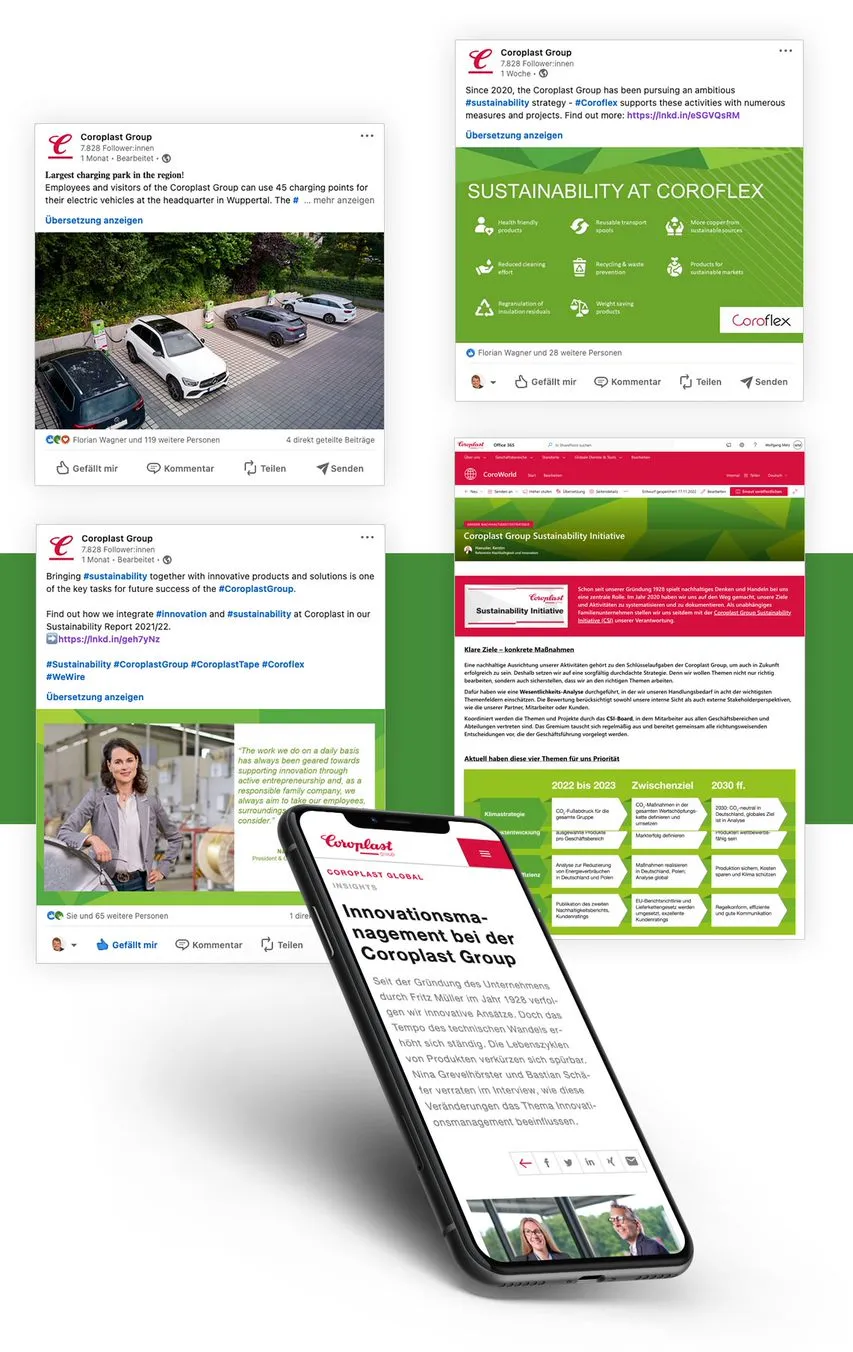
Channels and media for sustainability communication
Sustainability communication can happen across many channels and media. Following list maybe hold one or other idea for your sustainability communication:
Sustainability report: This format is often the starting point of communication. It delivers the key topics and provides a basic system. At the same time, this non-financial business report often follows complex standards, which frequently turns the medium into purely expert communication.
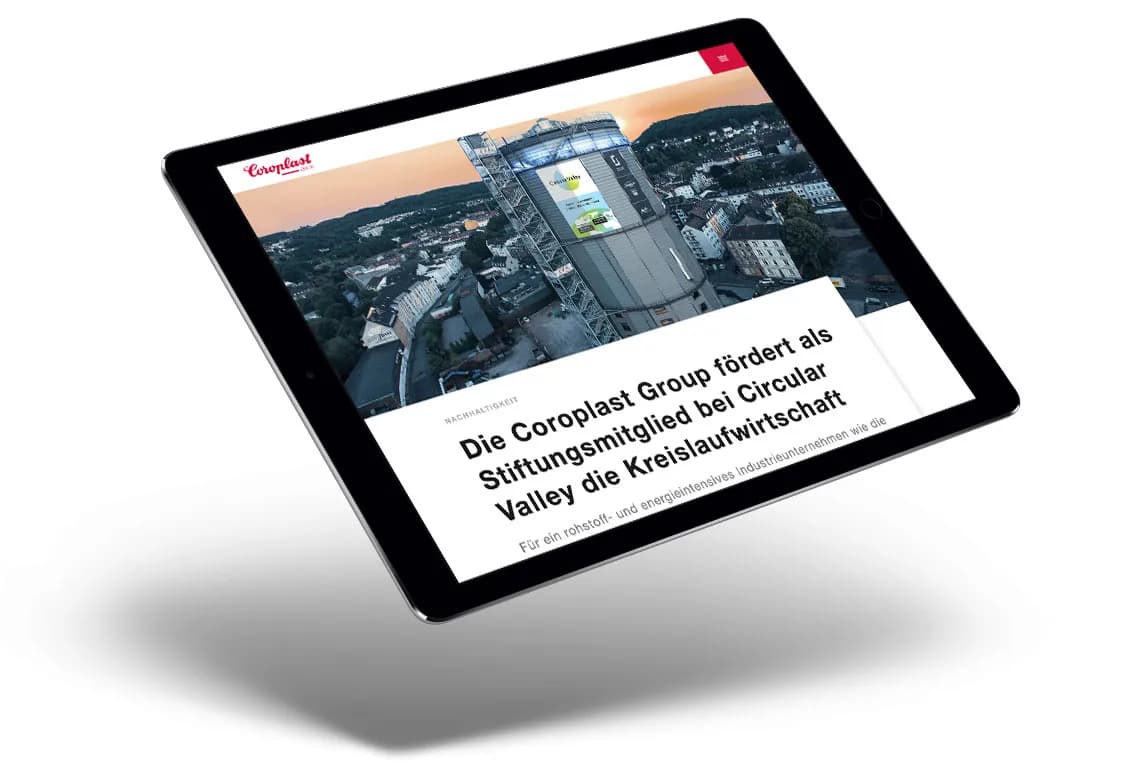
Website/corporate newsroom: Your company's website should be deliberately populated with sustainability topics. Dedicated landing pages bundle and highlight the topic. They provide an overview and link to more in-depth content. The sustainability report can also be offered for download here.
Social media: Company profiles on LinkedIn, Facebook, Instagram, Twitter etc. offer the chance to enter into dialogue with potential employees, suppliers or customers.
Newsletter: If such regular communication takes place, sustainability topics can be included here too. Monothematic sustainability mailings are also conceivable.
Whitepaper: Pick out relevant aspects or projects and make them accessible to your target groups, e.g. in exchange for granting contact permission via e-mail. This way you can gain valuable addresses for your newsletter campaigns.
Green PR/press releases: Media coverage strongly influences the public perception of a company. For this reason, sustainability topics should also be part of the PR concept.
Intranet/employee magazine: Internal channels should also be considered an important interface to employees.
Corporate influencer: Use your employees' specialist expertise to position your sustainability activities on social media channels.
Influencer: “Meaning influencers” are also another way to make your own sustainability efforts visible. This group of influencers, specialised in sustainability and purpose, has interesting reach.
Your contact person
- Marian Gertheim
Consultingsynaigy
Show phone numberShow email address