



The synaigy Framework – a look behind the scenes Part 1
 Hanno KortmannE-Commerce Consultant | Data Protection Officer (DPO) · synaigy
3 min. reading time
The synaigy Framework – or why it pays to approach projects with method
It's shortly before the end of the quarter. The sales reps of various IT service providers go into overdrive, get their hooks into middle or senior management, and before long a new piece of software is procured at short notice, because it's such a good deal right now and the department has been asking for IT support for ages anyway.

So software gets procured first. Then a service provider is sought who can solve all the company's problems in one go with this new system.
This, or something similar, is roughly how the IT of many companies has grown organically.

Strategy firmly in view
A grown IT landscape exists (at least in parts) in almost every organisation – and somehow it works. But only somehow. And with every additional system, it becomes harder to maintain. Updates and new features take longer, become more difficult and more expensive. On the other hand, it makes no sense to throw everything overboard and start again from scratch.
The IT strategy should serve the organisation. To do so, it must be subordinate to the business strategy and support it as effectively as possible.

Step by step towards a successful master plan
First and foremost, it's people who work in every organisation. Each of your employees has, to the best of their knowledge and based on their experience, settled into the systems and working methods your organisation prescribes, and has grown accustomed to their way of working. And each of your employees knows which steps matter in their personal area, which work for them and which don't.
Using the knowledge and experience of your specialists for your individual IT strategy and combining it with our experience and best practices ensures, right from the start, that the future system is tailored to your organisation and your employees, and geared towards your customers.

Old habits and the new look
When planning a successful overall strategy, one of the most important success factors is to shape, design and connect systems so that each is selected and deployed according to its strengths. This also means not giving in to the temptation of building parts of an existing system into a new one.
Every system is optimised for the purpose it's meant to serve. Bending it to behave just like another system is just as costly as it is pointless.
What's essential is that the transition from one system to the next causes no problems – which is why data flow and the basic design of the interfaces are already part of the strategy before the concrete software is even decided.
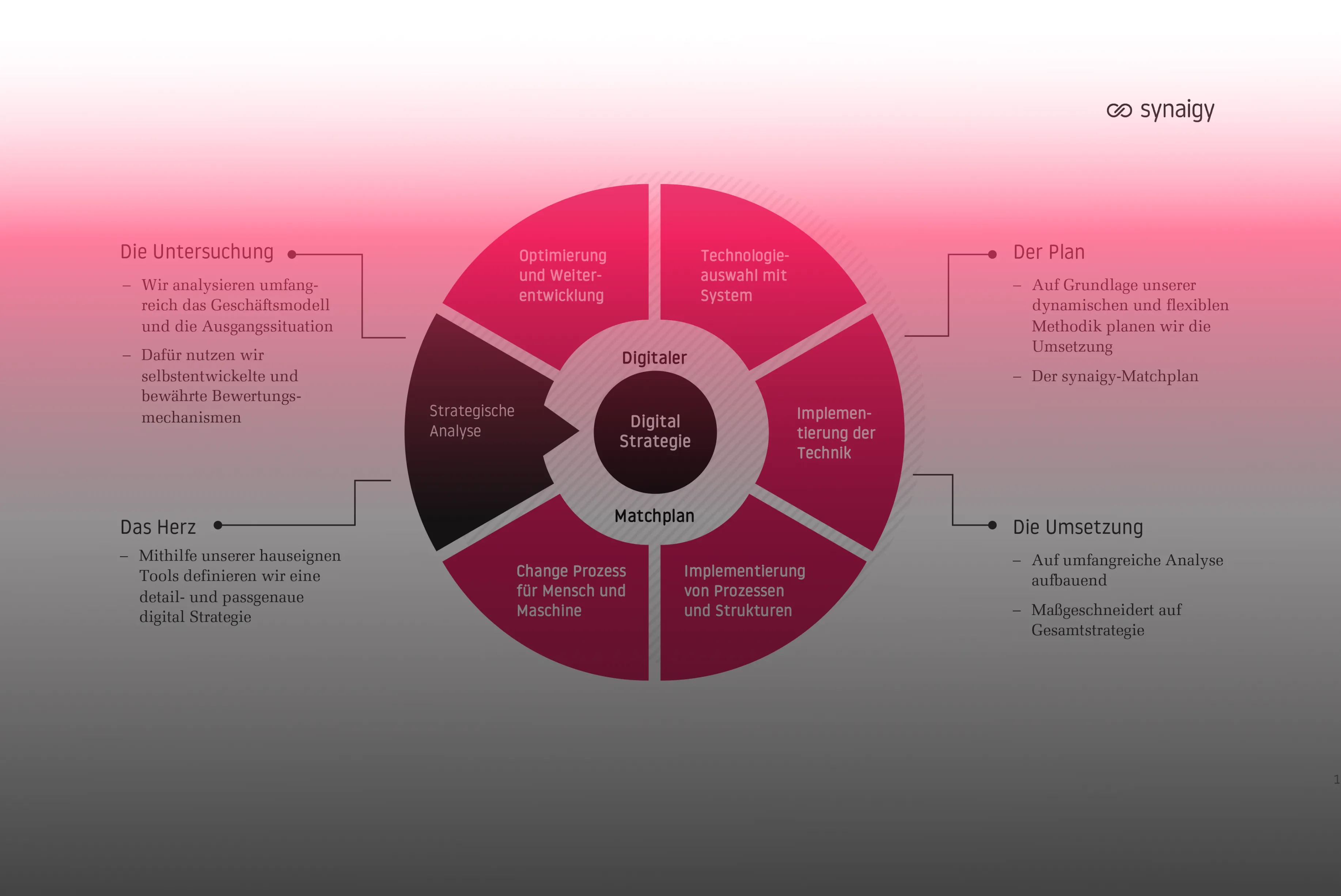
The synaigy Matchplan – your navigation device into the future
For the strategy compass to point sustainably in the right direction, it's necessary to first address the fundamental requirements of customers and suppliers. To design the Matchplan, synaigy uses a comprehensive toolkit that can be unpacked and tailored individually for each customer.
We'll show you exactly how such a Matchplan comes about and how it's applied in the following articles.
Read Part 2 ...
The synaigy Framework - A look behind the scenes Part 2
- Hanno Kortmann
E-Commerce Consultant | Data Protection Officer (DPO)synaigy
Show phone numberShow mobile numberShow email address

Subscribe to the blog now and never miss any news
✔️free ✔️weekly news ✔️expert knowledge
Please accept the corresponding cookies to view this embedded content.