

Working time models at interactive tools
5 min. reading time
Why we at interactive tools rely on individual working time models
At interactive tools, we always try to gain insights and improve through exchange and communication. Recently, some colleagues met up to discuss working time models. The first surprise: all five have different models.
We've summarised the most important insights and aha moments.
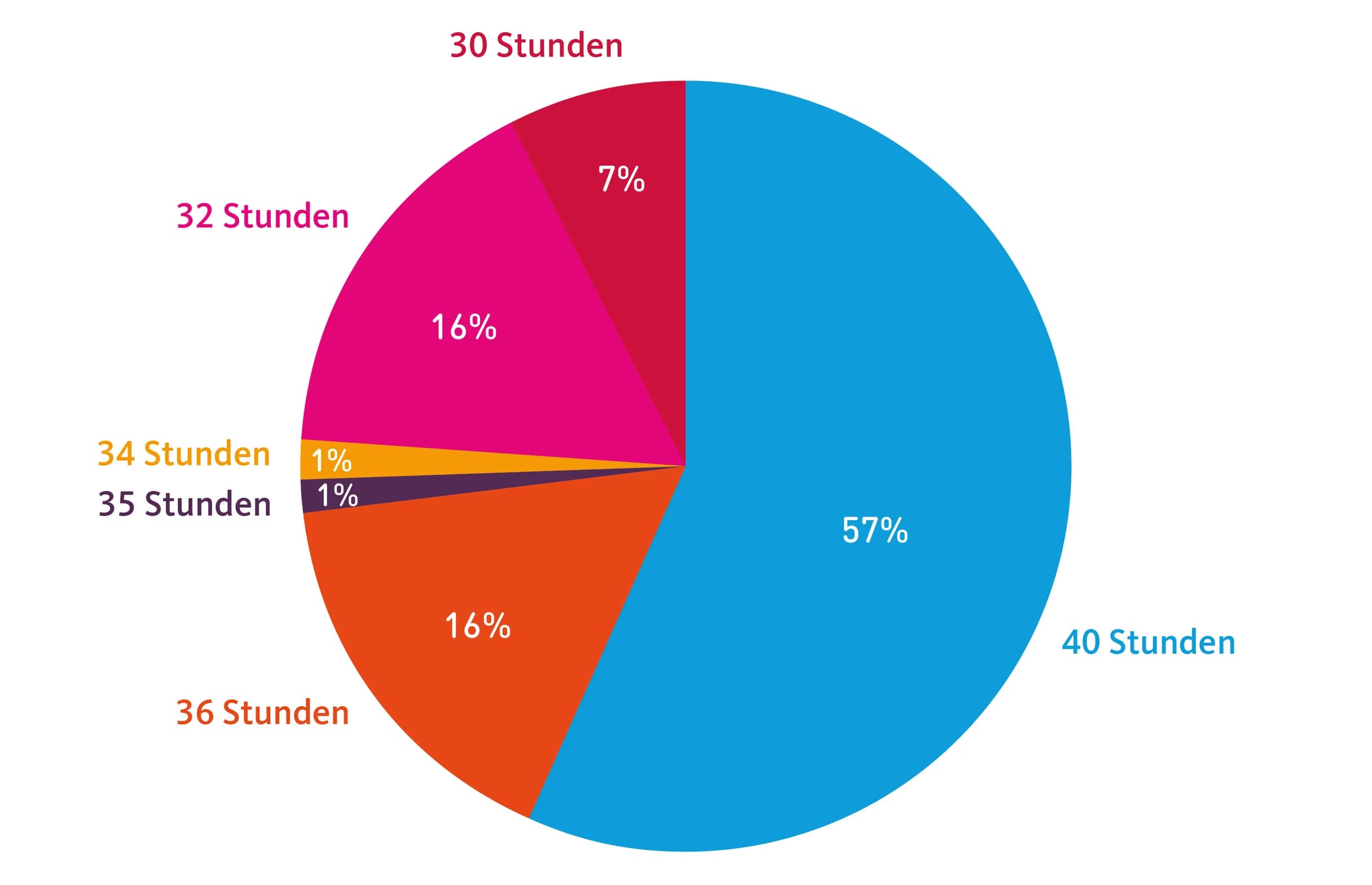
An interesting fact upfront: only around half of all colleagues at interactive tools work a classic 40-hour week.
Less than 40 hours – sometimes necessary, sometimes voluntary, always justified
In the conversation among our five colleagues, it turned out not only that everyone runs a different working time model. The motivations for choosing a more flexible working week also differ:
Passionately pursued hobbies
Caring for young children
a secondary occupation
Challenges as a single parent
Family commitments
Voluntary work
Physical limitations / illnesses
Place of residence with a longer commute
Or even several of these at once
What all these situations have in common is that they would be hard to reconcile with a classic full-time job. And that they're all justified. Some reasons aren't up for discussion or negotiation: for people with major family commitments, a 40-hour week proves nearly impossible to realise. Other reasons seem more self-chosen or voluntary. What matters to us is that we approach all reasons without reservations.
Are individual working hours compatible with teamwork?
While half of our team works the classic 40-hour week, a third work between 32 and 36 hours weekly. 7% of all colleagues work 30 hours a week and can thus realise the much-discussed 6-hour day. There are also tailor-made solutions: some work 34 or 35 hours weekly. On top of that: working from home is open to everyone.
The colleagues in our discussion group have interesting model variants: fixed home-office times, four-day weeks, "short" days, "long" days, "half" days, every other Friday off.
None of those present knew beforehand exactly which model the others used. This shows us that the different models make hardly any difference to daily teamwork.
Less is more? Not necessarily!
There's certainly a trend away from the 40-hour week as an ideal and economic benchmark. On the one hand, the standardised willingness to work 40 hours or more is losing significance as a sign of diligence and self-sacrifice for a company's success. On the other hand, we see in other (Scandinavian) societies that a four-day week or six-hour day can also make economic sense.
However, a shorter week also has very personal consequences for employees, as full wage compensation for reduced working hours is still utopian. Currently: whoever works less also earns less. This affects not only the monthly payslip. Lower income today has consequences for pension and retirement provision far into the future. So there are advantages and disadvantages to discuss, both from the employees' and the employer's side.
Self-management and communication are the basis for a flexible schedule
Being on site. Being reachable. Working in pairs or as a team. These are important requirements for all employees at our company too. And yet we experience no systemic crisis from the fact that not all colleagues sit at the agency for eight hours a day. Because whoever spends less time at the workplace isn't necessarily less available or less productive.
Am I even involved? Does someone need my help? Do I need help? Am I missing important information?
These are questions flexible working models raise in practice. And only our employees can answer them themselves. So far more important to us than 40-hour availability is strong capacity for self-management. Because anyone expecting a degree of flexibility and fairness must provide it themselves too. All colleagues here are responsible for organising their own working hours and making sure they're present for key team meetings.
This means communication within the team becomes even more important. Our agile methods help us ensure continuous exchange and communication, even when not everyone is always on site.

25 years of interactive tools – taking a stance seriously
For over 25 years, we at interactive tools have been developing digital products, placing people at the centre of our decisions and actions. This attitude shapes us not only in our projects, but in our day-to-day interactions and our role in society.
We take responsibility
Three very good reasons for more flexible working time models
Economic consequences and conclusion
Finally, we have to ask ourselves: does the flexibilisation of our working weeks also bring economic benefits?
At interactive tools, the opening up of working time models went hand in hand with other far-reaching changes, such as abolishing middle management and turning towards more appreciation and mindfulness. That's why it's hard to precisely measure the influence of working hours on our economic efficiency. In this interview, one of our managing directors explains how this change process has made the agency more efficient.
However, we do note that signal values such as sickness rate and staff turnover have fallen since then.
Organisations are called upon to offer their employees ways of working that see them more holistically as people. This means creating a framework in which individual biography needs to be subordinated to career biography less strongly. This includes creating room for employees to recover better, to pursue their own interests and projects more intensively without a guilty conscience, and to live more contentedly overall. Trust and strengthened personal responsibility can create a framework in which the individual needs of all colleagues and working life find better compatibility.
There are good reasons for every conceivable working time model. We're aware of that. With this awareness, we look ahead and are looking forward to the next exchange on this topic.
Not keen on clocking in and out?
- Anne Geissler
People & Organisationsynaigy
Show phone numberShow email address