

8 Content Marketing Trends
6 min. reading time
In recent years, greater bandwidth and new technologies and platforms have led to an explosive rise in content production. Content is undergoing a quality offensive: brands that understand and directly address user needs will generate more qualified leads and conversions than ever before.

Content, and no end in sight: with information overload, next year will finally bring the content shock. Producing high-quality content is becoming more time-consuming and expensive. Brands that want to hold their own in the battle for digital audiences will therefore need to focus even more on authenticity, quality and relevance in 2016. 8 content marketing trends will shape the year in particular.
1. Mobile is growing ever faster
A trend for years now, with no end in sight: 3.65 billion people now use mobile devices. More than half of our content consumption now takes place on smartphones.
In 2015, Google's Mobile Usability Update pushed numerous websites down from the top ranks of the search results. To avoid losing the valuable mobile audience, companies are now finally responding with a flood of responsive design relaunches.
In 2016, mobile is indispensable from marketing strategies. Responsive design, embedded video and other mobile technologies are becoming the expected standard. The importance of multi-device experiences – the seamless use of multiple devices by users – continues to grow.
2. Moving image dominates content marketing
As available bandwidth grows, so too do the demands of content consumers. By 2017, video content will account for nearly 70 per cent of all online traffic.
At the same time, the spread of user-generated content in the form of videos will increase disproportionately, not least due to ever-improving smartphone cameras. New video-based technologies such as 360° video ads will also make visual content increasingly varied and diverse.
Content marketing is thus increasingly being placed in the hands of users. For companies, the relevance of influencer relations is increasing.
At the same time, we can look forward to newsroom launches: with a focus on brand experience and storytelling, users will interact with increasingly sophisticated formats such as interactive infographics, reportages, explainer videos or interviews across ever more channels.
3. Brands are becoming more human
In 2016, more than ever: markets are conversations, and conversations are human. Stories, too, are told by people for people.
In this sense, the Cluetrain Manifesto makes a comeback in 2016: "We are not seers, receivers, end-users or consumers. We are human — and our reach exceeds your grasp. Deal with it."
What does this mean for storytelling? Brands, organisations and corporations will need to adopt a communicative stance in order to differentiate themselves and generate value – through stories, emotions, faces and dialogue. The era of self-congratulatory content is over.
4. User experience research continues to evolve
In 2016, too, the rule still applies: content can only be relevant and useful if the needs of target and user groups are understood and communication goals are clearly differentiated.
Proven user experience methods such as persona definitions or qualitative UX tests with in-depth interviews are experiencing a renaissance, while quantitative methods such as eye tracking or remote usability testing continue to evolve and complement digital content strategies with precision.
In 2015, digital trends focused on functionality, intelligent information architectures and emotionalising design – in 2016, existing trends such as simplicity, meaningful technology and responsiveness will focus even more radically on user needs. Conformity to expectations, relevance, benefit and usefulness form the framework within which successful content will need to operate in future.
5. SEO budgets flow into content added value
No more search engine optimisation without a focus on the user. Since 2015, Google's Knowledge Graph has not only rewarded mobile-friendly websites with better rankings, but also ensures more relevant, high-quality content by providing direct answers to user questions.
Purely keyword-driven link building and paid links, but also classic Q&A portals, will continue to lose importance in 2016. Instead, Google will primarily reward websites that have understood the value of added content value.
Website operators are therefore well advised, more than ever, to publish original, high-quality content – because differentiation from the competition through content with added value pays off directly in traffic, reach, leads and conversions.
In 2016, we will be discussing entirely new SEO best practices – including the extent to which SEO expertise needs to be rebuilt from scratch and placed in the hands of journalistically trained editorial teams.
6. Conversions and leads take high priority
While print circulations and advertising budgets shrink, content marketing will become the central channel for brand presentation and perception in 2016. Companies that have understood this will continue to refine their content marketing strategies and optimise their monitoring.
Producing content became more time-intensive and expensive in 2015. Many companies complain that the ROI of their initiatives isn't clearly measurable. In 2016, we're seeing a shift in priorities towards conversion-oriented, qualified lead generation.
Content marketing will also outgrow its infancy here in Germany. In 2016, the focus will need to be on precise planning, control and documentation of all initiatives. An important step will be integrating classic KPIs and marketing metrics into bespoke content marketing strategies from the outset.
Our forecast: in 2016, content marketing will generate more qualified leads and conversions than ever before.
7. Native advertising continues to grow
So-called "advertising in a familiar environment" will continue to grow in 2016. Advertorials and viral marketing in the form of video, image, music and articles are reaching an ever-wider distribution and ever more recipients.
Whether on Twitter, Tumblr, Facebook, Instagram, Buzzfeed or on blogs – we'll be reading the phrase "You might also be interested in the following content" particularly often in 2016. Worldwide, native ad budgets are expected to rise from 8 billion US dollars (2015) to an estimated 21 billion US dollars within 3 years. The reason is obvious: it works.
However, market saturation also threatens a content shock here too. What's more, native advertising can also produce exactly the opposite of the desired effect. Users only accept native ads if they offer genuine added value. If this is lacking, readers quickly perceive the content as hidden advertising and feel deceived by the brand in question.
So in 2016, the same applies to native advertising: success here only comes to those who offer high-quality, precisely targeted editorial content.

8. New channels: Instant Articles, Instagram, Periscope
The introduction of Facebook Instant Articles is still controversial among publishers. Media outlets such as Spiegel Online, Bild and Tagesschau are already testing the new format. One thing is certain: with Instant Articles, Facebook has taken many of publishers' fundamental wishes into account. 2016 will show how well the format works – for publishers and users alike.
But social media has long been more than just Facebook and Twitter. Since this year, companies can also use advertising on Instagram to boost reach. In 2016, brands will need to familiarise themselves with channels like Instagram and Snapchat, which are especially popular among younger audiences.
Livestreaming apps such as Periscope and Meerkat will also become interesting publishing platforms for companies next year. And here too, bespoke, high-quality content is what counts most.
The Author
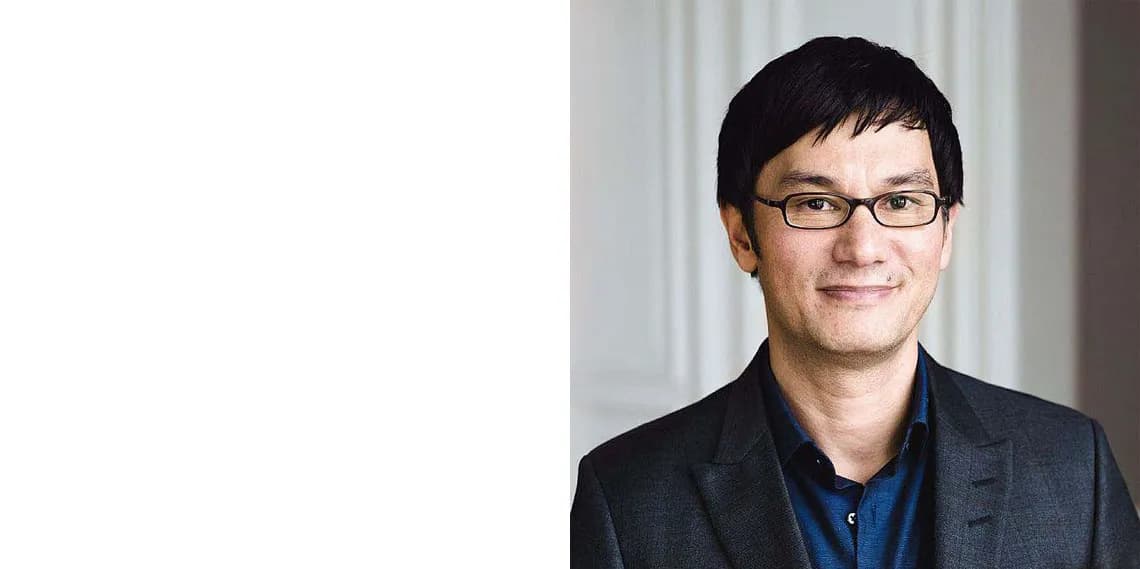
Marcus Völkel is a member of interactive tools' management board and, as creative director, oversees the agency's UX, concept and content practice. At interactive tools, he looks after clients such as Liebherr, Stiftung Warentest and enercity. He previously co-founded scoreberlin in 1999, one of the first German usability agencies.
YOUR CONTACT
- Marcus Völkel
Consultingsynaigy
Show phone numberShow email address