

Brand Portals for a consistent brand presence
5 min read

The complex structures of internationally operating B2B companies often make efficient and consistent corporate communication difficult. It's not just worldwide branches, different business divisions or subsidiaries that play a decisive role, but also internal change and globalisation processes. The particular challenge lies in managing Corporate Identity (CI) centrally and communicating it consistently under the conditions of often decentralised, local and cross-media communication. A Brand Portal makes this possible: all business divisions, locations, employees and service providers can access the online platform worldwide. It bundles all the materials and information needed for consistent, international corporate communication.
From style guide to Brand Portal
Consistent implementation of CI guidelines across all media and communication channels lies in the hands of company headquarters as well as external service providers such as agencies, graphic designers and copywriters. The style guide manages the most important guidelines and rules of Corporate Design (CD) and has been a proven building block of brand management for decades. However, in times of digital transformation, it can no longer meet the requirements of successful brand management. Globalised, decentralised working conditions call for new solutions.
To meet these expectations of contemporary brand communication, a Brand Portal is recommended. The solution lies in managing the implementation of CI via a central tool that can be accessed over the internet from anywhere. A digital, interactive brand portal bundles all information and elements of the CI in one place.
The digital platform has the potential to unite everything employees and external service providers worldwide need for corporate communication – from logos and colour values to guidelines and web-to-print applications. In this way, a Brand Portal provides a good, practical basis for presenting a company's brand consistently to customers, partners and potential employees.
The components of successful brand management
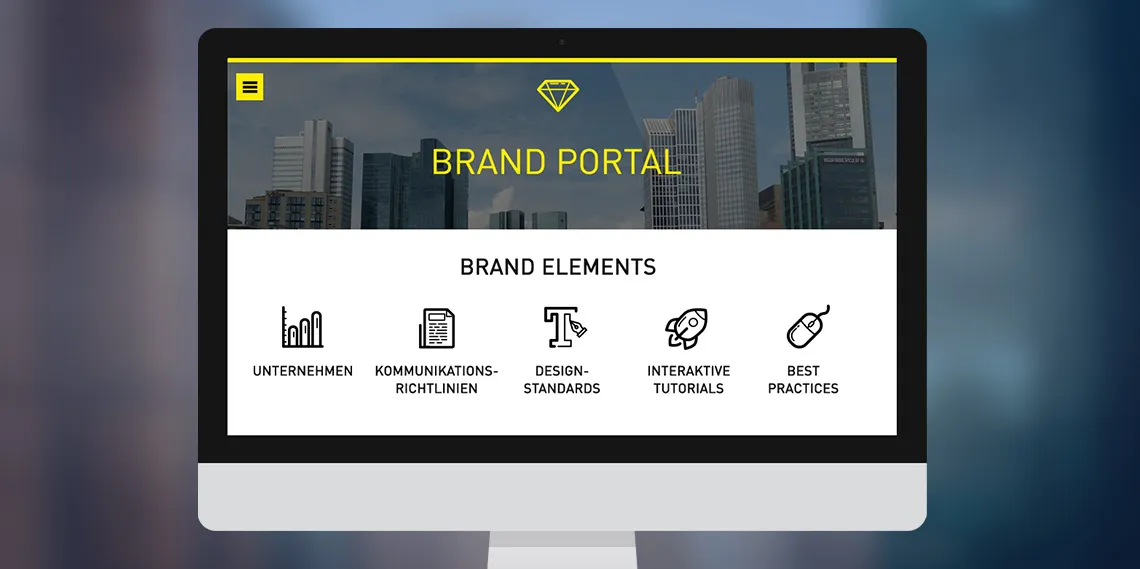
A powerful Brand Portal contains everything employees and service providers need to use and apply the brand elements independently in the intended way. This includes, for example:
Information about the company (figures, facts, identity, vision)
Communication guidelines
Design standards
Interactive tutorials
Best practices
This means all information is always up to date and available across country borders and business divisions. The Brand Portal provides individually tailored guidelines and materials for employees, for example those working in different country subsidiaries or business units. This makes it possible to communicate the brand consistently across all formats – whether flyers, image brochures, trade fair appearances, product catalogues, customer magazines, banners, adverts or entire campaigns.
One example: a sales employee of a globally operating company in Brazil has the task of creating a product brochure for an important South American trade fair. At the same time, the advertising agency in India needs the logo and image material for an online marketing campaign in the Indian market. Both people can access the Brand Portal independently of one another at the same time and retrieve the information they need.
A Brand Portal also offers many advantages when a brand is to be repositioned or a new brand is about to be launched. It guarantees that the current design guidelines, logo variants and product images are consistently available and intuitively usable for everyone involved. Because the digital brand platform allows worldwide access, it enables consistent global communication that also takes local specifics into account. This achieves integrated communication that unites different business fields, business units, sub-brands and target groups under one roof.
Brand Portals: added value for the company and its employees
Alongside CI-relevant information and materials, a Brand Portal can also serve as a do-it-yourself tool, for example as a web-to-print application. This enables employees worldwide to adapt templates for flyers, brochures, magazines or product catalogues within centrally defined limits and send them directly to a print shop – consistently in line with the CD and without the help of agencies.
A Brand Portal therefore also enables standardised working processes that support holistic brand management. Such a platform creates brand awareness – both inside and outside a company. However, it only fulfils this purpose if the Brand Portal is successfully established as an attractive tool in the everyday work of marketing managers, service providers and employees.
Optimal user experience for an intuitive working environment
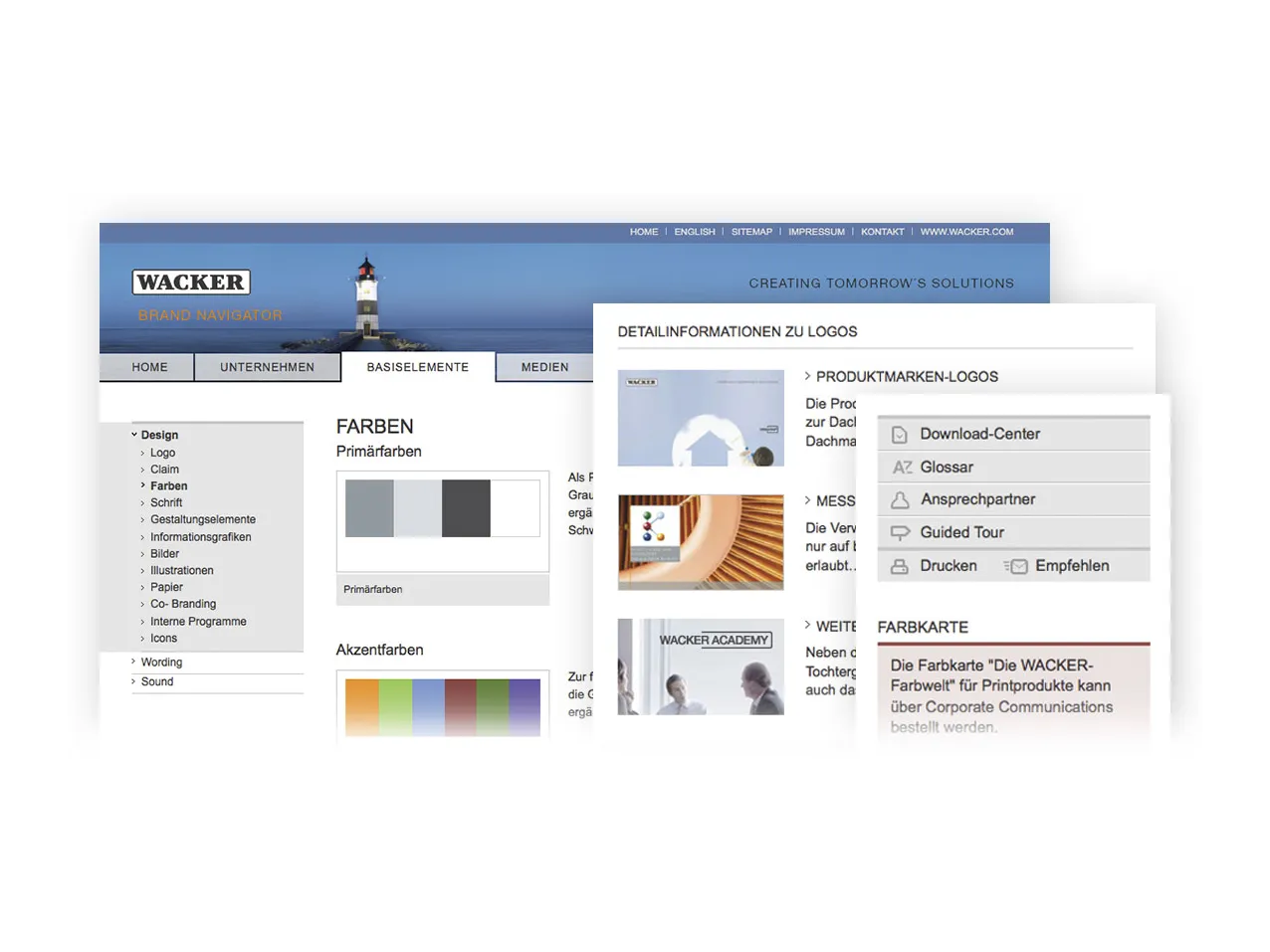
interactive tools, with its many years of experience in user experience, designs and develops Brand Portals that put users, their requirements and expectations at the centre. Acceptance and success depend to a large extent on how intuitive and user-friendly the digital application is. Alongside an information architecture that suits all user types and application scenarios, it makes sense to carry out a detailed needs assessment with the relevant target groups in advance. Every country and every business field has particular requirements that should be considered when conceiving the portal.
We recommend offering information in the form of tutorials or other interactive tools, for example. Theory is also easier to digest when illustrated using best-practice examples. Giving employees ways to engage in dialogue with colleagues keeps a portal lively. Engaging content should be maintained and updated editorially on a regular basis. This ensures the Brand Portal is used willingly and therefore regularly – and that its guidelines are actually put into practice.
Conclusion: the benefits of a Brand Portal at a glance
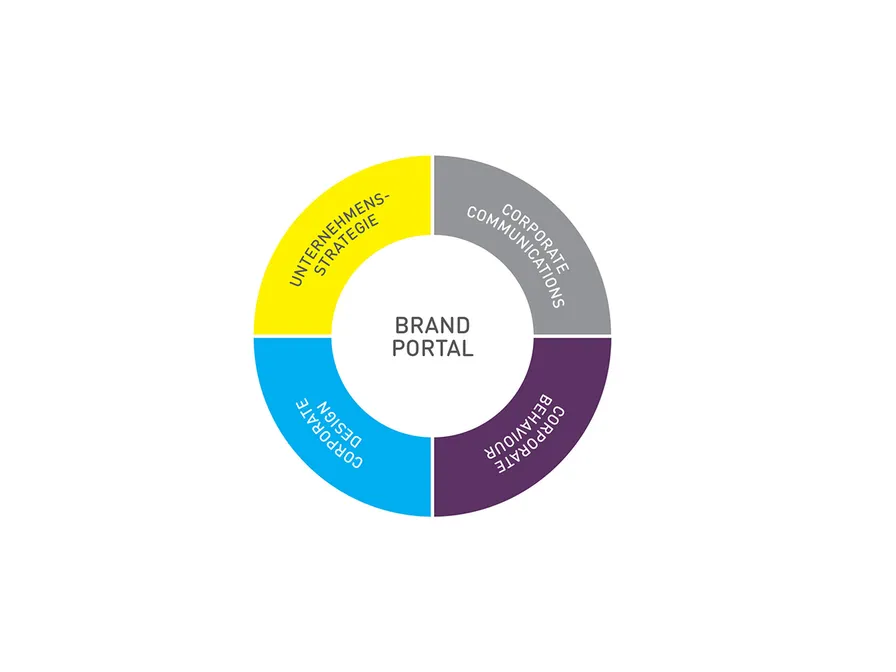
Central management of all information in the areas of brand, corporate communication, strategy and vision
Central provision of all materials and cross-media design guidelines in the form of an online style guide
Media-specific documentation of guidelines on corporate messaging, target groups and objectives, corporate language and communication processes
Central user and rights management with personalised access rights
Protection of sensitive data from unauthorised access
Central management of service providers
Decentralised use in line with local, market- and business-specific requirements
Dialogue-oriented collaboration tool
A content management system centrally manages all content
Your contact
- Klaus Cloppenburg
Managementsynaigy
Show phone numberShow email address