



#tbd - What e-commerce now has to learn from 25 years of experience
More than 25 years of e-commerce experience, a clear opinion and zero patience for excuses: in the new insights! episode, Melanie Vogt talks with Joubin Rahimi about why the fat Corona years made online retail complacent, how you can introduce AI pragmatically in your team, and why courage and a healthy attitude toward mistakes are the real drivers of digital transformation. This article sums up the key takeaways: from data silos to the click diet in the checkout to the question of why Gen Z does a lot of things better.
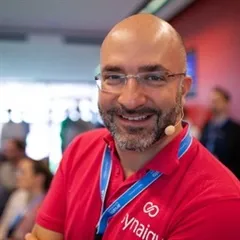
 Joubin RahimiManaging Partner · synaigy
6 min. read

„We don't have time to sit out a 9-to-5 and earn money for something that will already have passed us by in two years. So we really have to stay willing to experiment. And that's what I'd always call for: that everyone who can do digital change and understands what's behind it finds the courage to actually do it.“
The fat years are over: why success made e-commerce complacent
When someone has worked in e-commerce for more than 25 years, they have lived through the entire history of online retail: from PHP development and packing parcels in the company basement to AI-supported processes. Melanie Vogt belongs to that first generation, and that is exactly why her analysis of recent years is so precise. For e-commerce, the Corona period was the phase of record revenues. Numbers many had only dreamed of simply fell into companies' laps. Sounds like a success story, but it was the beginning of a problem.
Because with the success came complacency. Many companies became careless and overconfident, lost focus on their customers and started thinking only in terms of technology. Anyone who then also took the Corona revenues as the basis for future forecasts and simply added 30 percent on top was doing what Melanie Vogt drily calls wishful arithmetic. You can see the consequences in the market today: well-known fashion retailers that no longer exist. Customer centricity is not a new buzzword at all; in e-commerce it has always been the condition for survival. Whoever ignored it is gone today.
Introducing AI in e-commerce: fire at will and experiment
So how do you deal with the next big wave, artificial intelligence? Melanie Vogt's approach is refreshingly pragmatic: don't wait for the perfect plan or the ultimate AI expert, because in her view the end-to-end expert simply doesn't exist yet. Instead: look for low-budget tools, show your team what is possible, and then give them the go-ahead to try things out. Only once it really costs money do you weigh costs and benefits properly against each other.
This playful approach has a serious core, because AI is radically changing job profiles. Melanie's forecast: the share of classic developers will become very small. What remains are a few reviewers who check whether the generated code is really correct. Blind trust in AI would still be a mistake right now, but the direction is unmistakable. That is why the skills of the future look different from the classic curriculum:
Learn to prompt: anyone who can formulate precise requirements gets real value out of AI tools.
Think critically: AI results have to be checked and questioned instead of being adopted blindly.
Stay curious and willing to experiment: tools change faster than any training program can keep up with.
Build everyday skills: from handling money to filing a tax return, AI can provide concrete support here too.
And this topic doesn't stop at the office door: schools also lack AI skills on a massive scale. Teachers are supposed to monitor how AI is used, but have never received any training on it themselves. This is where Melanie Vogt sees the digital industry as having a duty, for example with formats like Teach the Teacher, to bring multipliers into schools.
Breaking up data silos: no digital transformation without a healthy attitude toward mistakes
Asked about the biggest challenge for companies, the answer isn't about technology but about culture: breaking up data silos and creating a healthy data foundation. That doesn't automatically mean switching ERP systems. First of all it means that everyone involved is willing to take a step back, to look at the whole picture from a bird's-eye view and to clarify honestly: what do we have, what do we want, and what pain do we have to accept in order to put it right?
That is exactly where things most often fail in practice, because openness requires a culture that tolerates mistakes. Anyone expected to admit that processes or data in their area aren't clean needs the assurance that no one will run them over for it. Only with that foundation can the courageous people in a company pick up speed. Or in Melanie's words: only once the basement is properly tidied up can you really put your foot down with your data foundation.
Click diet instead of checkbox madness: customer centricity in the checkout
How customer-centric a company really thinks rarely shows up in strategy slides, but in the checkout. Melanie Vogt's favorite example: an order process with twelve checkboxes. Her question about it gets to the heart of the problem: how many more times do we actually want to push customers out of the shop? Her remedy is the click diet: simply count how many clicks lie between the customer and the purchase, and then reduce them consistently.
Behind this lies a bigger principle: let the experts do their job. Usability belongs in the hands of usability experts, not in those of IT or data protection, who naturally set different priorities. Newsletter, CRM, sales: every discipline needs its own expertise, and no one should believe they can be an expert in everything. When all parties talk to each other well, the customer ends up feeling well looked after. And in the end, that's who we do all of this for.
Learning from Gen Z: why courage remains the most important currency
At the end, the conversation turns to a surprising insight: Gen Z does a lot of things better than the pioneer generation of e-commerce. Where elbows and a permanent higher-faster-further used to rule, the young generation brings a better feedback culture, more care within the team and healthier self-care. Old hands can learn from that too, Melanie Vogt says, and she doesn't exclude herself: being able to say now and then that's enough for today, I did a good job.
What sticks with you in the end is above all one sentence: the things that happened with courage were always better than the things that happened out of fear. Fear makes you overcautious, prevents experiments and therefore costs more than it protects. Courage, by contrast, doesn't mean recklessness, but respect without fear, paired with a culture that can absorb small setbacks and a willingness to celebrate successes as well. If you want to know what that feels like in practice, watch the full episode. And then: be courageous!
Would you like to listen to the full episode?
Here you'll find the podcast of the interview:
Would you rather watch the episode? No problem!
Here you'll find a recording of the interview:
Please accept functional cookies to watch this video.
Would you rather read?
Joubin Rahimi
Great to have you back for a new episode of insights! My name is Joubin, Joubin Rahimi, and joining me today is Melanie Vogt. Hi Melanie!
Melanie Vogt
Hi Joubin!
Joubin Rahimi
We've actually known each other for a while now.
Melanie Vogt
Yes, we've bumped into each other now and then.
Joubin Rahimi
Bumped into each other now and then at Behind Closed Doors, but we never really talked intensively.
Melanie Vogt
That's true.
Joubin Rahimi
And there are always 30, 40 people there and you never have enough time to talk to everyone. And then a few weeks ago we did manage to have a more in-depth exchange at an event.
Melanie Vogt
Right, and we noticed that we do the same thing.
Joubin Rahimi
You have to come on the podcast. Would you say a couple of sentences about yourself and then we'll just dive into the topic?
Melanie Vogt
Yes, gladly. So, I'm Melanie Vogt, I'm over 50, as we just established, and still in e-commerce. For more than 25 years now, I realized. Yesterday, I was editing my LinkedIn a bit. Exactly, so really e-commerce from the very beginning, and I got there by a huge coincidence. I didn't study e-commerce, because when I did my training the internet didn't even exist yet. Exactly, and since then I've been working in e-commerce in various positions and various companies, sometimes with bigger, sometimes with smaller projects or teams. Yes, but I feel very much at home there, because the movement and the change and the flexibility in e-commerce simply excite me. I'm passionate about it, and above all I'm a bit of a digital do-gooder. Whenever a process doesn't work, I always want to improve it somehow and say: hold on, there must be another way to do this.
Joubin Rahimi
And I found that really exciting too, because you have a lot of experience, really a lot of experience, but your mind is so fresh. And that's what's rare. Lots of experience and still being flexible enough to take on new ideas, to have energy. That's often what people deny young people, what they always said Gen Z didn't have, quite clearly, I have to admit. But I found that so impressive that I said, come on, we have to talk to each other.
Melanie Vogt
I can of course only answer for myself. I only know myself, the way I operate, and I've always been curious. And for me it's the other way round. And I think for other people it's sometimes hard to bear that I have this flexibility. Because when I see things that make me curious, I want to understand how they work, and then I usually already have a solution or an idea about how you could tackle it. And yes, patience isn't always my strong suit, it's not my middle name, but I think it's exactly this movement, this speed that we have in e-commerce, or rather where we actually come from in e-commerce, which we lost along the way with the success we had. Because there were the fat years in e-commerce, especially the Corona years, which were of course life-changing for a lot of people personally. Everyone in e-commerce was of course licking their lips, because suddenly we were making revenues we had only dreamed of. It more or less fell into our laps. But yes, those really were the fat years, and in some places many of us also became careless and overconfident, I think, and lost focus.
Joubin Rahimi
And complacent.
Melanie Vogt
Complacent, exactly. Because we were simply spoiled by success. I think those were super exhausting years, because during that time we always also, well, there's this customer centricity, this buzzword that's being hyped right now. That must always have existed in e-commerce, really, because if you didn't do it, you simply don't exist anymore today. Because who are we doing it for?
Joubin Rahimi
That's always been the case anyway.
Melanie Vogt
But a lot of people lost sight of that in that moment, they only looked at technology and thought in terms of technology too. We really, during Corona we rerouted all the parcels, we had everything come back from the stores, relabeled it, and we spent, well, I don't want to say nights, but days and weeks on it so that customers would get their things.
Joubin Rahimi
What do you mean, from the stores? Things that were packed in the stores but not shipped?
Melanie Vogt
So everything that went to the stores for customers, and everything, it was such a moving process, right, March 17, I still remember it exactly, suddenly the word was, nothing works anymore, close the doors. And then we brought back everything that had been sent to the stores, we sent everything from the stores into e-com, and we relabeled the customer orders with the whole crew. Everyone from all departments, from all specialist units, went into logistics. All hands on deck. Everyone rolled up their sleeves and then people became humble, actually, I think, right, because suddenly everyone got a taste of what it really means. And we really rolled up our sleeves so that we could meet the supplier conditions, didn't need any subsidies and thereby also saved the company. Well, saved sounds big, right, but not only were we able to save the company, we were also able to win customers over for the long run and keep them in the end. They stayed. Yes, of course, if you took the key figures and said, well, let's take the numbers from 2020 and say in 2022 and 2023, there's no more Corona, the stores are fully back, now let's add another 30% on top of that figure for our forecast.
Joubin Rahimi
That obviously doesn't work. But it happened very often.
Melanie Vogt
Exactly, so that's carelessness, and wishful arithmetic on top, that it isn't going to work.
Joubin Rahimi
I completely support the parcel-packing thing. I also had an online shop with a friend of mine for a while. That's really a long time ago now and we packed parcels.
Melanie Vogt
That's how I started. I packed parcels in the basement of a company.
Joubin Rahimi
In the mornings, yes, about 40 to 100 a day. And then you always, it's so funny, you start really optimizing it, how your walking routes go, so that you can always do it quickly. Whether you need two minutes or one minute really does make a difference.
Melanie Vogt
Whether it makes sense to set the parcels up in advance, whether it's better to build them into a to-do workflow. Exactly, so basically that's how it started for me too. That's how I got to know e-commerce. Back then it was also like, if you think about where we come from, it came out of PHP development. None of us let the others run into a wall; instead we had an open community, we exchanged ideas with each other and said, hey, I tried that, it was really nothing, better not do it. Then with the success we basically lost sight of that and everyone thought they were the greatest anyway. That's just how it is.
Joubin Rahimi
It really was like that.
Melanie Vogt
Now we've arrived back on a somewhat humbler footing and we say, we can talk to each other again and say, I did that, it wasn't that great. Exactly, and that's what I actually love about the industry, this open exchange, that's what excited me. When I was at DMEXCO for the first time, for example, I still took vacation days for it back then, and I actually come from a very creative field. And there at DMEXCO I saw a man walking around barefoot, trousers rolled up, dreadlocks. And I thought, I can feel at home here, I really like this. Here you can walk around however you want, here you can be whoever you want. You can have ideas, you can brainstorm wild things. I still brainstorm wild things with people at events.
Joubin Rahimi
Incredible. I don't know whether you can hear it, but it's really peaking here now with loud music playing. Bavarian folk style, right?
Melanie Vogt
I think everyone will be glad— this is the moment where you could all be glad that we're not singing along.
Joubin Rahimi
But let's carry on anyway. You said you build solutions into things. And in Germany we're often the engineers. Do you look at what could happen? What makes sense? What doesn't make sense? How do you deal with that? Because I suspect that's not where you'd say, yes, I love the people who constantly only describe what doesn't work.
Melanie Vogt
No, it's actually exactly the opposite. So when I notice that there are new things, the topic of AI, artificial intelligence, whatever you want to call it, we've been playing around with it for quite a while. Nobody really knew where to start. Then at Thun we found things that work on an AI basis but were still relatively low budget. Then I showed the whole team what we have, what's possible, what you could do, and then said: fire at will, try out what works. And I think we're still in the experimentation phase. I believe that if you find an AI expert now, I believe the end-to-end AI expert doesn't exist yet. I believe you can adapt AI to your application, to your workflows, so that it fits your system, in order to free up windows of time to do things you might otherwise have had no time for at all. And Tiny is just one example there. So when we have topics where I see there's a tool you could try out, then I always say: hey, fire at will, play with it as long as you can, until it really costs money. Then we have to consider whether it actually, does it make sense, is it also fun in the end, does it really help us to the extent that weighing costs and benefits against each other is worthwhile. Then you have to negotiate it, do we currently have the money or not, of course. Otherwise carry on low budget and use it as far as possible. And when someone discovers something, I always think it's good to talk about it, ideally bring the whole team along, present it, say once, hey, I saw something, or others do it like this, I heard about something, you'll think it's really cool, shouldn't we try that too?
Joubin Rahimi
Always.
Melanie Vogt
And I think you always have to be in sparring mode, you always have to talk about it in the team or with other people. That's why I think it's so good that the community is becoming this open again. Here at the trade fair I'm also meeting people I talk to about topics where I say, I saw something, has any of you tried it? Tried it, right? What was it like? Did it hurt or not? Yes, and when most people say, okay, we had teething problems, this and that wasn't so good, we should have done it differently, then all of us can only learn from it, because in the end I think we all want the same thing.
Joubin Rahimi
Yes, even when competitors are here and exchange ideas, we're all lagging behind anyway, so a bit of exchange isn't a problem either.
Melanie Vogt
And competitors, I mean, you can look at how far you exchange ideas. Do you happen to have the same systems anyway or not? Because then you also have the same interfaces that tell you the same thing anyway. In the end we want the same thing, namely first of all to keep existing somewhere in the European and also the global market. So my wish would be that everyone I meet here now is someone I'd still meet in 10 years. And not that I'd maybe have to speak Chinese here, for example.
Joubin Rahimi
Then we'll have a chip translator on board. A little button in the ear. Probably, then, probably.
Melanie Vogt
I'll probably already have an implant in my ear by then.
Joubin Rahimi
Hearing aids really are that small now, you can hardly see them from the outside. It's just a black dot and they can take phone calls, with Bluetooth and everything.
Melanie Vogt
Crazy, right? Exactly, and I think these dramatic changes that other countries are already managing, we're lagging so far behind there, and I could now be the 20th or the 20,000th person to complain about it, but my part of the story, my favorite part of the story would rather be that I'm the one who helped make it a bit better and not the one who just endured it or who just, yeah.
Joubin Rahimi
Endured is, I think, the right word. Many people simply endure.
Melanie Vogt
We're not in the right time for that, I think. We don't have time to sit out a 9-to-5 and earn money for something that may already have passed us by in two years. So we really have to stay willing to experiment, and that's what I'd always call for, that's what I'd always ask, that everyone who can do digital change and understands what's behind it, or who can do change at all, summons the courage to actually do it.
Joubin Rahimi
Now I have another question, but it's completely different. You have two children, I don't know how old they are. Maybe this hits the mark exactly, or maybe it's already too late. But if you were to advise your children now, they're facing the choice of a degree or a career, what would you tell them they should do that has a future? I mean, of course you can also say, whatever excites them and is fun, but if you ask the question, what would I pass on that also brings a future?
Melanie Vogt
Well, I find that extremely hard to advise on, but it's good that you bring it up, because my children are actually grown up, and my son, I'm really proud of this, I have to say at this point, has just handed in his diploma thesis and received his grade, so he passed, and brilliantly at that, absolutely wonderful. My daughter has also finished, they studied completely different things. I told them both, you should do what makes you happy, that's the most important thing.
Joubin Rahimi
Exactly, I believe that too.
Melanie Vogt
Exactly, and they both do completely different things. I also have a stepdaughter who does something else again. With my daughter it was International Studies, she studied in The Hague, she's now at the University of Bonn advising refugees, so she's a study coordinator. My son studied industrial engineering and my stepdaughter is studying psychology. So all completely different, and I think they're all in a good place doing what they do. All of them too, at least the two older ones, have finished, right, 27 and 24. They're clear about the challenges, but I think the best thing I passed on was actually, well, I never studied what I do now at all. I didn't in that sense, I mean, I didn't learn it.
Joubin Rahimi
It didn't exist back then either.
Melanie Vogt
Exactly, I learned it the hard way, namely I just did it and was always curious, always involved. So studying is basically my life. But I always said, if you really want something, then you can do it. If something really interests you, then look into it, stay diligent, stick with it, stay persistent, then you'll manage it. Then you don't have to be super smart or a high-flyer for it. And that's exactly how it turned out with all the children, coming back to that advice, that they did what they wanted to do, and with diligence, ambition and maybe also a little bit of cleverness they've actually achieved their goals so far, at least. And they're all going through life with good self-confidence and say: what I'm doing now is what I want to do. And if I don't want to do something anymore, then I'll do something else.
Joubin Rahimi
I think it's the flexibility. I raised the question because we have a Create the Future program where we think about what's important for us as a company in the future, and then also consider what you'd advise your children. And my wife's and my children are a bit younger. Computer science used to be the answer, but I'm just seeing that... The IT profession is still needed, but it's different. And with AI you can do a whole lot. And my daughter said: Dad, I'm not learning at school what I actually need. She's 13, so, okay, what do you need from your point of view? Well, how to handle money, quite plainly, that's what I'd like to learn. How do you use AI properly? Not just searching for data and so on, but how do I use it to do things myself. I found that exciting. I read an interview by someone else who said that critical thinking is one of the core skills of the future, no matter what you do, which is hugely important.
Melanie Vogt
Yes, staying curious. But it won't work without diligence either. You also need a bit of stamina, staying on it. Even when it gets uncomfortable, not caving in right away, but saying, okay, I'm going to see this through, right. But it's interesting, what you say about how you learn things at school. I actually had that topic last week in the Female Circle too, we talked about it there as well. Interestingly, during Carnival this year I talked with a teacher about the topic of AI, and I think it's getting really critical there, because teachers get very little training on how to deal with AI. And the one I talked to also works at a grammar school with a large share of students with a migration background, and she said, a lot of my students wear head coverings. I have to make sure they don't use AI for math tests. But I can't check at all whether they have a button in their ear. She herself doesn't know how to deal with AI either, because she never had any training on it. And I find it really quite critical that of course the people who are supposed to shape or teach our children's future have no training in it. But then she said, as an example, and here we come back to the topic of being solution-oriented, she said, I don't have time to deal with it either. I thought, how do you manage, or how do you plan your class trip, for example? She said, that takes about two to three weeks, and I do that with Google and so on, and then I look at where we want to go and so forth. I said, why don't you ask the AI, then it would do that for you, and in that time you'd have two to three weeks to deal with AI. And I said, that's such an applied idea, why didn't I come up with it myself? And I think this core message, it's not rocket science, right, but if you don't have much to do with it and only notice that there's a final boss standing in the room that you have to defeat or handle somehow but you have no approach to it. And I think that's where we, for example, could also have an impact in schools, we who move in the digital scene. We could also say, hey, we could do something like Digital Teacher or something like that, right. Or then the further education program Teach the Teacher, so that you turn people into multipliers, just like we do with our system. You have a small circle of teachers you invite to an event and they could carry it into the schools. So I think we in the digital scene also have a mandate to bring teachers along more and draw them more into a topic that's completely familiar to us.
Joubin Rahimi
The teachers, and many of the parents too, are stuck on that topic. I once had the chance to give a talk at a school, to school parents, or rather schools. For them it's important, and I completely understand it, phone use, kids are glued to their smartphones. I can't check at all what they're doing, is it something good or something bad. And at school you'd probably have more options. That has to be broken open.
Melanie Vogt
But I think it's actually the case, that was a topic too, that the younger teachers would be very open to it and the older teachers just do things the way they always have. And of course we also have a bit of a generational change. And by older I definitely also mean people my age. I think I'm allowed to say that, because I'm that age, so I'm allowed to be critical now and then and say, hey, you can't always just complain and you can't always just say, well, nobody shows me either, while you yourself aren't open to it at all. Maybe you also need to look for help. So you can't just say, yes, but I don't have any of that, you also have to ask, who can help me.
Joubin Rahimi
No excuses.
Melanie Vogt
Exactly.
Joubin Rahimi
But what I find funny about AI, and I keep discovering this in myself too, is that I don't even know how to do something, but then I say, I'll ask the AI, you can ask it any question. You just have to have the thing.
Melanie Vogt
Exactly.
Joubin Rahimi
Then you can say, okay, I don't know how it works, but I'll ask.
Melanie Vogt
Or I at least start engaging with it. That's a beginning at least. I listen to what's out there at all, what you can do with it and so on. And it really is the way you say, which professions will still exist in the future. I actually believe that developers, that share will be very small. There will be a few controllers, so to speak, who take another look at whether the coding is correct somehow. Because relying only on Claude is, I think, still a mistake at the moment. You do have to check whether the result that comes out is really what I expect. You have to be able to prompt, that's something you have to learn. Those are the topics children would have to learn. But as you say, a tax return would maybe be quite cool to know about too, or VAT. What even is that? What do I do with it?
Joubin Rahimi
With the tax return, we have all the documents that come in, grabbing them and then sorting them. And that works now, because I did my tax return recently, I always downloaded the documents but never sorted them. And then it was simply a matter of saying, okay, let's sort this once, pull out what the tax advisor needs and create a table. For the tax-relevant information, with the amount, what it is, so that I have the files. How great was that?
Melanie Vogt
Yes, but it was accurate too, wasn't it?
Joubin Rahimi
Yes, a bit was missing, but most of it was there. And you then also noticed what was missing. And that was really funny. But now I've actually strayed from the original question. Courage, you said, courage is important. Why is courage important?
Melanie Vogt
Because if you're not courageous, then you end up in exactly this no-excuses territory, because then you look for excuses for everything. You're permanently in a crouched posture, because you think someone might attack you. But if you're courageous and look ahead, then you've left that behind. Then you do actually know, you don't always know whether you're doing it right, and you're not arrogant about it and thinking, well, who can touch me, but you actually say, okay, I know there are a lot of things that could happen to me, but being scared of it doesn't make it any better for a start. Respect, yes, but not fear. And going ahead with courage and saying, well, nothing has ever happened to me, nothing really bad has ever happened. Now of course you can define what really bad means, right? So maybe I've also been lucky so far, nothing really bad has happened to me as I see it. If I had a different view of things, maybe it would have, because of course things have happened to me in life.
Joubin Rahimi
Yes, and what do you make of it?
Melanie Vogt
Exactly, but so far I'd say the things that happened to me with courage have been better than the ones that happened to me out of fear. And that's why—
Joubin Rahimi
You can just let that sink in. Yes, the things that happened with courage were better than the ones that happened out of fear. Yes, yes, there's a saying for that. Fear is not a good advisor.
Melanie Vogt
That's correct, that's correct, because then you also become overcautious, then you stop trying things out, and then you also miss out on an enormous amount. Well, sure, sometimes it costs something, it costs energy, bruises and sore muscles maybe, but honestly, nothing worse than that has happened yet.
Joubin Rahimi
Courage in mind, then. Question: where do you currently see the challenge for companies? Above all in the places where you've worked, so in the industry, where do you see the main challenge there?
Melanie Vogt
The big challenge really is breaking these silos up and creating a healthy data foundation for everything. That doesn't mean everyone has to switch ERP systems, it first of all means that— and here we're back to the topic of courage, that all the parties who control the silos, or don't, are willing to take a step back and say, okay, for the greater cause I'll take a step back now, let's look from a bird's-eye view, ideally with the various specialist departments, at what we actually have, and then at what we actually want, and then focus on what we need for that, and to sit down at the table for once, put our cards on the table and then also ask some tough questions: what pain do we have to accept in order to put this right, so that we can then really put our foot down with this healthy data foundation? Because with that you've basically tidied up the basement properly once. I think many companies are already doing that, that they're already on their way to doing it. But I think if everyone were a bit more willing to put their cards on the table, if there were a bit more openness and maybe with that also a culture that allows for mistakes, where people would say: yes, I did that, I didn't do that well or whatever, without me having to be afraid, there it is again, that someone will run me over for it. I think then we'd be able to pick up a different pace with the courageous people who are out there, but they need that foundation.
Joubin Rahimi
It's so loud that it just blew my question away. What would you advise a fashion retailer? We've had customers like Gerry Weber, Esprit, Reno Schuhe, deliberately so, and they're no longer in the market. Some are like, Deichmann for example, a completely different game, although similar starting position to Reno. But where do you really see the difference between companies that manage the positive upswing, even after the Corona hype in online business and the dip? What would you advise someone in an evening family conversation who says: Melanie, I don't know what to do now with this digital stuff. Everyone tells me something different. And now I remember my question again.
Melanie Vogt
So purely on the human side or purely on the technical side, or what is your question aiming at?
Joubin Rahimi
At what needs to be done. What needs to be done.
Melanie Vogt
If it were that simple, I'd be a consultant now and get about 5,000 a day for it. It's just not that simple. In fact, there is no single truth. It does point towards where many are already working, transformation, which a lot of people are already working on. So I think, now I'll use a buzzword after all, customer centricity is important, but it's not only important now. It always was important. What matters is that if I look at exactly this topic, I don't have IT build a shop, for example, and not the data protection officer either. They'd certainly handle it very differently from how the customer would handle it. I've just learned a nice new word, and I'd like to pass the term on: click diet. That you do a click diet in the shop for once and look at how many clicks a customer has to make before they can buy. And can I maybe do another click diet?
Joubin Rahimi
Yes.
Melanie Vogt
I really love that word, it's been in my vocabulary for two weeks.
Joubin Rahimi
Yes, I'm adopting it too now.
Melanie Vogt
You're very welcome. Exactly, in fact in one of the last checkouts I had, we had 12 checkboxes, so that at some point I asked, how often do we want to push customers out of the shop? How many more times? Or can we maybe handle it more smartly? Then of course you have discussions with the data protection officer and also discussions with IT, who naturally tend to put blue elephants in the room rather than coloring the pink one, or garnishing it perhaps. So what's really important is that you let the experts do the job. So usability should ideally be done by a usability expert.
Joubin Rahimi
Crazy idea.
Melanie Vogt
Newsletters maybe by a newsletter expert, CRM by a CRM expert, and then you shouldn't think there's someone who can be an expert in everything. There can be someone who looks at it a bit from a bird's-eye view, but that person should grant the experts their expertise. And that's very often exactly the case, you also have this conflict between e-com and marketing as an issue. Nobody outranks anyone else, instead they acknowledge each other and market themselves. And you need all the parties too. Sales is sales. In the end everything should talk to each other so well that the customer feels well looked after. Because that's who we do all of this for.
Joubin Rahimi
Now I'm coming to the question that got blown away here.
Melanie Vogt
Quick! Tell me!
Joubin Rahimi
We're nearing the end, they keep turning it up. Working with each other, you said, that's so incredibly important. And I think working for each other is what matters in a project, isn't it? Marketing for sales, in our case delivery, implementation, for units that maybe work directly for the customer, thinking in terms of this for-each-other.
Melanie Vogt
And I think Gen Z actually does that much better. Where we sometimes got our elbows out, Gen Z is much more caring. They've learned a completely different feedback culture, they've learned completely different self-care. Whether all of that is always right to that extent or not is up for discussion, and not everyone does it to the same degree. But I think where we were racing around higher, faster, further like crazed hares, building a lot too, admittedly, operating as pioneers, Gen Z is nicer to each other. And I'd like to learn that. I've always been like that, I'd like to have more of it, including being nicer to myself. I myself still have the challenge of faster, further and now. Still a bit more, still a bit more, still. This can't be all there is. But I also don't have to open a window at 11 at night in an industrial park and shout out a bad word that I'd now have to put a euro in the piggy bank for; instead I can also simply say, that's enough for today. That's good for today, because I did a good job today.
Joubin Rahimi
Most of the time, once it's past 11, nothing better necessarily comes out of it. Rarely, yes. Sometimes I find that when the day-to-day business is gone and you drill into something for one or two hours, and then maybe it's 11 too, those are my knotty nights and then bam, 3 a.m.
Melanie Vogt
Do you have a bit of a startup spirit in you in those moments too?
Joubin Rahimi
You're deep in the job.
Melanie Vogt
That's important, isn't it?
Joubin Rahimi
Yes.
Melanie Vogt
But it doesn't make your work the next day any better, because you do need the sleep.
Joubin Rahimi
Then it's a matter of only being able to work through things, without you, or then it's really free time. But yes, that's how it is, we're not getting any younger either.
Melanie Vogt
But I think we can all learn extremely well from each other, and that's what we old hands can take from the new generation, I think. But we can bring in our experience a bit, and that's what's extremely important to me now for my next years in the profession too, that I get younger people who maybe feel like getting into this business excited about it the way we were back then, and still are today. Where you can also say, hey, we're really moving great things here. To do that you also have to move them, admittedly, and have the courage to be allowed to move things. With a culture that tolerates mistakes and lets you say, okay, that was pretty good, not quite optimal yet, maybe we won't do it exactly like that again. Next time we'll try it a little differently, but it really wasn't that bad either. Yes, and I think that's what we can pass on, take with us, learning from the younger ones, learning from us, no, teaching, learning, passing on.
Joubin Rahimi
A beautiful closing word, because that's also simply about having different team structures, different types of people in there and being open to each other, in order to get the best for the company in that case.
Melanie Vogt
And don't forget to celebrate?
Joubin Rahimi
Don't forget to celebrate, exactly.
Melanie Vogt
Yes, exactly, I actually think you also have to celebrate the successes you have, the small ones.
Joubin Rahimi
Probably completely, since I forget that.
Melanie Vogt
You've forgotten that a bit.
Joubin Rahimi
Yes, we even have a celebration process. Well, we have a celebration process. After a launch like that you have to celebrate.
Melanie Vogt
Yes.
Joubin Rahimi
And that's really important.
Melanie Vogt
Yes.
Joubin Rahimi
I'm not the one who sticks to it or pushes it best, but I celebrate everyone who celebrates. You have to do it once, because you've pulled something off together with the customer. At least go out for a meal.
Melanie Vogt
Celebrating that together is worth more than any praise?
Joubin Rahimi
In the end.
Melanie Vogt
Yes, absolutely. Because you have lived feedback.
Joubin Rahimi
Yes, and then you feel it.
Melanie Vogt
Yes, exactly.
Joubin Rahimi
So, celebrate! Thanks for your time.
Melanie Vogt
My pleasure. Thanks for the invitation.
Joubin Rahimi
My pleasure. And if you have questions, drop them below or write to Melanie directly via her LinkedIn account and, yes, get in touch. Diverse teams.
Melanie Vogt
Speak up!
Joubin Rahimi
That's what we'll do.
Melanie Vogt
Be courageous!
Joubin Rahimi
Be courageous!
Do you have questions or feedback?
Then feel free to contact us directly.
- Joubin Rahimi
Managing Partnersynaigy
Show phone numberShow mobile numberShow email address
Subscribe to the blog now and never miss any news
✔️free of charge ✔️news every week ✔️expert knowledge
Please accept the corresponding cookies to view this embedded content.