

The 11 most important points before your website relaunch
8 min read
Whether it's more visibility, traffic or leads - there are many good reasons to opt for a relaunch of your corporate website. Above all, however, a website relaunch offers organisations the chance to increase revenue, reposition their own brand, address new target groups and much more. To help you successfully implement your relaunch project, we have developed an 11-point project plan. It helps you prepare effectively and purposefully for the relaunch.
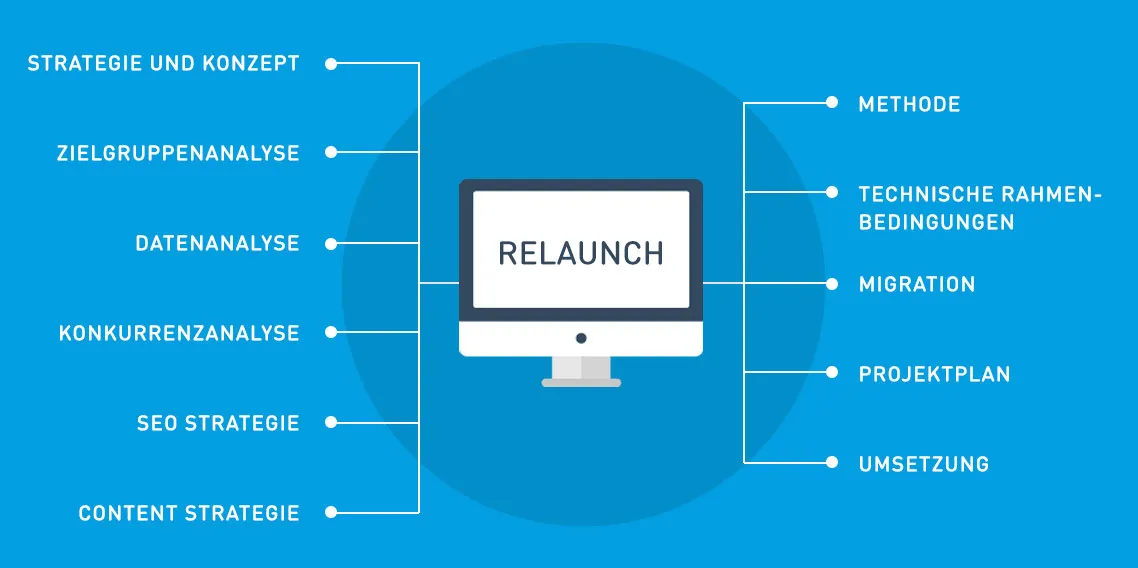
1. Strategy and concept: What do you want to achieve?
Thorough strategic considerations come before the website relaunch. For this step, involve all internal stakeholders and bring them together at one table: those responsible for online marketing, the communications department, sales, technology, procurement, product management and management.
The aim is to define shared goals: What exactly should the new website achieve? Is it just about a redesign, or would you like more traffic and visibility or conversions? Should more leads be generated, or should investors, specialists and potential applicants become aware of the organisation?
Record the results in a detailed written concept. Describe the identified requirements in precise detail and align them conclusively with all stakeholders. The effort is worthwhile, as you will then have a binding shared project basis and can realistically estimate the implementation effort.

As a digital agency, we're happy to help you bring these together: in Design Thinking workshops, you can collaborate across disciplines and reconcile these expectations and needs with one another. The aim is to find holistic concepts for the website with the involvement of users, and to develop, test and refine prototypes - until you have a product that's perfect from the user's point of view.
Subscribe to our newsletter now!
2. Target group analysis: Who do you want to reach?
Give careful thought to your target groups. Ask yourself: Who do you want to address with the new website, and with what goal? Are there perhaps new target groups, and what needs do they have? Today, for example, the wish to present oneself convincingly as an employer in order to attract new staff is increasingly taking centre stage. This is because a digital corporate presence is often a potential applicant's first point of contact with an employer.
This is where user research and clear definitions of your target group help you find out what users really want. If you focus on the B2B sector or come from the energy sector, you'll find answers to what users and customers expect from websites in these industries in our industry monitors B2B and Energy.
3. Data analysis: What are users doing?
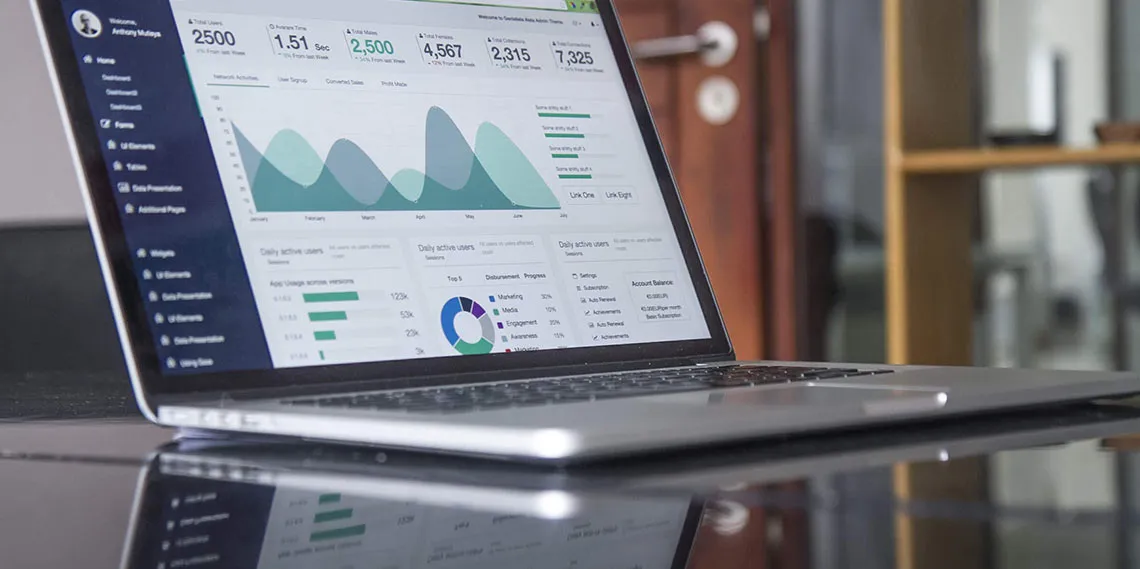
Don't leave user guidance to chance. Check your old website's data using webmaster tools such as Google Analytics, Piwik and the like. Analyse which content performs well and which performs less well. Check which pages are the top entry pages and exit pages. Analyse the bounce rates and time on page.
With these insights, you can set priorities for your new website and content creation. Focus more on the content and pages that resonate well with users. Going forward, place links to other pages you'd also like to direct users to at these points. This way, you can actively guide the users of your website.
4. Competitor analysis: What are the others doing?
Before you start the relaunch, observe your three strongest competitors: How are their websites structured? What structures and concepts underlie them? With which topics and content do they position themselves? What do your competitors do differently, and what makes them successful? What special features distinguish their websites?
5. SEO strategy: What are you found for?
Check the keywords and phrases your competitors rank well for and that your customers search for. How do others approach this? Think about whether and how you can rank better here. Review the SEO strategy and look for gaps in your competitors' Google rankings. Use this as the basis for developing your own SEO strategy ahead of the website relaunch, so you can exploit these gaps afterwards.
A new website is not much use if it isn't visible on Google. Our advice: take the time and very carefully define your key keywords. Be sure to observe the standard SEO rules. But search-engine-optimised texts alone are not the basis for your new website's success - what matters are texts that offer your readers real value and are unique.
6. Content strategy: What is your message?
Once you've clarified what you want to be found for, complement your SEO with a content strategy for the website relaunch. At the centre sits your brand vision as the connecting core idea. From this, you develop relevant topics, define formats and prioritise channels. After that, it's time to implement the content you've planned and defined.
For many organisations, creating useful content of the right quality is a challenge. Decide whether you want to handle production internally or whether external providers are an option for creating texts, infographics, videos and whitepapers.
7. The method: classic or continuous relaunch?
There are two different approaches to a relaunch – the conventional one and the continuous relaunch. Together with your agency, you should consider which of the two suits your project and your company best.
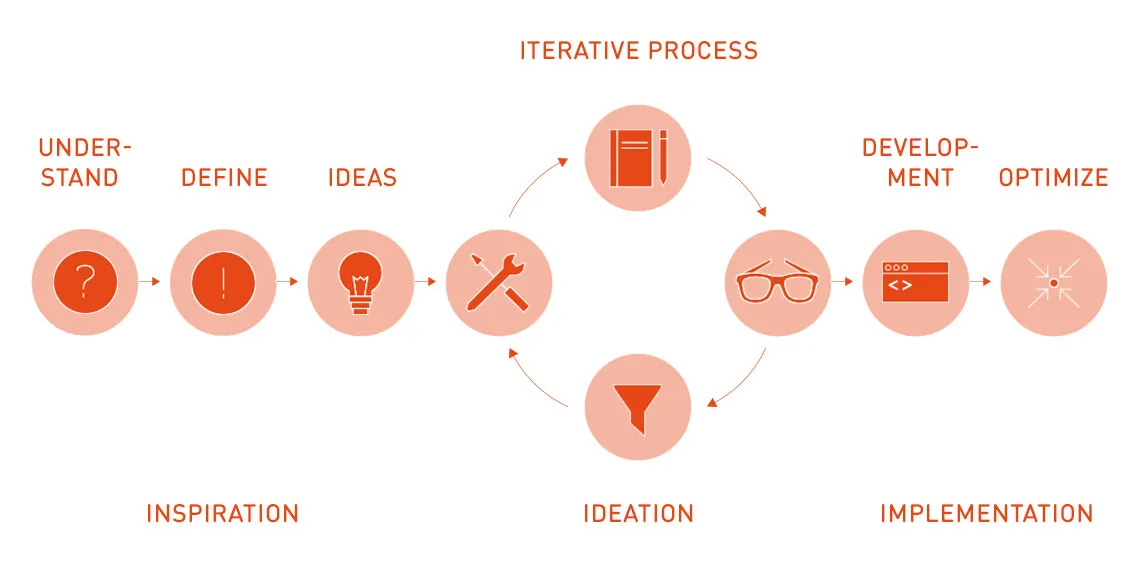
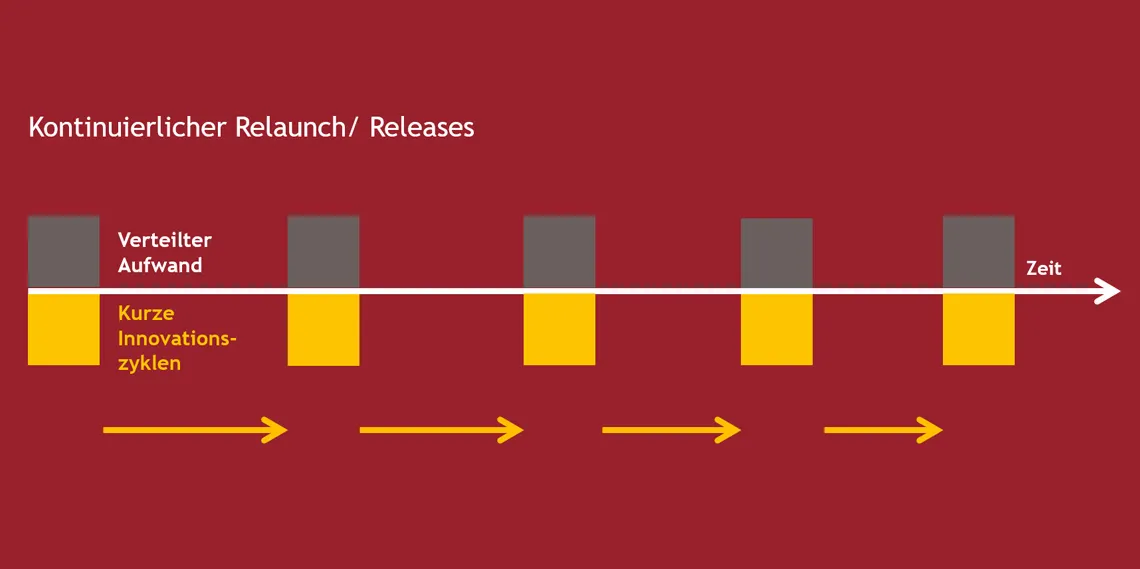
With a conventional relaunch, you agree the framework and implementation conditions of the project at the outset and settle on a fixed launch date. With a continuous relaunch, on the other hand, the website is renewed step by step in an ongoing process. This way, your digital corporate presence is always up to date with the latest technology and can be continuously optimised - whether in terms of concept, design or usability.
8. Technical framework conditions and requirements for the website relaunch:
Once the question of conventional versus continuous relaunch has been resolved, it's time to consider the technical implementation: What technical requirements do you have for the new website? What IT infrastructure and APIs are in place? Do customer relationship management or product information management systems need to be implemented?
Are there other tools you already have or are planning to get, for example for newsletters? FirstSpirit, TYPO3, Drupal and the like – is there a content management system you favour? Which system best meets your requirements? Which features should be integrated? Clarify these and other questions as early as possible with your technical department and the agency involved, and feed them into the project plan.

9. Migration: Manual or automatic?
Think early on about whether and which content should be carried over to the new website and how you can implement this process reliably from a technical standpoint. Basically, there are two options for migration: manual or automatic.
Manual migration is suitable for smaller volumes of data. If, on the other hand, all content is to be transferred to the new website and a new content management system is perhaps even being implemented, we recommend an automatic migration. In doing so, the metadata should of course also be reviewed and improved where necessary.
10. Website relaunch project plan: Who does what, and when?
In the next step, you should consider which tasks your organisation can take on itself during a relaunch - and which tasks should be entrusted to an agency or other external specialists:
Do you already have ideas about the design, concept or information structure of the website? Will existing content be carried over or reworked? Should new content be created, and if so, which content and how should it be produced? Who will handle the technical implementation? Clarify these questions and then choose experienced experts who can take on these tasks. For complex web projects, it is often sensible to source all services from a single provider, for example a digital agency with a full-service offering.
11. Implementation: in-house or full-service agency?
Commissioning a full-service agency brings many advantages: you have a fixed point of contact and receive a website from a single source - design and concept can be developed closely aligned with technological possibilities. You save time and effort needed to coordinate with multiple contacts. What's more, the short communication channels and spatial proximity of the trades within a full-service agency speed up coordination and production processes.
Several ways exist to work with agency. In agile projects, early and regular testing of prototypes is already fixed part of workflow. Client also gets directly involved in many development steps, handled in so-called sprints, and attends agency meetings regularly. Compared to traditional waterfall method, this approach lets teams make direction-setting decisions on short notice, so project stays flexible to new requirements and goals.

Conclusion: How to make your website relaunch a success
Whether it's about incorporating comprehensive analyses, involving all stakeholders or taking technical framework conditions into account, these eleven points have shown how central a clear strategy and precise objectives are to your upcoming website relaunch.
So allow enough time to work through all the points step by step. Clarify which internal resources you can commit and where you need professional support. The common thread running through your considerations should be reflecting your organisation's goals on the new website and aligning them with your users' needs. If you still have unanswered questions, we would be happy to advise you individually on your relaunch project.
Your contact person
- Marian Gertheim
Consultingsynaigy
Show phone numberShow email address