



DXP
The foundation for every successful digital strategy: a DXP lets you meet your customers' needs while working far more efficiently. How does it work?
11 min read
What is a Digital Experience Platform (DXP)?
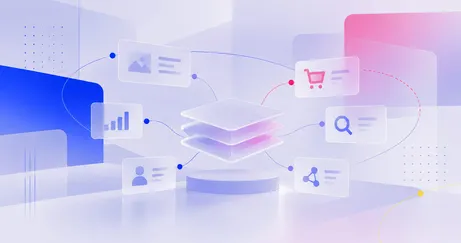
A digital experience platform (DXP) brings together all channels, content and functions for a company's digital marketing and sales in one integrated platform. The goal: consistently high-quality, unified customer experiences.
DXPs are a combination and evolution of existing CMS and e-commerce technologies. Websites, shops, apps and other channels are no longer run separately across different systems. Instead, a single central solution delivers digital experiences, adapted to each channel and personalised for the user. This lets companies align their efforts fully with customer needs: technology no longer sets limits here.
Why do organisations build DXPs?
Global organisations with a wide range of digital presences today face a threefold challenge:
1. More and more touchpoints need to be served, and target groups are becoming ever more diverse. Companies must offer their customers valuable, personalised digital experiences along the entire customer journey. The so-called digital experience is becoming a competitive factor that determines success.
2. In addition, more and more processes, third-party systems, external and in-house-built services must be integrated into the digital landscape. Operating and further developing them becomes more expensive and complex. IT security also becomes a critical factor.
3. Budgets and staff, along with editorial and technical resources, are scarce. Manual and unnecessary processes waste a great deal. Instead, resources must be used efficiently and their contribution to business success made measurable.
A DXP lets you tackle these challenges all at once, as this article will show. It helps organisations become more efficient on the one hand, and better meet customer needs on the other.
How does a Digital Experience Platform work?
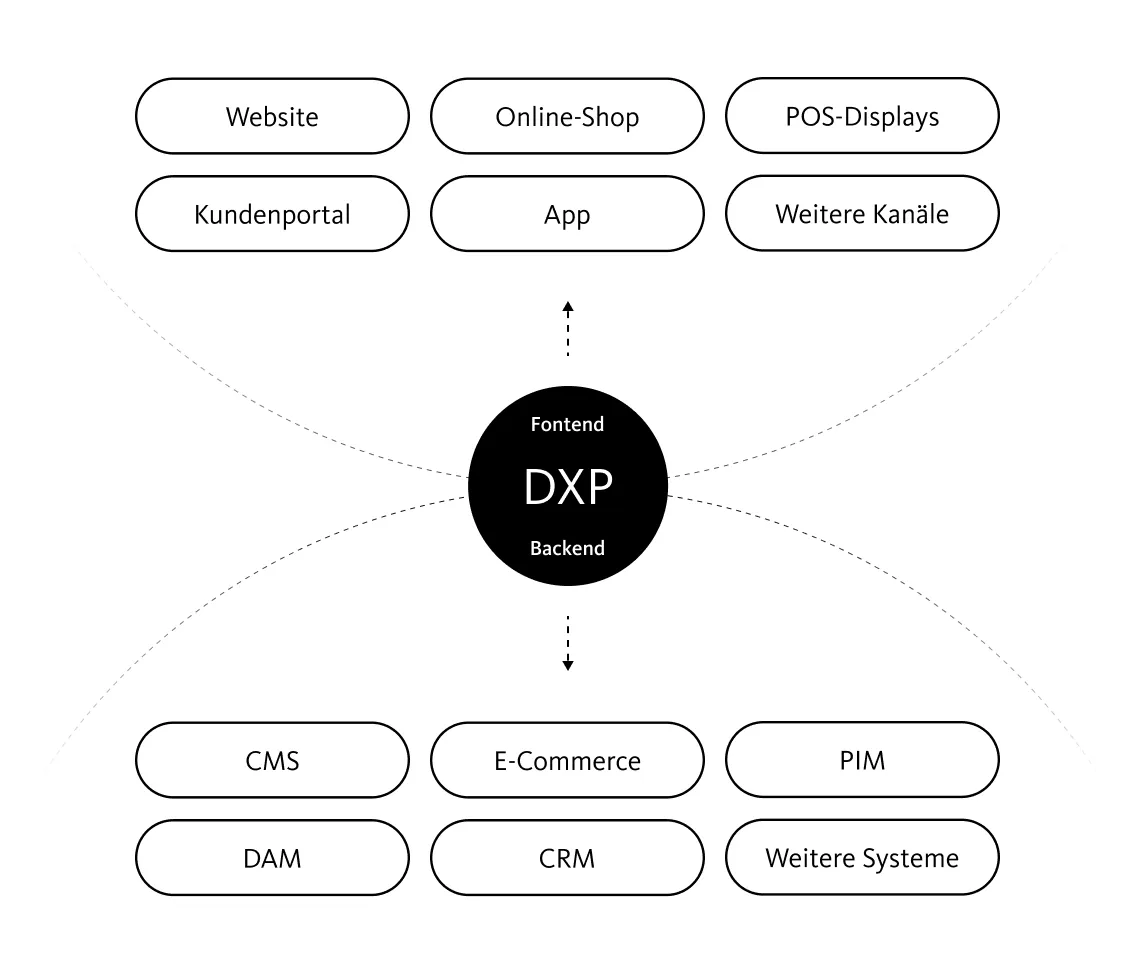
A DXP emerges when software solutions and services are connected via programming interfaces (APIs) into a modular infrastructure and continuously developed further. The central components are a headless CMS and/or an e-commerce solution. Additional systems for PIM, DAM, CRM, marketing automation and applicant management are often integrated too.
Unlike traditional systems, the presentation layer (frontend) is separated from the backend services. Customer experiences across channels are no longer determined by the different technologies and templates of individual systems. Instead, frontends can be designed completely freely using standard technologies (e.g. JavaScript).
The four key components of a DXP
A DXP is based on four technological approaches, or key components:
Headless approach: backend and frontend of digital systems are independent of each other. How content is displayed is not constrained by the given system. This lets content be flexibly adapted to digital touchpoints and personalised.
API integration: systems and services are integrated into the platform via interfaces, without custom coding. Effort for integration and later updates is greatly reduced.
Microservice architecture: every component of the modular system can be adapted at any time. Customer journeys can be updated within a very short time, for instance by adding further cloud services.
Digital design pattern library (design systems): the entire brand design is stored as approved visual elements and code in one repository. This lets developers and marketers quickly create new channels, content and products. The brand presents itself consistently everywhere.
A DXP can adapt to changing requirements
A DXP is not just software. It combines two approaches: on one hand, a modern technical landscape that is adaptable and supports business goals. On the other, a digital strategy consistently geared towards the customer experience.
That's why the ideal DXP is rarely an off-the-shelf, all-in-one solution. Companies' and customers' requirements change, and trends come and go. Companies need to be able to respond to that. The ideal solution for this is a so-called composable DXP: a platform that can be extended and reassembled again and again. Behind this lies the best-of-breed concept, where the best available solution is used for each specific task.
Until now, companies had to completely rebuild their digital platform every few years to bring it up to latest standard of technology and design. With composable DXP, such risky, costly relaunches are history. Instead they develop the platform continuously in small steps. Changes that don't bring desired results can simply be rolled back.
What makes a DXP solution strategically valuable?
High-quality, consistent and personalised customer experiences
A customer journey consists of countless touchpoints, from the initial search for information right through to well after purchase. Customers use different channels and devices along the way. They expect consistently high-quality and, wherever possible, personalised experiences, functions and content. With a DXP, brands can deliver such consistent customer experiences.
Customers can switch between individual channels at any time without experiencing any disruption. Functions such as log-in, customer accounts and personalised content, for example, are available across multiple channels.
Higher revenue and loyal customers
A consistent customer experience not only strengthens brand image but also has a measurable effect on sales success: on conversion rates, revenue and customer lifetime value.
A Salesforce study found that customers who use multiple information channels before a purchase spend more than three times as much as others. And according to a Twilio study, companies report they've been able to boost revenue per customer by 38 per cent through personalisation measures. More than half of consumers said they'd be more likely to shop online again with a provider if the experience was personalised.
According to Gartner's B2B Buying Report, as many as 3 in 4 B2B buyers prefer purchasing without personal contact. These buyers will tend to buy wherever they get the best digital experience.
Work more efficiently in editorial and marketing
A DXP also makes background work easier and faster: digital customer experiences are managed centrally in one system and delivered from there to the channels. Marketers and editors no longer need to jump between systems.
Content can easily be reused, making manual data transfers unnecessary. All departments collaborate within the platform instead of each working separately with data silos and isolated solutions. This optimises processes across the whole company.
Agile, adaptable IT platform
Thanks to its modular architecture, a DXP is relatively easy to maintain and evolve. This not only lowers IT costs but also supports business goals, since new features or entire customer experiences can now be launched with a much shorter time-to-market. Companies can test innovations easily, without major IT projects. They gain a competitive edge and can respond better to change.
What's the difference between a DXP and a CMS?
A content management system (CMS) is software used to manage content for a website. DXP, by contrast, describes an integrated IT landscape covering all backend systems and frontends of a digital brand presence. So term DXP covers much more. A DXP still needs content management functions. Hence CMS is usually part of a DXP.
What happens to the CMS and the existing system landscape?
Building a DXP doesn't mean you have to replace your existing systems entirely. You may well be able to keep your enterprise-grade CMS (or e-commerce solution) and integrate it into your future DXP architecture. The condition: the CMS must support the key components mentioned above — in particular, it needs APIs that let external systems and frontends connect. Vendors Magnolia, TYPO3 and crownpeak (formerly FirstSpirit) meet these requirements.
The CMS provides the DXP with functions such as editing, content and media management, workflows, rights and roles. However, the CMS is no longer responsible for rendering content or displaying frontends. As already mentioned, the presentation layer is operated separately. (A hybrid approach is possible: individual websites, such as microsites or landing pages, can continue to be managed directly through the CMS.)
You can also keep using most of your company's other software solutions and connect them to the DXP, such as your PIM or CRM tool. The precondition, again, is a compatible API through which data can be exchanged.
Four steps to a DXP concept
Planning to transform your IT landscape into a customer-centric DXP? Great! Start by analysing these four areas. The insights form the foundation for your DXP strategy and concept.
Your organisation's strategic requirements and objectives: Consider your current business strategy and target metrics. Examine how a DXP can deliver value towards these objectives. Also take into account the needs of individual stakeholders and the resources available.
IT strategy: A DXP is not just another piece of software, it's an IT strategy. Introducing one is likely to require a reorientation of your existing strategy. Analyse this in two directions: in which areas is your current IT strategy already aligned with a DXP, creating synergies? In which areas are adjustments needed, and what are they?
Customer needs: A DXP is only successful if it improves the customer experience – that is its actual purpose. For the concept, you therefore need a clear understanding of your customers' needs, preferences and expectations. Take enough time to analyse these needs and develop ideas on how to meet them better. The customer perspective takes top priority in the DXP requirements; technical aspects come only after that.
Technical feasibility: The best concepts are futile if they cannot be technically implemented. That's your focus in this last step. Evaluate your infrastructure and existing systems: do they already have the required capabilities? Identify systems that should be updated or, if necessary, replaced.
What opportunities does a DXP offer your organisation?
Want to know exactly what benefits a DXP offers your organisation? Or need support analysing customer requirements and strategic considerations? Then get in touch with us!
In summary: the main benefits of a Digital Experience Platform
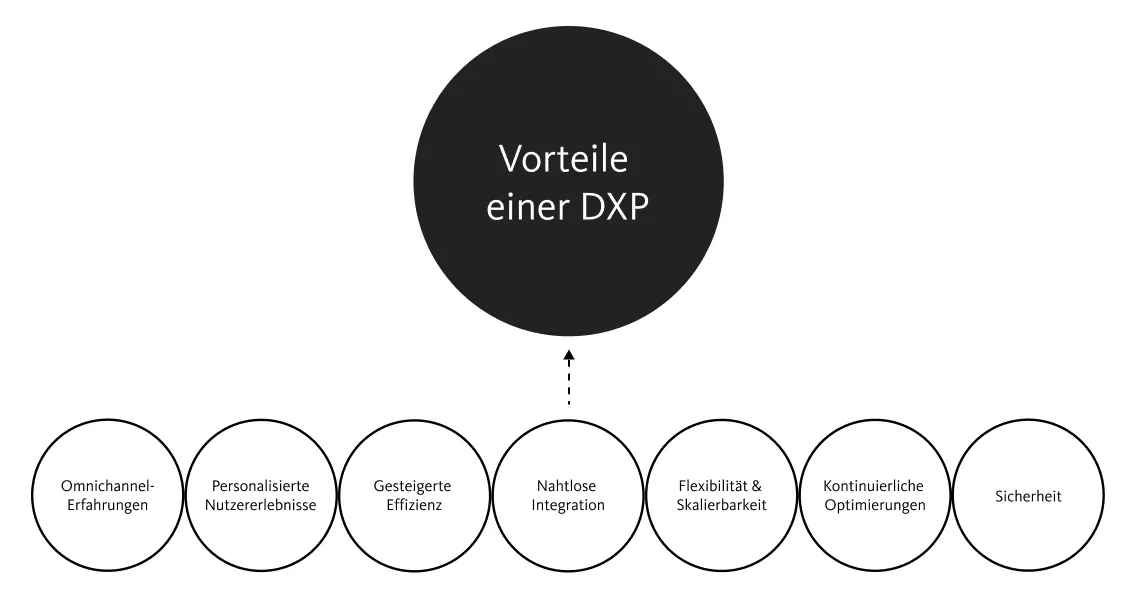
Personalisation: DXPs enable personalised user experiences.
Efficiency: you boost efficiency through better resource use and cross-departmental workflows.
Integration: seamless integration of third-party systems into one unified platform.
Flexibility: DXPs are built modularly to adapt to changing requirements.
Continuous optimisation: they support ongoing adjustments for improved resilience and user satisfaction.
Your contact
- Daniel Richter
Web Developmentsynaigy
Show phone numberShow email address

Subscribe to the blog now and never miss any news
✔️free ✔️news every week ✔️expert knowledge
Please accept the corresponding cookies to view this embedded content.