

Legacy system
How to replace legacy software and modernise your company's IT landscape
14 min read
From Legacy System to Future-Ready Platform: How to Make the Transition from a Legacy System to a Modern CMS
IT landscapes grown over years are the normal case in B2B organisations. The most varied requirements have led to systems being extended, adapted and supplemented piece by piece – often without a coherent strategy. The result: ever-increasing complexity, high maintenance costs and systems that no longer harmonise with one another. At the same time, requirements for digital processes, data security and scalability are rising.
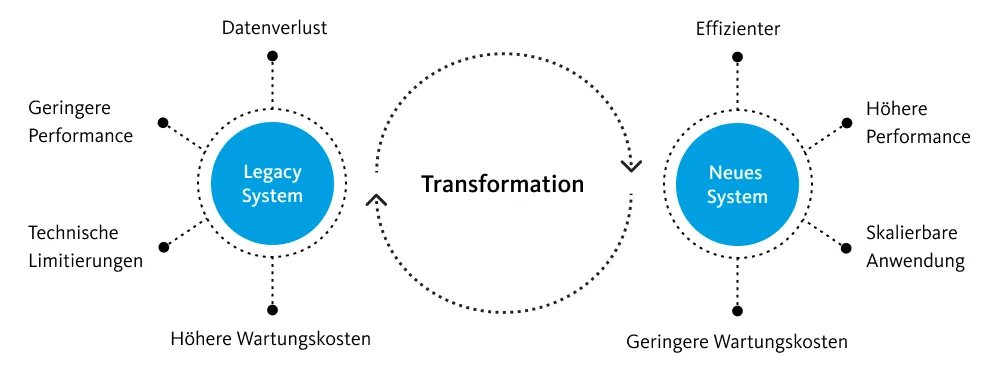
Legacy systems – so-called old systems – prevent progress, innovation and flexibility. They make it harder to integrate new technologies, increase risks and technical debt, and reduce investment security. To remain competitive, companies must modernise their digital infrastructure now: consolidate systems, simplify processes and set the course for a future-ready IT architecture.
This is where your opportunity lies: with a future-proof system landscape – for example, by switching to a cloud-based content management system (CMS) – you can not only reduce costs and risks, but also massively increase efficiency and flexibility. Companies gain a future-proof foundation that enables innovation, conserves resources and optimally interlinks digital processes in the long term.
But when are investments in a renewal worthwhile? How do you approach the transformation strategically? What pitfalls are there? Does it need a completely new system, or is an upgrade of individual components enough?
In this insight, we show you when legacy modernisation is necessary and how the transformation to a scalable, flexible and efficient IT infrastructure succeeds.
1 | What is a legacy system?
A legacy system, by Gartner's definition, is an IT system that, although based on outdated technology, remains critical to daily operations. The term covers both outdated software and hardware.
Note: the term “legacy” has nothing to do with IT per se, but can carry positive connotations such as “heritage” or “inheritance”, and, with “burden” or “baggage”, also very negative ones.
In the IT context, the term “legacy” is translated as “Altlast” (burden), which illustrates the challenges of such systems: since their introduction, the organisational, technical and market-specific conditions have changed considerably – the IT infrastructure has been continuously adapted and maintained, often with increasing complexity.
At the same time, these historically grown IT systems are often deeply integrated into business processes and form the backbone of operational workflows.
But even if they seem to work reliably, there are good reasons to replace the legacy system. Because outdated software can no longer keep pace with today's demands for flexibility, security and integration capability. Gartner even rates legacy systems and applications as "critical to daily operations", which is why a gradual replacement is often unavoidable.
So the strategic system change is more than just a technical migration.
It's a decisive step towards digital resilience.
Replacing our legacy systems is a major effort – but a necessary investment in future readiness and standardisation.
2 | Is my company affected? Or: how do I recognise a legacy system?
2 | Is my company affected? Or: how do I recognise a legacy system?
Regardless of industry, business type or software architecture, this checklist lets you easily determine whether a particular application or system counts as a legacy system or legacy application:
Age of the technology: Was the system developed many years ago and does it rely on outdated programming languages or technologies that are barely used today? Might this affect the security and stability of the application?
Inefficient performance: does the software fail to meet current requirements for speed, scalability or usability, and disrupt smooth operation? Is it, for instance, not cloud-ready?
Strong dependencies: Is the system deeply integrated into your workflows, and would a replacement affect numerous interfaces and processes?
Lack of support: Are regular updates, security patches or qualified experts who can help with problems missing?
High maintenance costs: Are the costs for software maintenance, bug fixes and system adjustments steadily rising?
Tip: not every old system is automatically a legacy system. The decisive part of the definition is whether its use hinders an organisation's progress.
Sources: * Red Hat: "The state of application modernization"; ** Computerwoche, CIO, CSO, Thinkwise: "Legacy modernisation 2024"
3 | What are examples of a legacy system?
From older operating systems such as Windows XP, Vista and 7, through mainframes, COBOL applications, old ERP systems and old database systems, to bespoke systems – legacy systems and applications can affect any building block of an IT system.
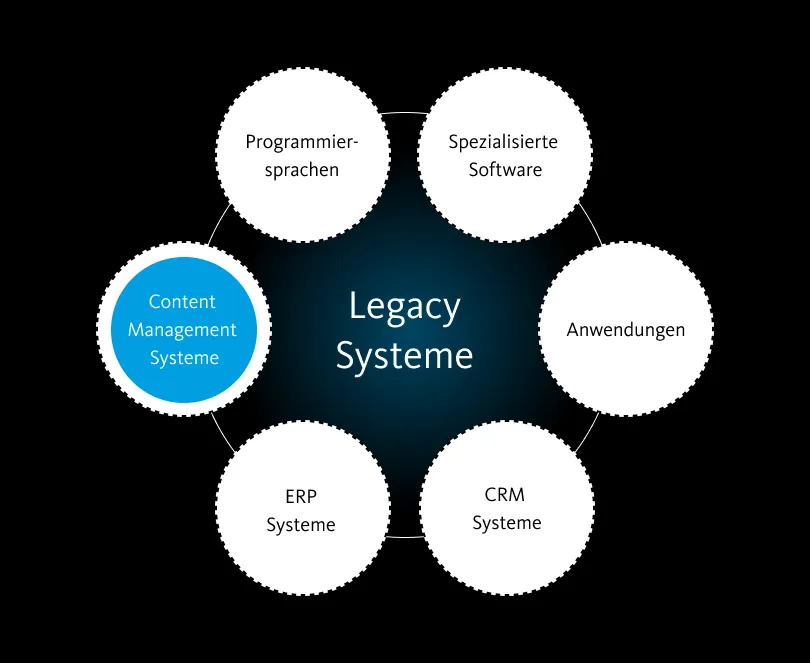
Many companies still work with outdated content management systems (CMS), which reach their limits when managing articles, editorial content and digital media. They lack features such as personalisation and multichannel publishing, which are essential for modern digital communication.
This problem also shows up in operating systems: systems like Windows XP or Windows 7 remain in use at some companies — despite missing security updates and growing risks.
Another obstacle to a future-proof IT landscape is outdated database management systems that store critical company data but are often incompatible with modern analytics tools.
These and many other legacy systems and applications are often still in use, as they – initially – function reliably and support critical business processes.
The problem with legacy code: it's too complicated to develop further and too valuable to delete.
4 | Why is legacy software still in use?
Management decisions on dealing with legacy systems are challenging for good reasons.
Because legacy systems are not only deeply embedded in a company's internal processes.
They also carry valuable know-how embedded in their development and maintenance. Legacy code (outdated or poorly maintainable source code), for example, is often hard to follow and at the same time insufficiently documented or not documented at all, making it difficult to understand, edit or renew.
On top of that come further factors that raise the barriers to renewal: dependency on third-party systems, fear of high costs and possible risks in data migration.
Even though the consequences of waiting too long can be serious – all these reasons are why many companies continue to rely on their existing legacy systems, despite the obvious drawbacks.
Outdated software is often no longer supported by updates and is vulnerable to cyberattacks.
5 | Challenges: the biggest problems caused by legacy systems
Security risks: Many legacy systems are no longer regularly updated, making them vulnerable to cyberattacks. Security gaps often go undetected or can no longer be patched. This can lead to data loss, system outages and legal consequences
Problems with data protection: Legacy software poses significant problems for compliance with data protection regulations such as GDPR, for example regarding the storage, processing, transfer and correct encryption, anonymisation or deletion of personal data. In addition, legacy systems make it harder to integrate modern security features and comply with current compliance requirements. This leads to increased security risks and potential legal consequences for companies.
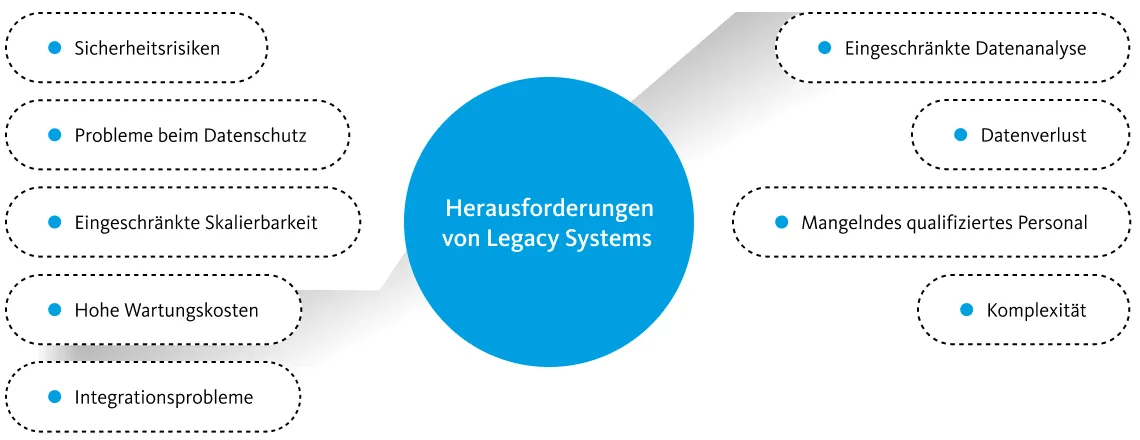
Limited scalability: Legacy systems quickly hit their limits as data volumes grow and new requirements emerge.
High maintenance costs: The costs of maintaining and operating legacy systems rise exponentially over time, as spare parts and expert knowledge become hard to find. One example of this is legacy code, which has often been changed by various developers over the years without clear documentation or consistent standards. This means maintenance and further development become increasingly difficult and costly.
Integration problems: legacy systems are often incompatible with modern applications, cloud technologies or API interfaces. This hinders automation and data exchange between systems, leading to inefficient processes in daily operations .
Restricted data analysis and data loss: Outdated technologies and architectures in legacy systems often store data in isolated structures, which makes extraction for modern analysis methods such as data science or AI difficult. This hinders the effective use of company data for insights and innovation. In addition, especially when replacing legacy applications, there's a high risk of data loss, since new data models are often not compatible with the old ones.
Lack of qualified staff: For maintenance and support of outdated software, there are often not enough qualified specialists available.
Complexity: Integrating legacy systems into modern IT environments often leads to complicated workarounds and increased administrative overhead.
6 | The first step: where does my company stand and how do I proceed?
Whether your company uses software on a large scale or develops its own: sooner or later, you'll need to address the modernisation of your legacy systems.
But where do you currently stand?
With these four phases, you can quickly find out what situation your company is in – and what steps are next.
Phase 1: need not yet recognised
Haven't looked into modernising your legacy systems yet? First check using the checklist under point 2 whether your IT is affected by legacy software. Talk to the stakeholders who work with the system daily and identify their biggest challenges. This way you quickly gain an overview of the most urgent issues.
Phase 2: need recognised, but no measures taken yet
You know that modernisation is needed and a new system is necessary? Now you should analyse where your system currently stands and what's causing the need. The state of the legacy code is of central importance here: is it still maintainable? Is there clear documentation? Are there critical security vulnerabilities? A thorough analysis helps you identify legacy code and legacy applications in detail and set the right priorities.
Phase 3: analysis complete, goals still open
Analysed your current state? Now it's time to define concrete goals and develop a clear strategy. Derive from your findings which measures are needed to reach these goals. You should also factor in the effort and resources required.
Phase 4: strategy defined, implementation begins
You've clearly formulated your goals and set up a modernisation strategy? Now implementation begins. It's important to focus on measures that directly support your goals. Avoid unnecessary adjustments that distract from what matters – otherwise you risk the project dragging on.
Conclusion: whatever phase you're in – a structured approach is key to successfully modernising your legacy systems. Interactive tools supports you with proven strategies and innovative approaches at every step towards a new system.
7 | Case study CMS switch: these are the benefits
Many companies hit limits with existing CMS solutions when it comes to personalisation, seamless user experiences and integration of various digital touchpoints.
A CMS switch then offers the opportunity to replace the affected legacy CMS and set up a new system with numerous benefits:
Efficiency gains: reduced operating costs and more efficient processes through centralised management of content and workflows.
Personalisation: tailored content for individual user needs thanks to intelligent personalisation features.
Omnichannel delivery: seamless delivery of content across all channels and devices – from desktop to app.
System integration: linking with CRM, marketing automation tools and other applications for a connected digital ecosystem.
Scalability: the flexible architecture lets companies keep pace with growth, easily integrate new features and manage large volumes of data efficiently.
API-first architecture: enables easy integration of external systems and delivery of content across various channels.
Cloud capability: cloud-based solutions simplify maintenance and enable fast scaling as demand grows.
Analytics and optimisation: integrated analysis tools support data-driven decisions and optimise the user experience.
Competitive advantage: faster response to market changes and innovative customer experiences boost competitiveness.
The advantages of a new system are obvious: you can solve the legacy problem in one go while creating an integrative, highly flexible platform that offers significant advantages in terms of customer satisfaction, operational efficiency and competitiveness.
8 | How does interactive tools support the modernisation of legacy software?
Whatever stage of modernisation you're at – our team of experts from software development, strategy consulting and creation supports you in developing future-proof, flexible and scalable digital landscapes.
With decades of experience in the technical development and creative design of complex digital platforms, we guarantee smooth, agile collaboration and outstanding results.
Our clients in the field of IT modernisation:
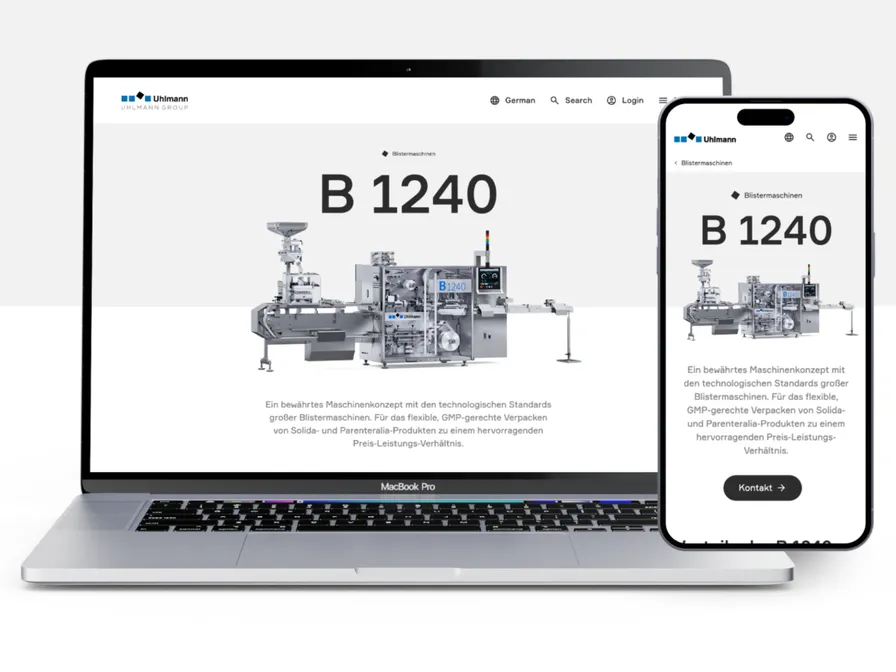
Complete restart with Magnolia's DXP solution
How our team developed a modern, integrative and future-proof digital platform for Uhlmann Pac Systeme.
9 | Wrap up: use the renewal of your IT systems as an opportunity!
Master two challenges in one strategic step: by switching to a new content management system, you gain the opportunity to replace risky legacy software while simultaneously building a secure, flexible and integrative digital landscape with numerous positive characteristics.
In short: replacing the legacy system not only creates the technical foundation for resilient, user-centric digital landscapes, but is also an investment in company growth and long-term competitiveness.
Modernise your digital offerings with experts by your side. Contact us now for a free consultation and discover the best solutions for your company.
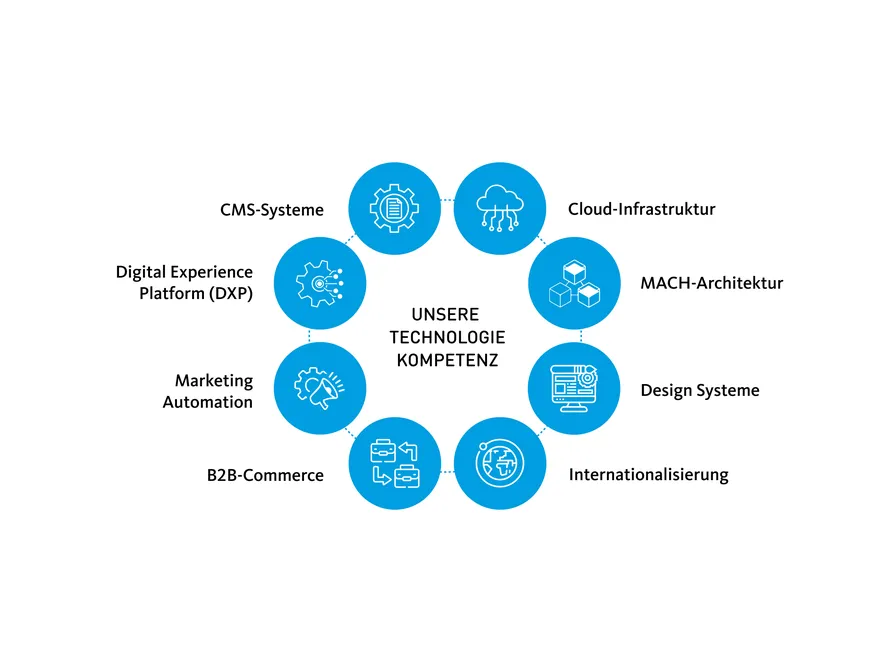
Would you like support with your modernisation project?
We've supported our customers for over 25 years in developing secure, scalable and flexible digital landscapes.
Our services at a glance
Our collaboration is always tailored to your needs:
Holistic development: Need new system for content management? Or looking for partner for complex website project with marketing automation, AI integration, new design and SEO? Our 100-strong team of experts across various disciplines plans and develops websites and digital offerings that delight your target audiences.
Joint implementation and knowledge transfer: We work side by side with your team, provide helpful input and ensure all measures are implemented optimally. Of course, we hand you our methods so you can apply them independently.
Years of experience with diverse customer projects: With interactive tools by your side, you benefit from an experienced partner who helps you modernise your legacy systems efficiently and sustainably – tailored individually to your organisation's requirements.
Your contact person
- Daniel Richter
Web Developmentsynaigy
Show phone numberShow email address